
Florida Boating Under the Influence Laws Explained
By : saulcrim | Category : Criminal Defense | Comments Off on Florida Boating Under the Influence Laws Explained
1st Dec 2025

Florida’s waterways attract millions of boaters annually, but operating a vessel while impaired carries serious legal consequences. Florida boating under the influence laws mirror DUI regulations with harsh penalties including fines, jail time, and license suspension.
We at Law Offices of Scott B. Saul see many boaters who underestimate these laws. Understanding your rights and potential defenses can make the difference between conviction and case dismissal.
What Are Florida’s BUI Penalties and BAC Limits?
Blood Alcohol Limits for Boat Operators
Florida sets the legal blood alcohol concentration limit at 0.08% for boat operators, identical to vehicle operation. The Florida Fish and Wildlife Conservation Commission enforces a zero-tolerance policy for operators under 21 years old and prohibits any measurable alcohol in their system. A BAC between 0.05% and 0.08% can still result in BUI charges if officers observe additional impairment evidence such as erratic boat operation or failed field sobriety tests. Officers frequently use portable breathalyzers during marine stops, and those who refuse testing face automatic penalties that include $500 fines and potential license suspension.
Criminal Penalties and Escalation
First-time BUI convictions carry fines between $500 and $1,000 plus up to six months imprisonment. Second offenses within five years increase penalties to $1,000-$2,000 fines and potential nine-month jail sentences.
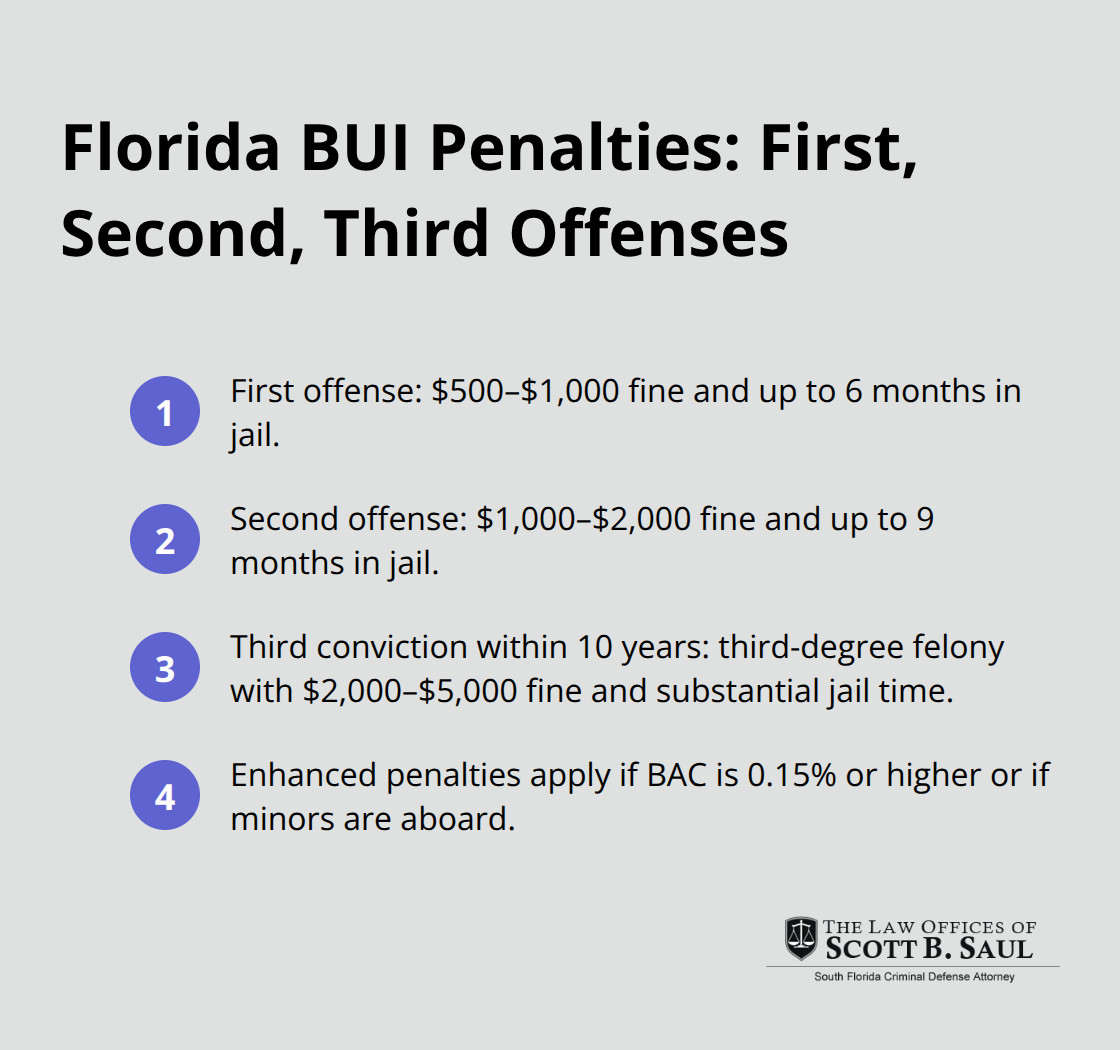
Third convictions within ten years become third-degree felonies with fines between $2,000 and $5,000 and substantial jail time. Courts mandate 50 hours of community service for first offenders and require completion of substance abuse education programs. Enhanced penalties apply when BAC exceeds 0.15% or minors are aboard, with fines that double and mandatory minimum jail time imposed.
Vessel Impoundment and License Restrictions
BUI convictions trigger vessel impoundment for 10 days on first offenses and extend to 90 days for repeat violations. Florida courts impose mandatory probation with monthly reports and random alcohol tests. Offenders cannot operate any vessel until BAC drops below 0.05% or eight hours pass since arrest.
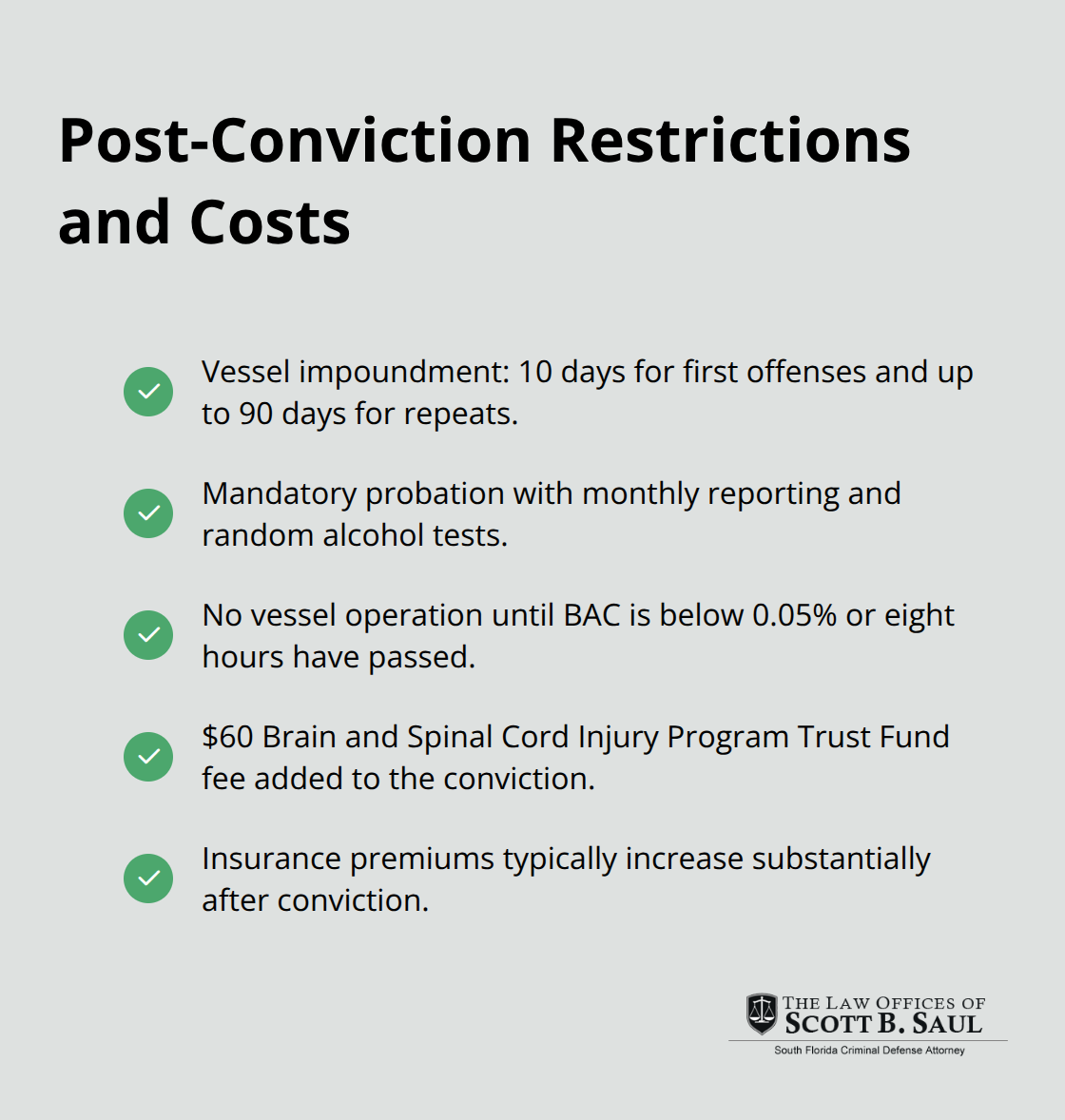
The conviction adds $60 to Brain and Spinal Cord Injury Program Trust Fund fees, and insurance premiums typically increase substantially after conviction.
Additional Financial and Legal Consequences
Courts often impose additional costs beyond standard fines (treatment programs can cost hundreds of dollars). Civil lawsuits remain possible even after criminal conviction, and prior DUI convictions from other states count toward repeat offender status in Florida. These penalties create substantial long-term financial burdens that extend far beyond the initial arrest and conviction.
The severity of these penalties makes understanding your legal options essential when facing BUI charges.
How Can You Defend Against BUI Charges?
Field Sobriety Tests Face Unique Water-Based Challenges
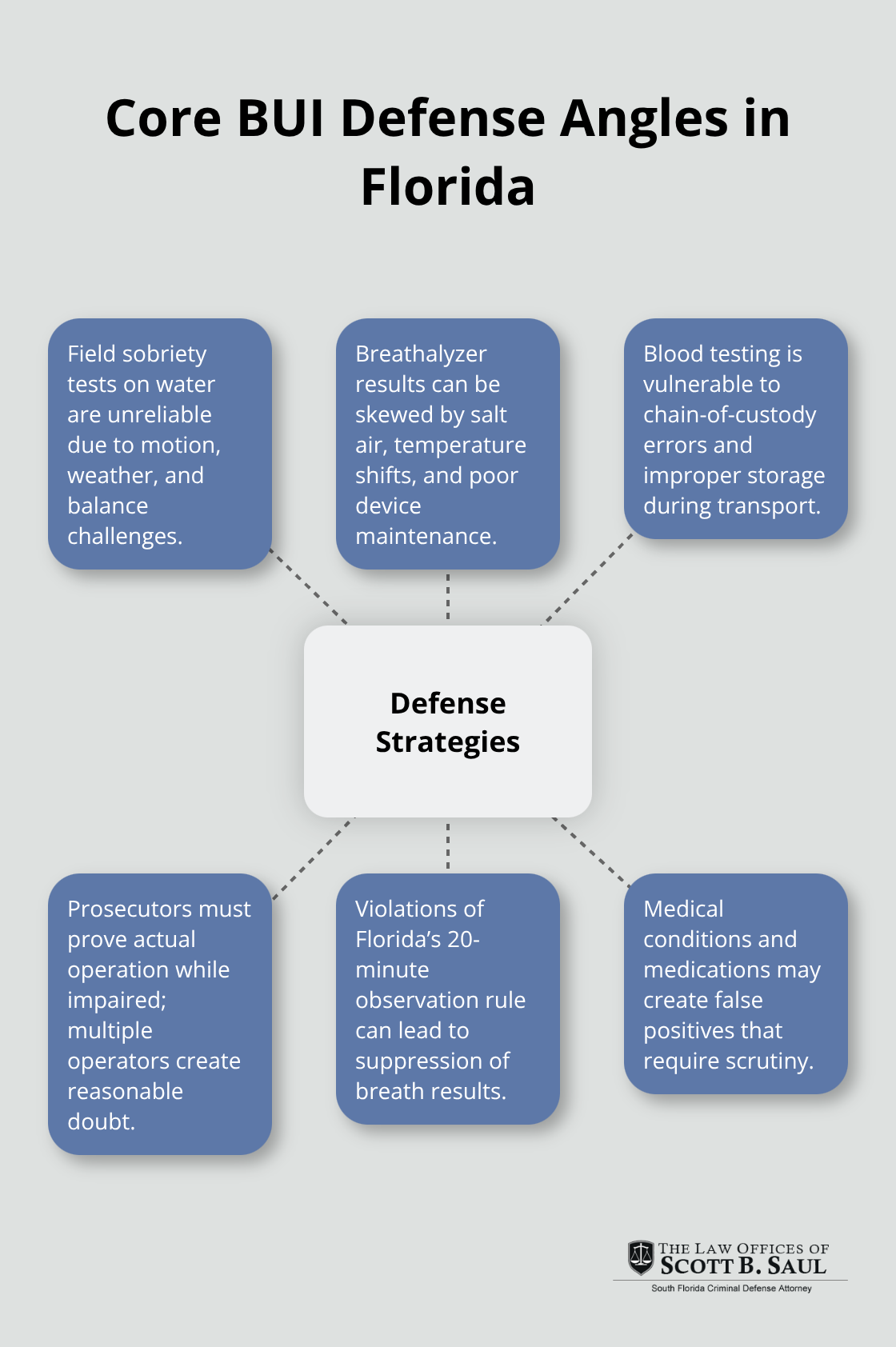
Marine law enforcement officers conduct field sobriety tests on boats, but these tests present significant reliability problems compared to roadside tests. Water motion creates balance difficulties that affect even sober boaters during standard tests like the walk-and-turn or one-leg stand. Florida courts have dismissed several cases due to improper test conditions on vessels.
Weather conditions, wave action, and boat deck surfaces create variables that make test results unreliable. Officers must establish stable test conditions, which rarely exist on boats in motion. Defense attorneys challenge these tests when officers fail to account for maritime conditions that naturally impair balance and coordination.
Breathalyzer and Blood Test Equipment Shows Vulnerabilities
Portable marine breathalyzers suffer calibration problems from salt air exposure and temperature changes common in Florida waters. These devices require specific maintenance schedules that law enforcement agencies sometimes neglect, which creates opportunities for evidence suppression. Blood test challenges focus on chain of custody problems and improper storage during transport from marine locations to test facilities.
Florida statute requires officers to observe suspects for 20 minutes before breath tests to eliminate mouth alcohol contamination. Marine arrests often involve immediate tests without proper observation periods. Medical conditions like acid reflux or diabetes can produce false positive results, and recent dental work or seasickness medication can affect outcomes. Defense strategies examine test equipment maintenance records and officer certification to identify procedural violations that invalidate test results.
Physical Control and Operation Require Specific Proof
Florida BUI laws require prosecutors to prove that defendants actually operated the vessel while impaired. Prosecutors must establish operation beyond reasonable doubt, which creates defense opportunities when multiple people were aboard or when arrests occurred while anchored. Physical control definitions become complex when boats have multiple operators or when mechanical problems prevent actual operation.
Successful defenses focus on timeline evidence that shows impairment occurred after operation ceased (such as alcohol consumption while anchored or moored). Witness testimony about who actually controlled the vessel during alleged impairment periods can create reasonable doubt about operation. These defense strategies require thorough investigation of the arrest circumstances and witness statements.
The arrest process itself presents additional opportunities for defense, starting from the initial marine police stop through court appearances.
What Happens During Your Florida BUI Arrest
Marine Police Stop Procedures
Florida Fish and Wildlife Conservation Commission officers conduct BUI stops differently than roadside traffic stops. Officers typically approach vessels in patrol boats and request permission to board for safety inspections. You must comply with these requests, and law enforcement officers do not need probable cause for random stopping and brief detention of motorboats for limited safety purposes.
Common triggers include erratic navigation, excessive speed in no-wake zones, or visible alcohol containers with impaired behavior. Officers document weather conditions, wave height, and boat stability during stops because these factors affect field sobriety test validity.
The initial safety check becomes a BUI investigation when officers smell alcohol, observe bloodshot eyes, or notice slurred speech. Officers must inform you of the investigation’s nature and your constitutional rights when this transition occurs.
Your Constitutional Rights During Investigation
You maintain the right to remain silent during marine investigations, and courts cannot use this silence against you. Officers must read Miranda rights before custodial interrogation begins, which typically occurs after arrest rather than during initial questioning.
Florida law imposes no automatic penalties for refusing field sobriety tests, unlike breath test refusal. However, officers can still arrest based on other impairment evidence such as admission of alcohol consumption or observable behavior.
The 20-minute observation period required before breath testing creates opportunities for procedural challenges, especially when officers rush testing procedures or fail to monitor properly. Request to speak with an attorney immediately after arrest, as this invokes your right to counsel and limits further questioning.
Evidence Collection and Testing Procedures
Officers collect evidence through multiple methods during BUI investigations. Physical observations include balance tests, coordination assessments, and speech pattern evaluation. These tests face unique challenges on water due to boat motion and weather conditions.
Breath testing equipment requires specific calibration and maintenance schedules that officers must follow precisely. Salt air exposure and temperature changes common in Florida waters can affect portable breathalyzer accuracy (creating potential defense opportunities).
Blood test procedures involve strict chain of custody requirements and proper storage during transport from marine locations to testing facilities. Medical conditions like acid reflux or diabetes can produce false positive results that experienced attorneys can challenge.
Booking Process and Initial Court Appearances
BUI arrests require transport to shore-based facilities for processing and breath testing, which can take several hours depending on location. You cannot be released until your BAC drops below 0.05% or eight hours pass since arrest, whichever comes later.
The process includes fingerprints, photographs, and formal charge documentation. First appearances typically occur within 24 hours, where judges set bond conditions and address immediate custody issues.
Your first court date usually falls within 3-4 weeks of arrest, and Florida’s speedy trial rules require resolution within 90 days for misdemeanor BUI charges. Prosecutors often file formal charges within 30 days of arrest, which provides time to retain counsel and begin defense preparation.
Final Thoughts
Florida boating under the influence laws impose severe consequences that extend far beyond initial fines and jail time. With over 1 million registered boats in Florida and 723 documented accidents in 2021, law enforcement agencies actively patrol waterways to identify impaired operators. The 0.08% BAC limit applies equally to boats and vehicles, but marine arrests present unique challenges that create defense opportunities.
BUI convictions trigger vessel impoundment, mandatory probation, substance abuse programs, and substantial insurance premium increases. Third offenses within ten years become felonies with prison sentences up to 12 months. These penalties affect your freedom, finances, and future privileges permanently (often for years after conviction).
Professional legal representation becomes essential when you face BUI charges. We at Law Offices of Scott B. Saul understand the complexities of marine law enforcement procedures and have experience with criminal defense cases. Early intervention protects your rights and maximizes defense options before prosecutors file formal charges. If you face BUI charges, contact experienced criminal defense attorneys immediately.
Archives
- February 2026 (5)
- January 2026 (9)
- December 2025 (9)
- November 2025 (8)
- October 2025 (8)
- September 2025 (9)
- August 2025 (8)
- July 2025 (8)
- June 2025 (9)
- May 2025 (9)
- April 2025 (8)
- March 2025 (9)
- February 2025 (8)
- January 2025 (9)
- December 2024 (10)
- November 2024 (5)
- July 2024 (2)
- June 2024 (2)
- May 2024 (2)
- April 2024 (2)
- March 2024 (2)
- February 2024 (2)
- January 2024 (2)
- December 2023 (2)
- November 2023 (2)
- October 2023 (2)
- September 2023 (2)
- August 2023 (1)
- July 2023 (2)
- June 2023 (2)
- May 2023 (2)
- April 2023 (2)
- March 2023 (2)
- February 2023 (2)
- January 2023 (2)
- December 2022 (2)
- November 2022 (2)
- October 2022 (2)
- September 2022 (2)
- August 2022 (2)
- July 2022 (2)
- June 2022 (2)
- May 2022 (2)
- April 2022 (2)
- March 2022 (2)
- February 2022 (2)
- January 2022 (2)
- December 2021 (2)
- November 2021 (2)
- October 2021 (2)
- September 2021 (2)
- August 2021 (2)
- July 2021 (2)
- June 2021 (2)
- May 2021 (2)
- April 2021 (2)
- September 2020 (5)
- July 2020 (4)
- June 2020 (4)
- May 2020 (4)
- April 2020 (5)
- March 2020 (4)
- February 2020 (4)
- January 2020 (4)
- December 2019 (1)
- November 2019 (4)
- October 2019 (4)
- September 2019 (4)
- August 2019 (4)
- July 2019 (5)
- June 2019 (4)
- May 2019 (4)
- April 2019 (4)
- March 2019 (4)
- February 2019 (4)
- January 2019 (4)
- December 2018 (4)
- November 2018 (5)
- October 2018 (5)
- September 2018 (4)
- August 2018 (4)
- July 2018 (7)
- June 2018 (4)
- May 2018 (4)
- April 2018 (8)
- March 2018 (4)
- February 2018 (4)
- January 2018 (4)
- November 2017 (4)
- October 2017 (4)
- September 2017 (4)
- August 2017 (7)
- July 2017 (6)
- June 2017 (4)
- May 2017 (4)
- April 2017 (4)
- March 2017 (4)
- February 2017 (7)
- January 2017 (4)
- December 2016 (7)
- November 2016 (4)
- October 2016 (4)
- September 2016 (10)
- August 2016 (4)
- July 2016 (4)
- June 2016 (4)
- May 2016 (4)
- April 2016 (4)
- March 2016 (4)
- February 2016 (7)
- January 2016 (4)
- December 2015 (5)
- November 2015 (4)
- October 2015 (7)
- September 2015 (4)
- August 2015 (4)
- July 2015 (13)
- June 2015 (9)
- May 2015 (8)
- April 2015 (6)
- March 2015 (4)
- February 2015 (4)
- January 2015 (4)
- December 2014 (4)
- November 2014 (4)
- October 2014 (4)
- September 2014 (3)
Categories
- Adjudication (1)
- Bankruptcy (1)
- Burglary Crimes (3)
- calendar call (1)
- Car Accident (1)
- Criminal Defense (395)
- Cyber Crimes (7)
- DNA (1)
- Domestic Violence (9)
- Drug Crimes (5)
- DUI (12)
- Embezzlement (1)
- Environmental Crimes (4)
- Expungement Law (2)
- Federal Sentencing Law (3)
- Firearm (3)
- Forgery (4)
- General (82)
- Healthcare (3)
- Immigration (1)
- Indentity Theft (1)
- Insurance (5)
- judicial sounding (2)
- Juvenile Crimes (4)
- Manslaughter (4)
- Money Laundering (3)
- Organized Crime (1)
- Racketeering (1)
- Reckless Driving (3)
- RICO (3)
- Sealing and Expunging (2)
- Sex Offense (1)
- Shoplifting (1)
- Suspended Driver's License (1)
- Traffic (4)
- Trending Topics (1)
- White-collar Offenses (1)
