
How to Avoid Jail Time for Illegal Gun Possession
By : saulcrim | Category : Criminal Defense | Comments Off on How to Avoid Jail Time for Illegal Gun Possession
16th Feb 2026

A gun possession charge in Florida carries serious consequences, including potential jail time for illegal gun possession. The penalties depend on the specific circumstances of your case, the type of charge, and your criminal history.
At Law Offices of Scott B. Saul, we’ve helped countless clients navigate these charges and explore every available defense option. This guide walks you through Florida’s gun laws, your legal defenses, and why experienced representation matters from day one.
Florida’s Gun Possession Penalties and How They Escalate
Florida treats gun possession violations with severity that escalates dramatically based on your criminal history and the circumstances surrounding the charge. A conviction for illegal possession results in mandatory minimum sentences that leave judges with little flexibility-your prior record directly determines how much prison time you face. If you have no prior felonies, a standard illegal possession charge carries up to five years in prison. However, one prior felony conviction raises the minimum to ten years, and two or more prior felonies trigger a mandatory 15-year minimum sentence.
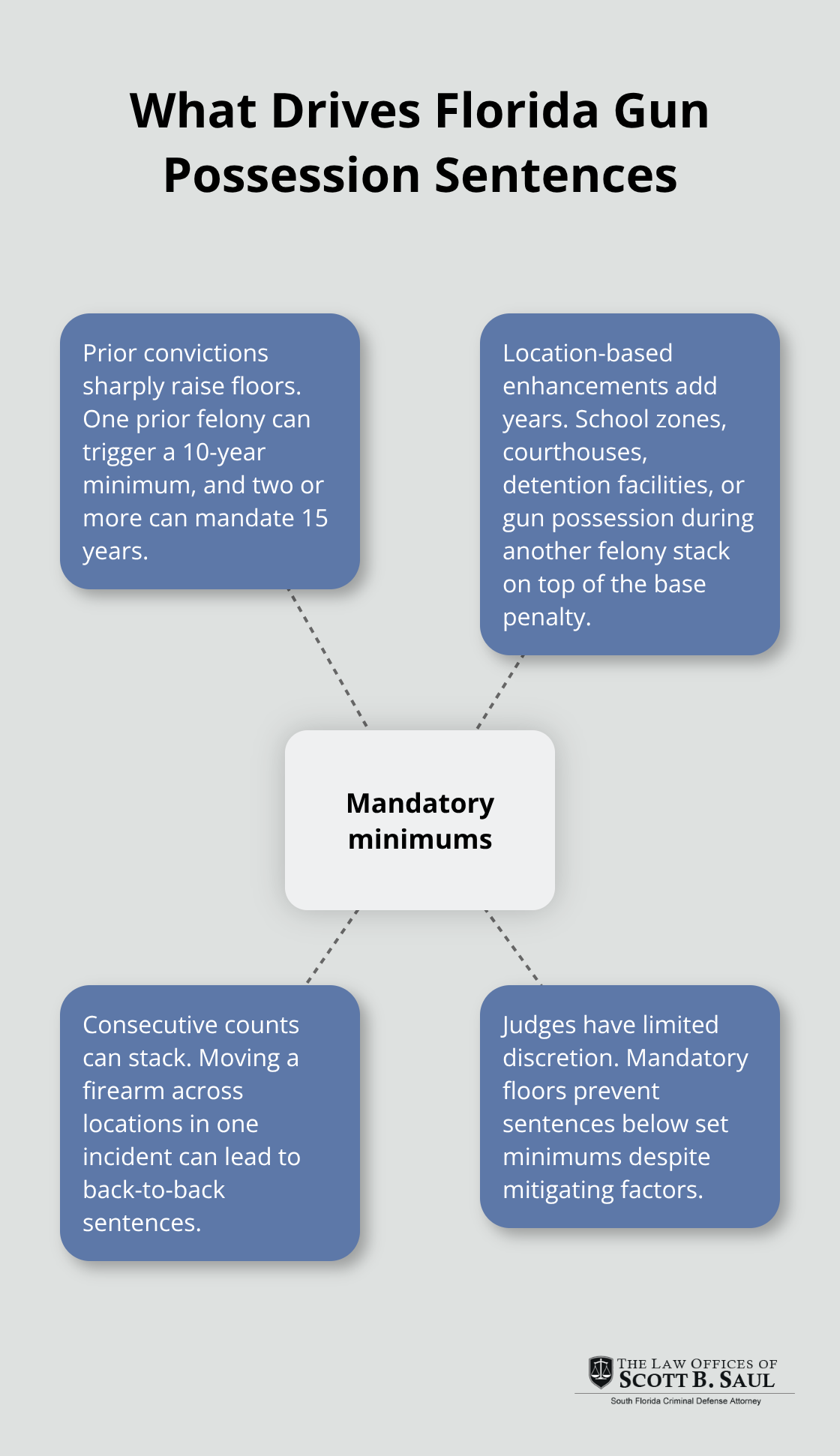
These are not recommendations or guidelines; they are floors below which judges cannot sentence you, regardless of mitigating factors or your personal circumstances.
Location-Based Enhancements Add Years to Your Sentence
The location where police found the weapon transforms a serious charge into an exceptionally severe one. Possession in certain designated areas automatically adds years to your sentence. If you carried or possessed a firearm in a school zone, on school property, or within 1,000 feet of a school, Florida law imposes an additional mandatory minimum on top of the base penalty. Possession in a courthouse, detention facility, or during the commission of another felony carries similar enhancements. These location-based penalties are not discretionary-prosecutors use them strategically because they guarantee extended incarceration.
Many people facing charges don’t realize that moving a firearm from one location to another during a single incident can result in multiple charges stacked consecutively, meaning you serve the sentences back-to-back rather than simultaneously. This is why the specific location of arrest becomes critical information in your defense strategy from the very first conversation with your attorney.
Felony Versus Misdemeanor Classifications Determine Your Prison Time
Not all gun possession charges carry identical consequences, and understanding the difference between felony and misdemeanor classifications determines whether you face months or years in prison. A misdemeanor gun possession charge typically results in up to one year in county jail and a $1,000 fine, but it does not trigger the mandatory minimum sentencing that felonies do. However, most illegal gun possession cases in Florida are charged as felonies, particularly when the defendant is a convicted felon attempting to possess any firearm.
The moment you cross into felony territory, mandatory minimums activate, and your entire future changes. Prior convictions act as sentence multipliers-they don’t just count as background information but directly determine the floor of your sentence. An experienced criminal defense attorney challenges how prosecutors classify your charge because the difference between a felony and misdemeanor charge can mean the difference between probation and a decade in prison.
Why Your Defense Strategy Must Start Immediately
The penalties you face depend not only on Florida law but also on how aggressively your attorney challenges the prosecution’s case from day one. Understanding these sentencing structures helps you grasp why taking action immediately after an arrest is not optional-it is essential. Your attorney needs time to investigate the circumstances of your arrest, examine how police obtained the firearm, and identify weaknesses in the prosecution’s evidence before charges become locked in place.
How to Attack Weak Evidence Before Trial
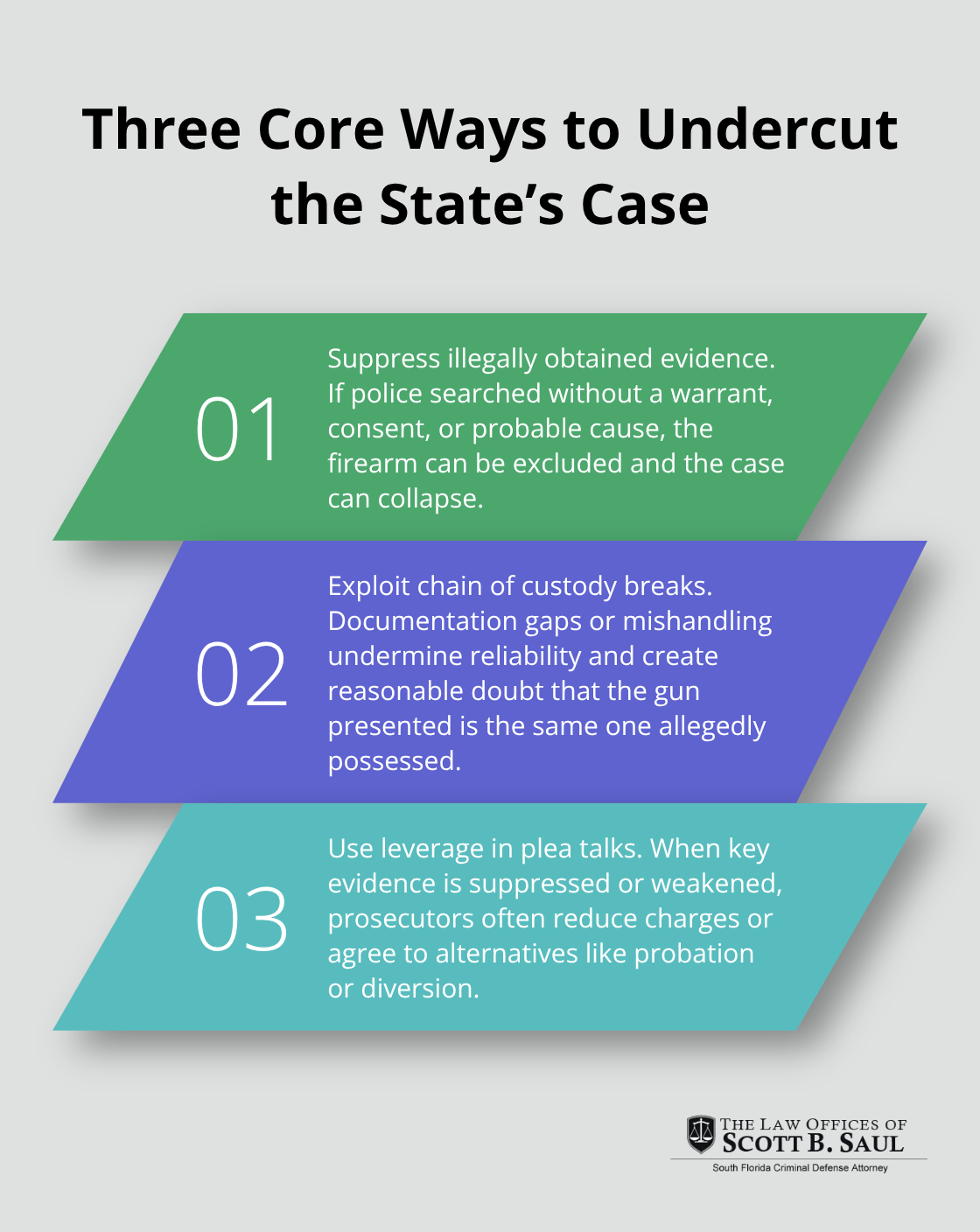
The prosecution’s case against you rests on evidence, and that evidence often contains vulnerabilities you can exploit. The most effective defense strategy targets the foundation of the state’s case rather than arguing around it. When police conduct an illegal search, the evidence they recover becomes inadmissible in court, which can collapse an entire prosecution.
Fourth Amendment Protections Stop Illegal Searches
The Fourth Amendment protections against illegal searches protect you against unreasonable searches and seizures, and Florida courts enforce these violations consistently. Police need either a valid warrant, your consent, or probable cause to search you or your property. Many gun possession arrests happen because officers conducted searches without meeting any of these requirements.
An experienced criminal defense attorney immediately examines how police found the firearm. Did they have a warrant? Did you consent to a search? Did they have probable cause based on observable facts, or did they rely on a hunch? If the search violated your rights, the firearm itself becomes inadmissible evidence. Without the weapon, the prosecution cannot prove its case. This is not a technical loophole; it is a constitutional protection that federal judges enforce consistently.
Chain of Custody Breaks Destroy Prosecution Evidence
Once police seize a firearm, every person who handles it must be documented, and the weapon must remain properly stored and accounted for. The chain of custody evidence documentation gaps establish that the firearm presented in court is actually the one police recovered from you. If documentation gaps exist, if evidence handling was careless, or if storage conditions compromised the firearm’s integrity, you gain leverage.
Police reports sometimes lack detail about who transported the weapon, where it was stored, or how long it sat in evidence before testing. Defense attorneys challenge evidence by exposing gaps in documentation. Forensic testing can be inconclusive or mishandled, and these weaknesses create reasonable doubt about whether the state can prove you possessed that specific firearm. An attorney who scrutinizes evidence handling finds inconsistencies that force prosecutors to strengthen their case or negotiate. The difference between a conviction and a dismissal often comes down to whether someone properly documented the evidence chain.
Leverage Weaknesses in Plea Negotiations
Plea negotiations happen when prosecutors recognize weaknesses in their case or when you present a credible threat of trial. You should never accept a plea offer without understanding what happens if you go to trial. If the search was illegal and the evidence gets suppressed, the prosecutor loses their strongest evidence. If the chain of custody is questionable, conviction becomes uncertain. These realities give your attorney leverage in negotiations.
A prosecutor facing trial risk often reduces charges significantly. Instead of a felony with mandatory minimum sentencing, you might negotiate a misdemeanor with probation. Instead of prison time, you might secure a diversion program that addresses underlying issues like housing, employment, or mental health support. These programs exist in Florida jurisdictions, and prosecutors sometimes offer them when they recognize their evidence is vulnerable.
Your attorney must understand both the strength of the state’s case and the availability of alternatives to prison before advising you on any plea. This assessment determines whether you fight at trial or negotiate from a position of strength. What happens next depends on whether your attorney identifies these weaknesses early and uses them effectively.
Why Your Attorney’s Prosecution Background Matters
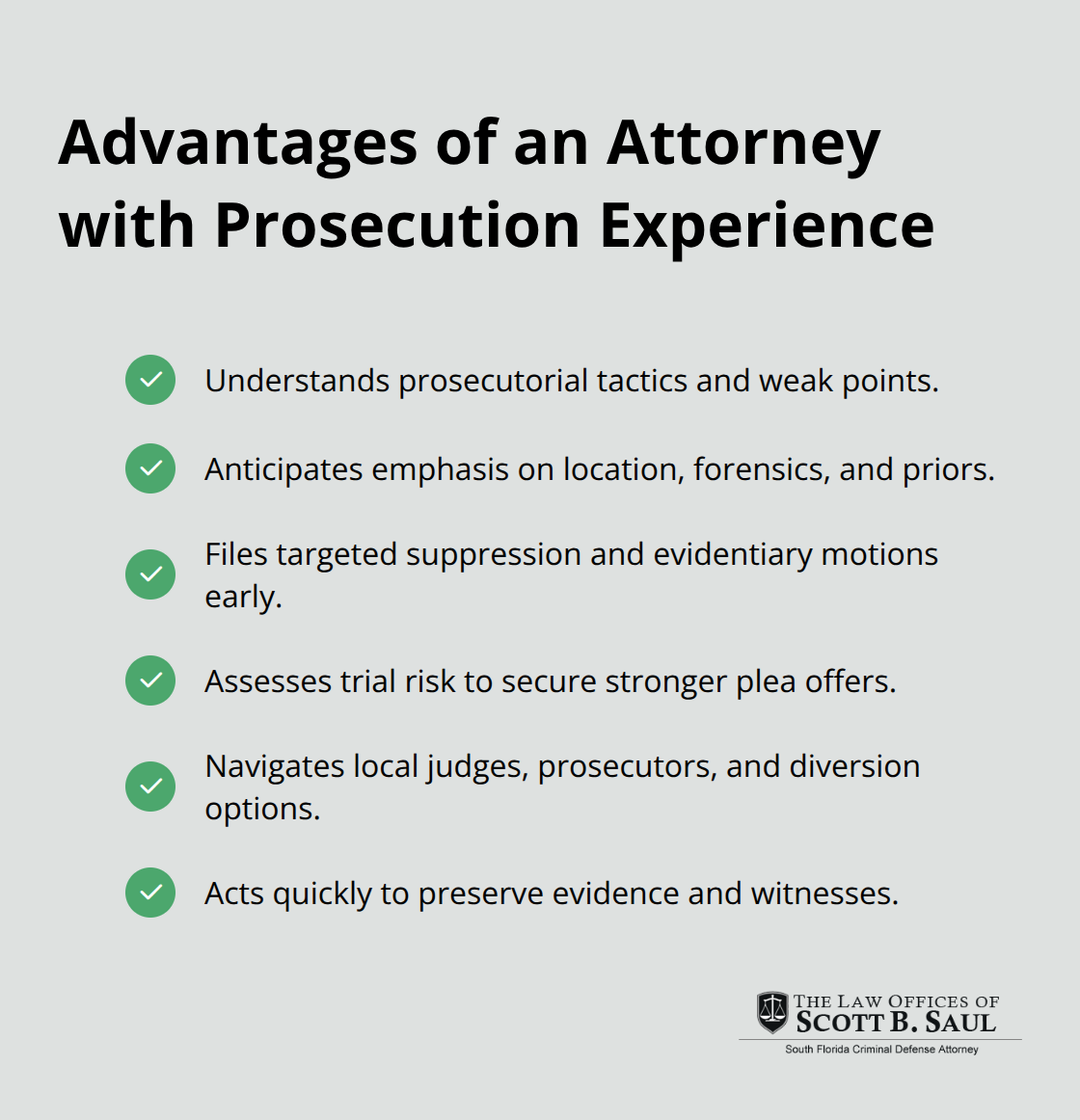
An attorney who spent years as a prosecutor understands the playbook prosecutors follow because they once ran the same plays. This experience translates into specific advantages when defending against gun possession charges. An attorney with prior experience as both a federal and state prosecutor knows exactly how prosecutors build their cases, where they cut corners, and which judges respond to particular arguments. When your attorney has sat at the prosecution table, they understand which evidence prosecutors consider strongest, which witnesses they rely on most heavily, and which procedural mistakes they commonly make. This knowledge becomes actionable intelligence in your defense.
How Prosecutors Build Gun Possession Cases
Prosecutors follow predictable patterns in gun possession cases: they emphasize the location of arrest, they lean heavily on forensic testing, and they use prior convictions to justify mandatory minimum sentences. An attorney who has worked inside the prosecution office recognizes these patterns immediately and prepares counterarguments before the state ever presents its case. When prosecutors know they face an attorney familiar with their office’s tactics, they calculate trial risk differently. A prosecutor confident in their case might offer standard plea terms, but when they face an attorney who understands exactly what evidence will survive suppression motions and what testimony will fall apart under cross-examination, they often reduce offers significantly.
Evidence Discovery and Negotiation Leverage
The difference between hiring a generic criminal defense attorney and one with prosecution experience surfaces most clearly during evidence discovery and plea negotiations. In Florida gun possession cases, this means the difference between a felony conviction carrying mandatory minimums and a negotiated disposition that avoids prison entirely. Your attorney must investigate immediately after arrest, identifying which searches violated Fourth Amendment protections, which evidence chain breaks exist, and which prosecution witnesses have credibility problems. An attorney with prosecution experience knows which of these issues prosecutors take seriously and which ones they dismiss too quickly.
Building Your Defense from Day One
Your attorney must act within days of arrest, not weeks. Evidence preservation, witness interviews, and early investigation determine what defenses remain available later. The Florida criminal justice system moves quickly, and delays work against defendants. An attorney familiar with Florida courts knows which judges favor suppression motions, which prosecutors negotiate seriously on gun charges, and which jurisdictions offer diversion programs for individuals facing gun possession charges. This local knowledge, combined with prosecution experience, transforms abstract legal principles into concrete strategic advantages.
Final Thoughts
Gun possession charges in Florida demand immediate action because the consequences are severe and the window for effective defense closes quickly. The strategies outlined in this guide-challenging illegal searches, exposing chain of custody weaknesses, and leveraging prosecution vulnerabilities-work only when your attorney begins investigating within days of arrest. Waiting weeks or months allows evidence to disappear, witnesses to become unavailable, and prosecutors to solidify their case.
Your defense rests on three pillars: understanding Florida’s mandatory minimum sentencing structure so you grasp what you face, attacking the prosecution’s evidence before trial to create negotiation leverage, and working with an attorney experienced enough to recognize which cases should go to trial and which ones can be resolved through favorable plea negotiations or diversion programs. An attorney with prosecution experience understands how prosecutors think because they once thought the same way. This background translates into concrete advantages when challenging searches, questioning forensic evidence, and negotiating with the state.
We at Law Offices of Scott B. Saul bring extensive criminal defense experience to cases involving gun possession charges throughout South Florida. Contact Law Offices of Scott B. Saul today for a comprehensive consultation about avoiding jail time for illegal gun possession. The sooner you act, the more options remain available to you.
Archives
- February 2026 (5)
- January 2026 (9)
- December 2025 (9)
- November 2025 (8)
- October 2025 (8)
- September 2025 (9)
- August 2025 (8)
- July 2025 (8)
- June 2025 (9)
- May 2025 (9)
- April 2025 (8)
- March 2025 (9)
- February 2025 (8)
- January 2025 (9)
- December 2024 (10)
- November 2024 (5)
- July 2024 (2)
- June 2024 (2)
- May 2024 (2)
- April 2024 (2)
- March 2024 (2)
- February 2024 (2)
- January 2024 (2)
- December 2023 (2)
- November 2023 (2)
- October 2023 (2)
- September 2023 (2)
- August 2023 (1)
- July 2023 (2)
- June 2023 (2)
- May 2023 (2)
- April 2023 (2)
- March 2023 (2)
- February 2023 (2)
- January 2023 (2)
- December 2022 (2)
- November 2022 (2)
- October 2022 (2)
- September 2022 (2)
- August 2022 (2)
- July 2022 (2)
- June 2022 (2)
- May 2022 (2)
- April 2022 (2)
- March 2022 (2)
- February 2022 (2)
- January 2022 (2)
- December 2021 (2)
- November 2021 (2)
- October 2021 (2)
- September 2021 (2)
- August 2021 (2)
- July 2021 (2)
- June 2021 (2)
- May 2021 (2)
- April 2021 (2)
- September 2020 (5)
- July 2020 (4)
- June 2020 (4)
- May 2020 (4)
- April 2020 (5)
- March 2020 (4)
- February 2020 (4)
- January 2020 (4)
- December 2019 (1)
- November 2019 (4)
- October 2019 (4)
- September 2019 (4)
- August 2019 (4)
- July 2019 (5)
- June 2019 (4)
- May 2019 (4)
- April 2019 (4)
- March 2019 (4)
- February 2019 (4)
- January 2019 (4)
- December 2018 (4)
- November 2018 (5)
- October 2018 (5)
- September 2018 (4)
- August 2018 (4)
- July 2018 (7)
- June 2018 (4)
- May 2018 (4)
- April 2018 (8)
- March 2018 (4)
- February 2018 (4)
- January 2018 (4)
- November 2017 (4)
- October 2017 (4)
- September 2017 (4)
- August 2017 (7)
- July 2017 (6)
- June 2017 (4)
- May 2017 (4)
- April 2017 (4)
- March 2017 (4)
- February 2017 (7)
- January 2017 (4)
- December 2016 (7)
- November 2016 (4)
- October 2016 (4)
- September 2016 (10)
- August 2016 (4)
- July 2016 (4)
- June 2016 (4)
- May 2016 (4)
- April 2016 (4)
- March 2016 (4)
- February 2016 (7)
- January 2016 (4)
- December 2015 (5)
- November 2015 (4)
- October 2015 (7)
- September 2015 (4)
- August 2015 (4)
- July 2015 (13)
- June 2015 (9)
- May 2015 (8)
- April 2015 (6)
- March 2015 (4)
- February 2015 (4)
- January 2015 (4)
- December 2014 (4)
- November 2014 (4)
- October 2014 (4)
- September 2014 (3)
Categories
- Adjudication (1)
- Bankruptcy (1)
- Burglary Crimes (3)
- calendar call (1)
- Car Accident (1)
- Criminal Defense (395)
- Cyber Crimes (7)
- DNA (1)
- Domestic Violence (9)
- Drug Crimes (5)
- DUI (12)
- Embezzlement (1)
- Environmental Crimes (4)
- Expungement Law (2)
- Federal Sentencing Law (3)
- Firearm (3)
- Forgery (4)
- General (82)
- Healthcare (3)
- Immigration (1)
- Indentity Theft (1)
- Insurance (5)
- judicial sounding (2)
- Juvenile Crimes (4)
- Manslaughter (4)
- Money Laundering (3)
- Organized Crime (1)
- Racketeering (1)
- Reckless Driving (3)
- RICO (3)
- Sealing and Expunging (2)
- Sex Offense (1)
- Shoplifting (1)
- Suspended Driver's License (1)
- Traffic (4)
- Trending Topics (1)
- White-collar Offenses (1)
