
Leaving the Scene of an Accident in Florida What to Do
By : saulcrim | Category : Criminal Defense | Comments Off on Leaving the Scene of an Accident in Florida What to Do
10th Nov 2025

Florida drivers face serious consequences when leaving the scene of an accident. The state’s hit and run laws carry harsh penalties that can impact your life for years.
We at Law Offices of Scott B. Saul see clients struggle with these complex cases daily. Understanding your rights and options makes the difference between a minor setback and a life-changing conviction.
What Exactly Constitutes Leaving the Scene in Florida
Florida Statute 316.061 defines leaving the scene as the failure to stop immediately after any crash that involves property damage, injury, or death. The law requires drivers to remain at the scene, provide identification information, and render reasonable assistance when injuries occur. Property damage cases under this statute constitute second-degree misdemeanors with penalties up to 60 days in jail and fines. The statute applies even when damage appears minor or when no other person seems present at the scene.
When Property Damage Becomes a Criminal Matter
Property damage hit and run cases carry mandatory penalties that include potential jail time and driver’s license revocation. Courts impose a mandatory $5 surcharge on all fines, which funds the Emergency Medical Services Trust Fund (Florida Statute 316.061). Drivers must provide their name, address, and vehicle registration number to affected parties or leave written notice if no one is present. Florida law enforcement prosecutes these cases aggressively, with prosecutors typically filing second-degree misdemeanor charges for property damage accidents.
How Injury Cases Escalate Penalties Dramatically
Accidents that involve bodily injury elevate charges to third-degree felonies under Florida Statute 316.027, which carry up to five years in prison. When serious bodily injury or death occurs, charges become first-degree felonies with potential 30-year sentences. The law defines serious bodily injury as conditions that create substantial risk of death or significant long-term impairment.
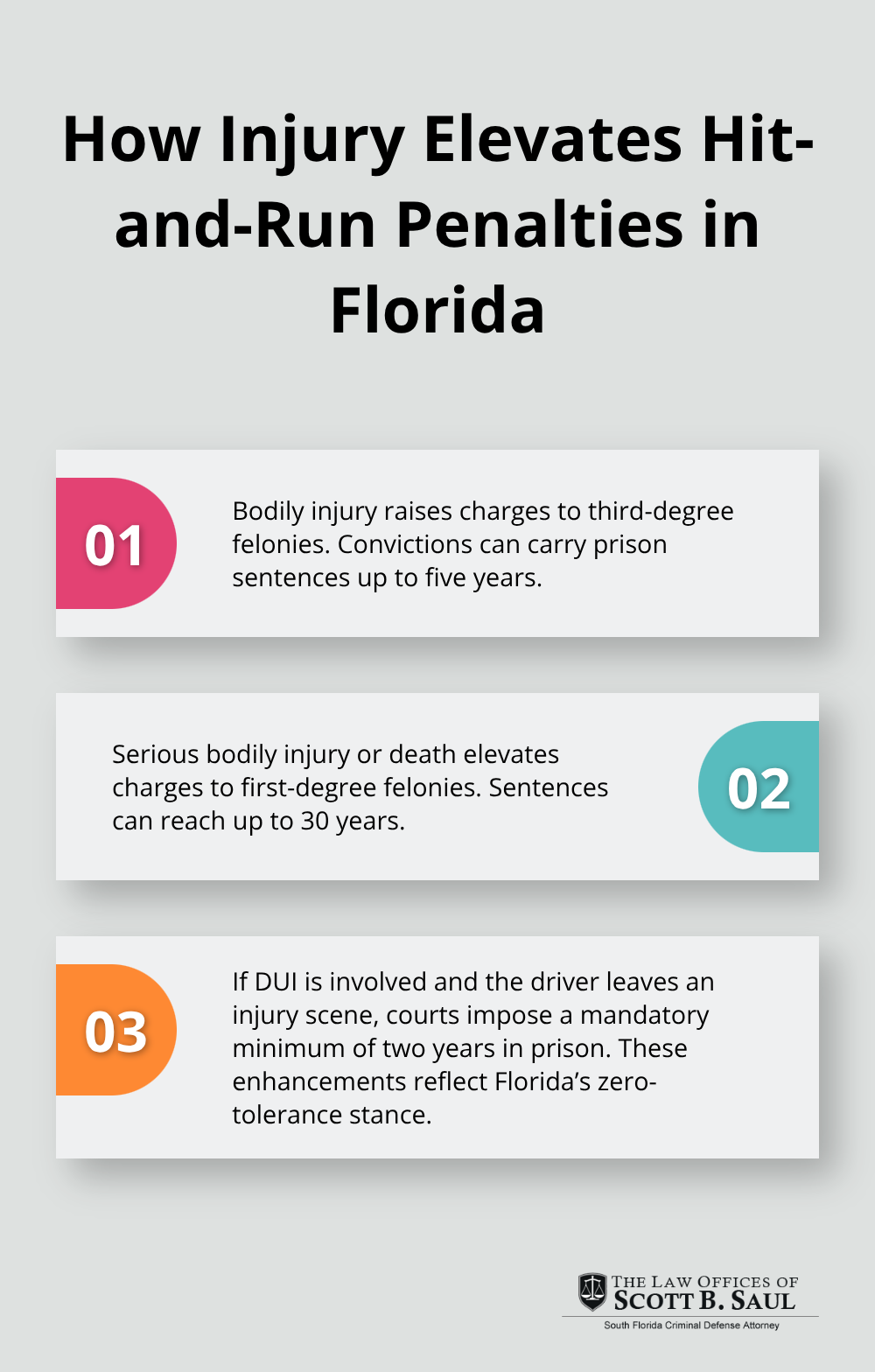
DUI offenders who leave injury scenes face mandatory minimum sentences of two years in prison. These enhanced penalties reflect Florida’s zero-tolerance approach to hit and run cases that involve human harm.
Legal Obligations at Every Accident Scene
Florida law mandates specific duties that drivers must fulfill at accident scenes regardless of fault determination. Drivers must stop immediately, move vehicles away from traffic when possible, and exchange insurance information with all parties involved. The statute requires drivers to render “reasonable assistance” to injured parties, which may include transportation to medical facilities or calling emergency services.
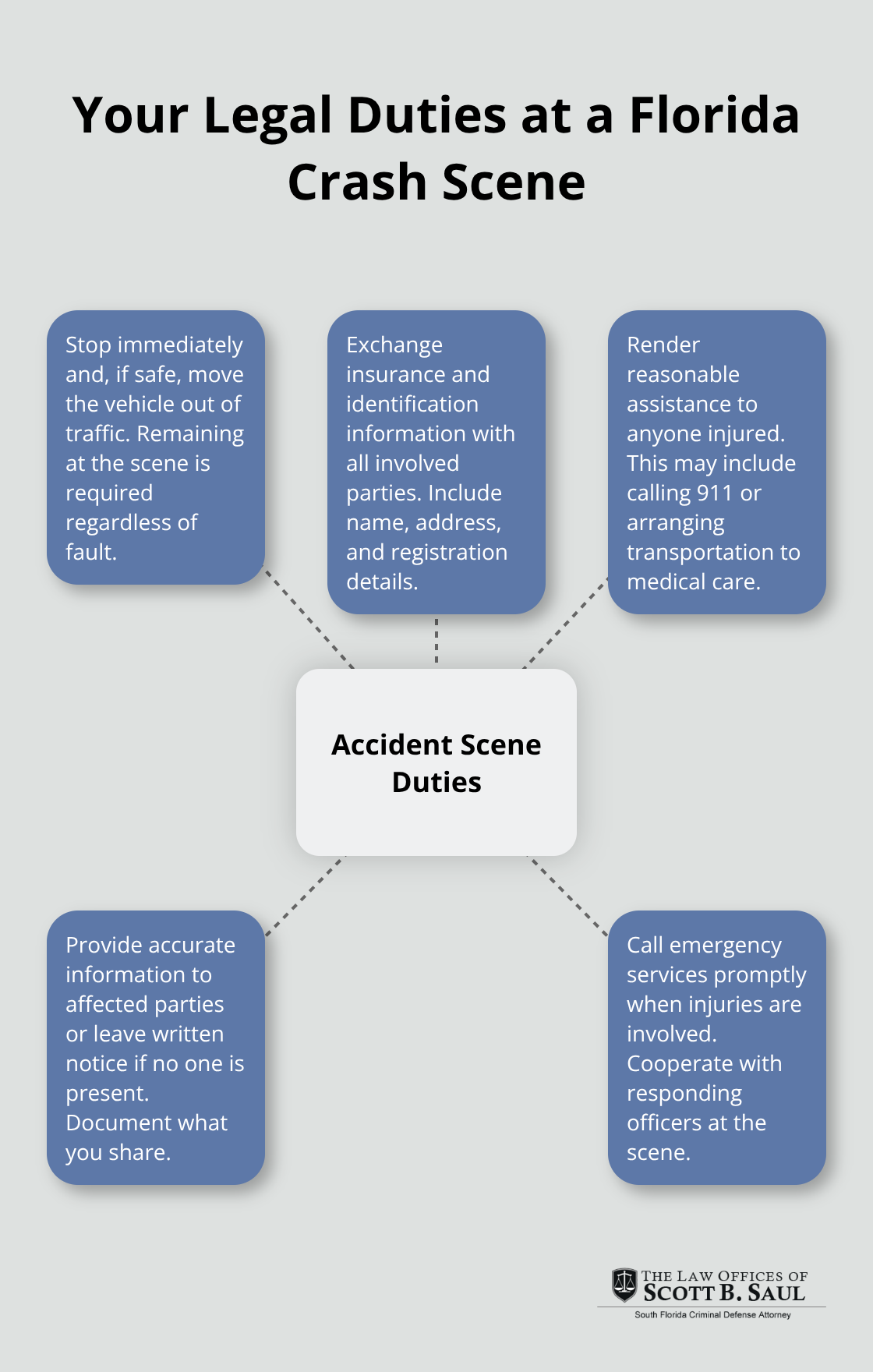
Failure to complete these obligations transforms a simple traffic incident into a criminal matter with lasting consequences that extend far beyond the initial accident.
What Should You Do Immediately After a Hit and Run
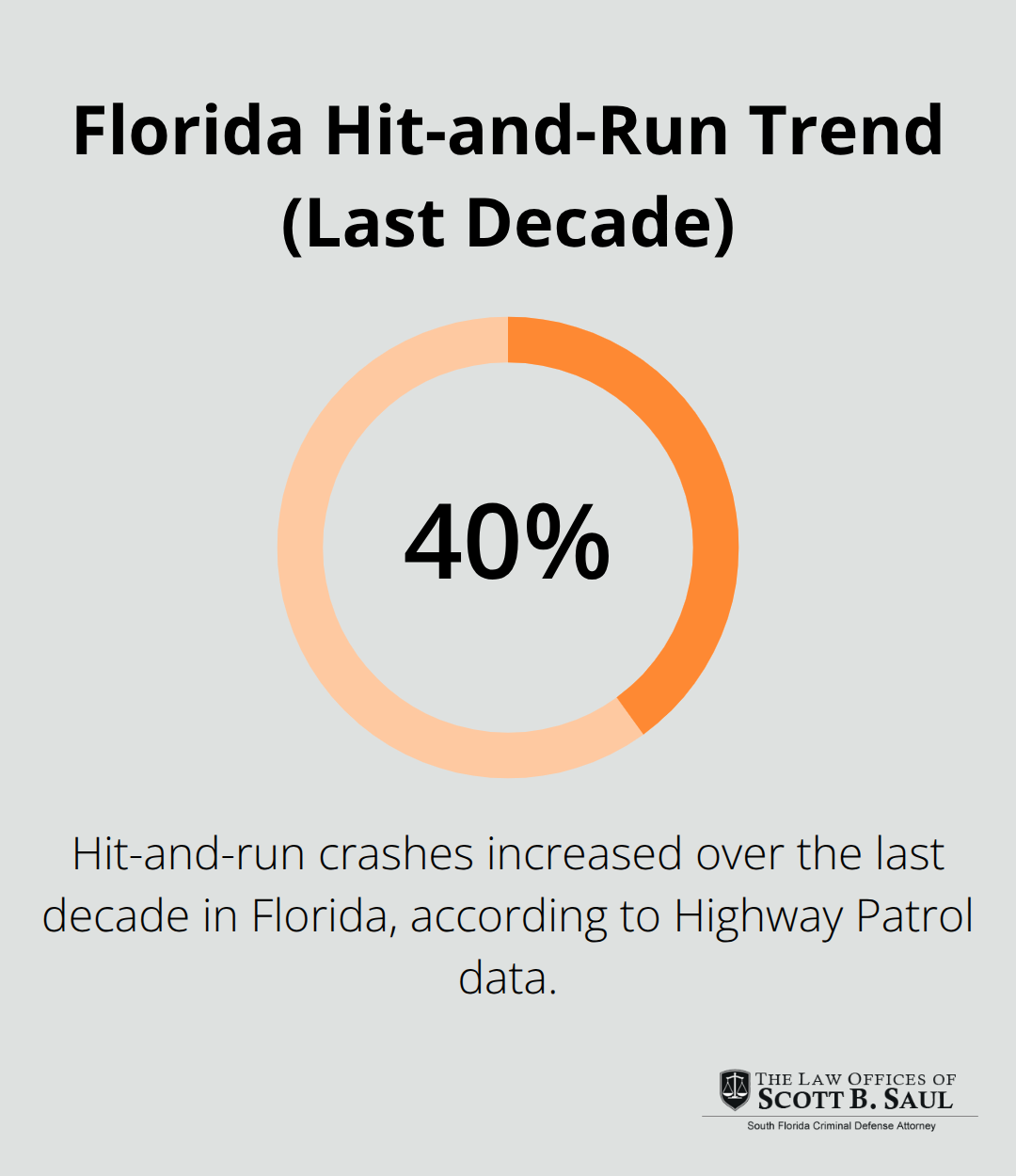
The first 30 minutes after a hit and run incident determine the strength of your case and your safety. Move to a secure location immediately if you can walk, then call 911 to report the incident and request medical attention even if injuries seem minor. Hit-and-run cases have increased by 40% over the last decade in Florida according to Highway Patrol data, making prompt action crucial. Take photos of your vehicle damage, the accident scene, and any visible injuries with your smartphone before anyone moves or cleans up anything. Write down everything you remember about the other vehicle (color, make, model, license plate numbers, and the direction the driver fled).
Document Everything While Memory Stays Fresh
Start to record witness contact information within the first few minutes after police arrive, as bystanders typically leave accident scenes within 15 minutes according to Florida Department of Transportation data. Ask witnesses to provide written statements about what they observed, which includes the other vehicle’s description and driver behavior. Take photos of all four sides of your vehicle, street signs, traffic signals, and any debris from the other car left at the scene.
Florida courts accept smartphone video evidence, so record a walkthrough of the scene while you explain what happened in your own words.
Report to Authorities and Insurance Within 24 Hours
Florida law requires accident reports within 10 days for crashes involving injury, death, or at least $500 estimated property damage, but you strengthen your position significantly when you file within 24 hours. Contact your insurance company immediately after you speak with police, as most policies require prompt notification of hit and run claims. Provide your insurer with the police report number, photos, witness statements, and medical documentation if you sought treatment. Request a copy of the official police report within 5 business days, as details often change between the initial report and final version that officers file.
Seek Medical Attention Even for Minor Symptoms
Visit an emergency room or urgent care facility within 24 hours even if you feel fine after the accident. Medical professionals can identify injuries that adrenaline masks during the initial shock period. Document all medical visits, treatments, and prescriptions as this evidence supports your insurance claim and any potential legal action. Keep all medical receipts and follow up with specialists if doctors recommend additional treatment or evaluation.
These immediate actions protect your health and legal interests, but the next phase requires strategic decisions about legal representation and defense options that can make or break your case outcome.
What Defense Options Exist for Hit and Run Charges
Identity and Knowledge Challenges Form Strong Defense Foundations
Driver identity disputes represent the most successful defense strategy in hit and run prosecutions, with Florida courts requiring prosecutors to prove beyond reasonable doubt that the accused person actually operated the vehicle. Defense attorneys attack weak identification evidence by challenging witness reliability, questioning surveillance footage quality, and exposing gaps in police investigation procedures. Key evidence includes witness testimonies, surveillance footage, and vehicle identification like license plates. Lack of knowledge defenses work when drivers genuinely did not realize an accident occurred, particularly in minor contact situations where damage appears minimal or weather conditions obscured visibility. Florida appellate courts have consistently upheld dismissals when prosecutors cannot establish the defendant’s actual awareness of the collision through concrete evidence rather than assumptions.
Witness Credibility Challenges Weaken Prosecution Cases
Defense teams examine witness statements for inconsistencies, bias, and reliability issues that undermine prosecution evidence. Witnesses often provide conflicting descriptions of vehicle colors, license plate numbers, and driver characteristics (especially in poor lighting conditions or high-stress situations). Cross-examination reveals memory gaps, alcohol consumption, or distractions that affected witness observations at the time of the incident. Expert testimony about human perception limitations and memory reliability can cast doubt on eyewitness identification accuracy.
Negotiation Strategies That Avoid Felony Convictions
Early intervention with prosecutors yields significantly better outcomes than waiting for formal charges, with immediate attorney contact often reducing potential sentences substantially compared to cases without early representation. Pre-trial intervention programs allow first-time offenders to avoid criminal records through community service and driver education courses, but prosecutors typically offer these alternatives only within the first 30 days after arrest. Plea negotiations often reduce felony injury charges to misdemeanor charges when medical evidence shows injuries were minor or pre-existing conditions contributed to harm. Alternative sentences include house arrest with GPS monitoring, weekend jail programs, and extended probation periods that preserve employment and family stability while satisfying court requirements.
Final Thoughts
Hit and run charges in Florida demand immediate professional legal intervention to protect your rights and future. The complexity of leaving the scene of an accident Florida laws requires experienced representation that understands both prosecution tactics and defense strategies. We at Law Offices of Scott B. Saul respond quickly when clients face arrest or investigation in Miami-Dade and Broward County.
Our background as former prosecutors provides unique insights into how these cases develop and what weaknesses exist in prosecution arguments. We specialize in cases where tourists and foreign travelers face additional challenges when they navigate Florida’s legal system. Early intervention frequently prevents charges from being filed or reduces felony accusations to misdemeanors.
Time works against you in hit and run cases because evidence disappears, witnesses forget details, and prosecutors build stronger cases while you wait. Evidence collection becomes more difficult as days pass (particularly surveillance footage that businesses often delete after 30 days). Contact our experienced criminal defense team immediately to schedule a comprehensive consultation and begin to protect your rights today.
Archives
- January 2026 (9)
- December 2025 (9)
- November 2025 (8)
- October 2025 (8)
- September 2025 (9)
- August 2025 (8)
- July 2025 (8)
- June 2025 (9)
- May 2025 (9)
- April 2025 (8)
- March 2025 (9)
- February 2025 (8)
- January 2025 (9)
- December 2024 (10)
- November 2024 (5)
- July 2024 (2)
- June 2024 (2)
- May 2024 (2)
- April 2024 (2)
- March 2024 (2)
- February 2024 (2)
- January 2024 (2)
- December 2023 (2)
- November 2023 (2)
- October 2023 (2)
- September 2023 (2)
- August 2023 (1)
- July 2023 (2)
- June 2023 (2)
- May 2023 (2)
- April 2023 (2)
- March 2023 (2)
- February 2023 (2)
- January 2023 (2)
- December 2022 (2)
- November 2022 (2)
- October 2022 (2)
- September 2022 (2)
- August 2022 (2)
- July 2022 (2)
- June 2022 (2)
- May 2022 (2)
- April 2022 (2)
- March 2022 (2)
- February 2022 (2)
- January 2022 (2)
- December 2021 (2)
- November 2021 (2)
- October 2021 (2)
- September 2021 (2)
- August 2021 (2)
- July 2021 (2)
- June 2021 (2)
- May 2021 (2)
- April 2021 (2)
- September 2020 (5)
- July 2020 (4)
- June 2020 (4)
- May 2020 (4)
- April 2020 (5)
- March 2020 (4)
- February 2020 (4)
- January 2020 (4)
- December 2019 (1)
- November 2019 (4)
- October 2019 (4)
- September 2019 (4)
- August 2019 (4)
- July 2019 (5)
- June 2019 (4)
- May 2019 (4)
- April 2019 (4)
- March 2019 (4)
- February 2019 (4)
- January 2019 (4)
- December 2018 (4)
- November 2018 (5)
- October 2018 (5)
- September 2018 (4)
- August 2018 (4)
- July 2018 (7)
- June 2018 (4)
- May 2018 (4)
- April 2018 (8)
- March 2018 (4)
- February 2018 (4)
- January 2018 (4)
- November 2017 (4)
- October 2017 (4)
- September 2017 (4)
- August 2017 (7)
- July 2017 (6)
- June 2017 (4)
- May 2017 (4)
- April 2017 (4)
- March 2017 (4)
- February 2017 (7)
- January 2017 (4)
- December 2016 (7)
- November 2016 (4)
- October 2016 (4)
- September 2016 (10)
- August 2016 (4)
- July 2016 (4)
- June 2016 (4)
- May 2016 (4)
- April 2016 (4)
- March 2016 (4)
- February 2016 (7)
- January 2016 (4)
- December 2015 (5)
- November 2015 (4)
- October 2015 (7)
- September 2015 (4)
- August 2015 (4)
- July 2015 (13)
- June 2015 (9)
- May 2015 (8)
- April 2015 (6)
- March 2015 (4)
- February 2015 (4)
- January 2015 (4)
- December 2014 (4)
- November 2014 (4)
- October 2014 (4)
- September 2014 (3)
Categories
- Adjudication (1)
- Bankruptcy (1)
- Burglary Crimes (3)
- calendar call (1)
- Car Accident (1)
- Criminal Defense (390)
- Cyber Crimes (7)
- DNA (1)
- Domestic Violence (9)
- Drug Crimes (5)
- DUI (12)
- Embezzlement (1)
- Environmental Crimes (4)
- Expungement Law (2)
- Federal Sentencing Law (3)
- Firearm (3)
- Forgery (4)
- General (82)
- Healthcare (3)
- Immigration (1)
- Indentity Theft (1)
- Insurance (5)
- judicial sounding (2)
- Juvenile Crimes (4)
- Manslaughter (4)
- Money Laundering (3)
- Organized Crime (1)
- Racketeering (1)
- Reckless Driving (3)
- RICO (3)
- Sealing and Expunging (2)
- Sex Offense (1)
- Shoplifting (1)
- Suspended Driver's License (1)
- Traffic (4)
- Trending Topics (1)
- White-collar Offenses (1)
