
Understanding Drug Possession Penalties and Sentencing
By : saulcrim | Category : Criminal Defense | Comments Off on Understanding Drug Possession Penalties and Sentencing
24th Jul 2025

Drug possession penalties and sentencing can have serious consequences for those charged with these offenses. The severity of these penalties often depends on various factors, including the type and quantity of the drug involved.
At Law Offices of Scott B. Saul, we understand the complexities of drug possession cases and their potential impact on individuals’ lives. This blog post aims to provide a clear overview of drug possession charges, the factors that influence penalties, and the common consequences faced by those convicted.
Types of Drug Possession Charges
Drug possession charges come in various forms, each with its own set of legal implications and potential penalties. Understanding these distinctions is essential for anyone facing such charges.
Simple Possession
Simple possession is the most common drug charge. It typically involves having a small amount of a controlled substance for personal use. In Florida, possessing any controlled substance, except as lawfully sold, manufactured, or delivered, can result in a $500 fine and 100 hours of public service.
Possession with Intent to Distribute
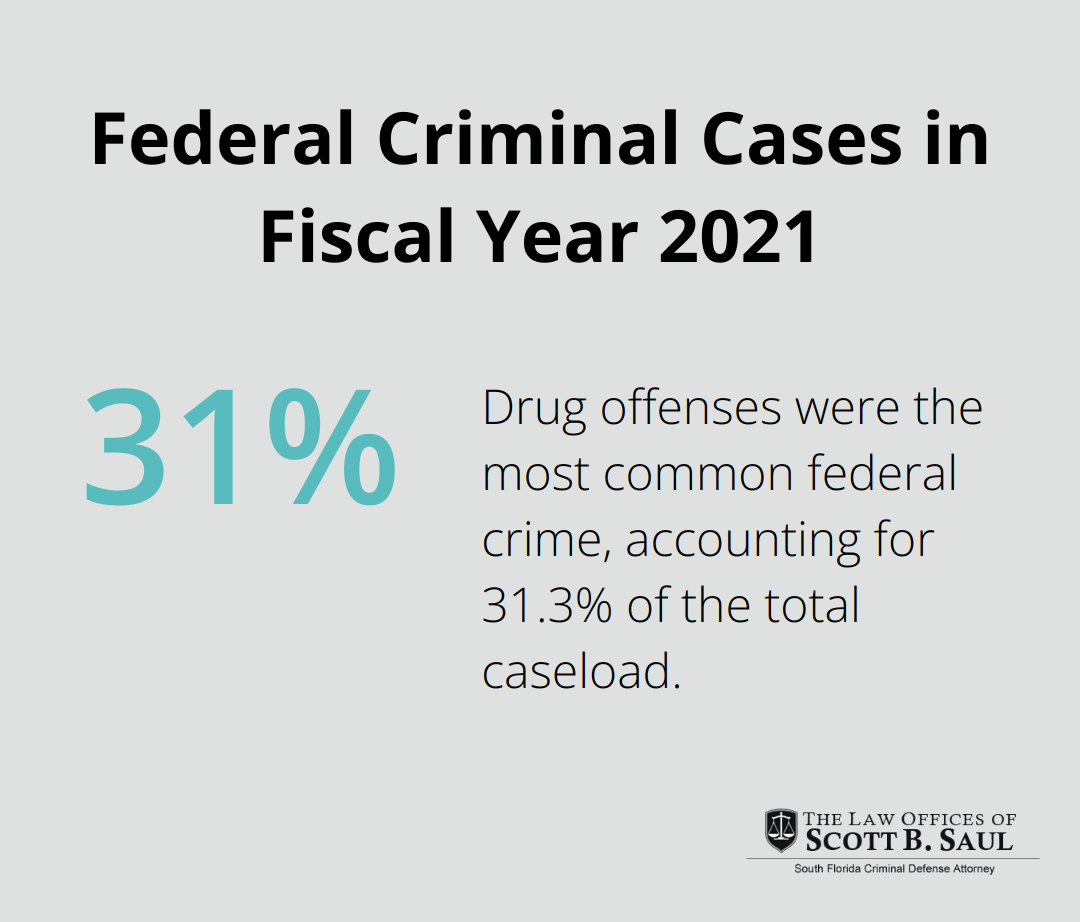
This charge is more severe than simple possession. Law enforcement may suspect intent to distribute based on factors such as the quantity of drugs, packaging materials, or large amounts of cash. According to the United States Sentencing Commission, drug offenses were the most common federal crime in fiscal year 2021, accounting for 31.3 percent of the total caseload.
Constructive Possession
Constructive possession occurs when a person doesn’t physically have drugs on them but has control over the area where drugs are found. This could be a car, home, or even a shared living space. The concept of constructive possession can be complex and often requires skilled legal representation to challenge.
Possession of Drug Paraphernalia
This charge often accompanies other drug charges and involves items used to consume, produce, or distribute drugs. Common examples include pipes, scales, and syringes.
Understanding these different types of drug possession charges is the first step in building a strong defense. Each case is unique, and the specific circumstances surrounding the arrest can significantly impact the potential outcomes. The next section will explore the various factors that influence drug possession penalties, providing a comprehensive view of the legal landscape surrounding these charges.
Factors Influencing Drug Possession Penalties
Drug possession penalties vary widely based on several key factors. Understanding these can help individuals facing charges better navigate the legal landscape.

Drug Type and Quantity
The type and amount of drug involved significantly impact potential penalties. Possession of marijuana often carries lighter sentences compared to cocaine or heroin. In Florida, possession of less than 20 grams of marijuana is a misdemeanor, while any amount of cocaine is a felony. The United States Sentencing Commission reports that in fiscal year 2021, methamphetamine offenses accounted for 48% of all drug trafficking cases (highlighting its severity in the eyes of the law).
Criminal History
Prior convictions play a crucial role in sentencing. First-time offenders may qualify for diversion programs or reduced sentences, while repeat offenders face harsher penalties. Research shows that individuals with previous convictions have higher rates of recidivism. Regarding criminal background, most substance-using individuals also reveal a history of prior offenses.
Location of the Offense
The location where drug possession occurs can significantly affect the charges. Possession near schools, parks, or other protected areas often results in enhanced penalties. Drug-free zone policies near schools have led to substantially higher penalties for individuals caught using or selling drugs within these protected zones compared to those engaging in the same conduct outside the zones.
Aggravating Factors
The presence of weapons, large sums of cash, or evidence of drug distribution can escalate simple possession charges to more serious offenses. According to the DEA’s 2020 National Drug Threat Assessment, drug trafficking organizations increasingly use firearms to protect their operations, leading to more severe charges when weapons are found alongside drugs.
Legal Representation
The quality of legal representation can significantly influence the outcome of drug possession cases. Experienced attorneys can challenge evidence, negotiate plea deals, and advocate for alternative sentencing options. They can also help clients understand their rights and the potential consequences of their charges. The next section will explore the common penalties for drug possession and how they apply in various scenarios.
Common Penalties for Drug Possession
Drug offenses overtook immigration offenses as the most common federal crime in fiscal year 2021, accounting for 31.3% of the total caseload, highlighting the prevalence of these charges.
Fines and Monetary Penalties
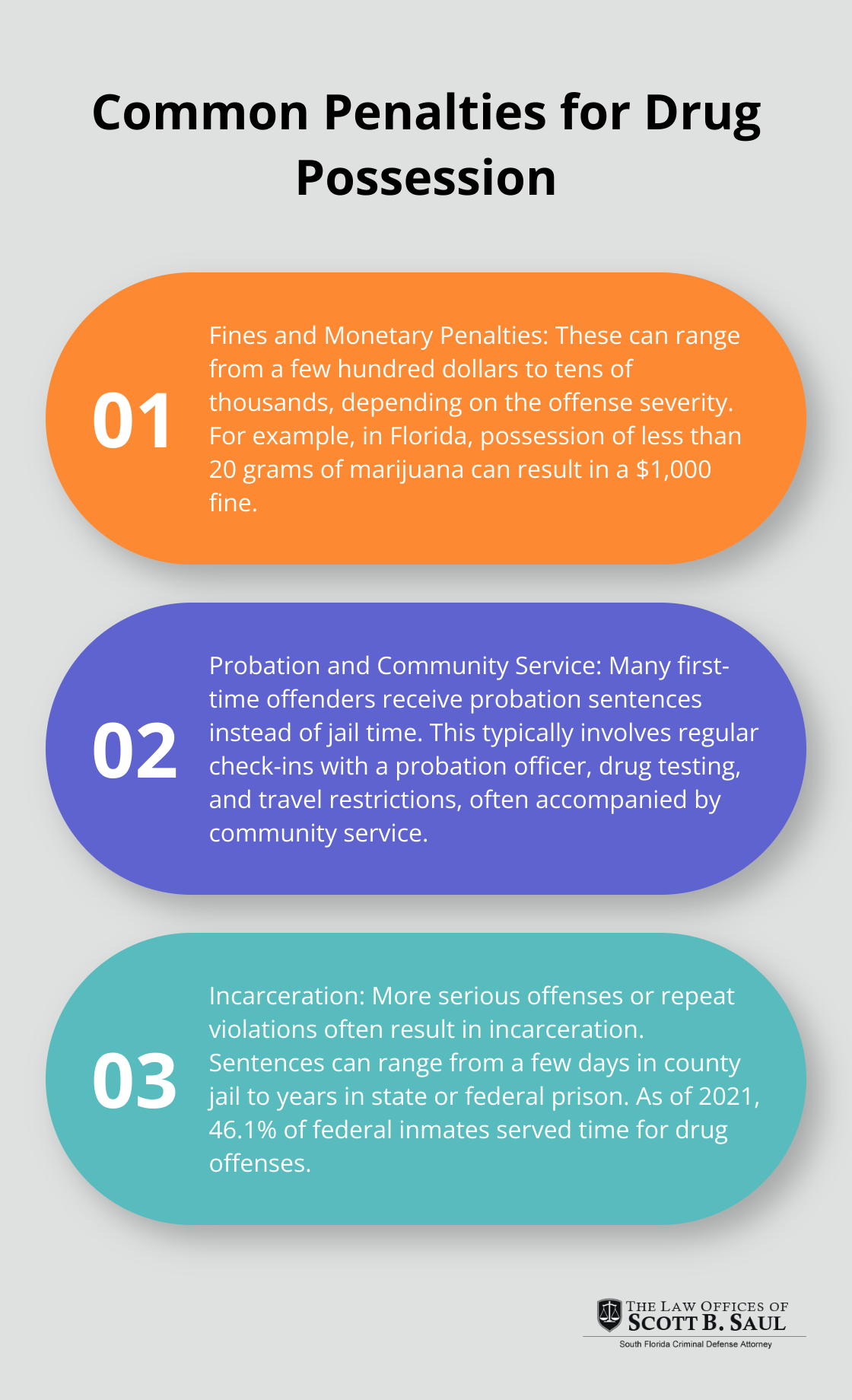
Fines for drug possession can range from a few hundred dollars to tens of thousands, depending on the offense severity. In Florida, possession of less than 20 grams of marijuana can result in a $1,000 fine, while cocaine possession can lead to fines up to $5,000. These fines often come with court costs and fees, which add significant financial burden to those convicted.
Probation and Community Service
Many first-time offenders receive probation sentences instead of jail time. Probation typically involves regular check-ins with a probation officer, drug testing, and travel restrictions. Community service often accompanies probation, with hours varying based on the offense.
Mandatory Drug Treatment Programs
Courts increasingly recognize the importance of addressing underlying substance abuse issues. Many jurisdictions now mandate participation in drug treatment programs as part of sentencing. These programs range from outpatient counseling to intensive inpatient rehabilitation. The National Institute on Drug Abuse states that every dollar invested in addiction treatment programs yields a return of between $4 and $7 in reduced drug-related crime, criminal justice costs, and theft.
Incarceration and Prison Sentences
More serious offenses or repeat violations often result in incarceration. Sentences can range from a few days in county jail to years in state or federal prison. The Federal Bureau of Prisons reports that as of 2021, 46.1% of inmates served time for drug offenses, underscoring the severity with which the justice system treats these crimes.
Legal Representation
The quality of legal representation can significantly influence the outcome of drug possession cases. Experienced attorneys can challenge evidence, negotiate plea deals, and advocate for alternative sentencing options. They can also help clients understand their rights and the potential consequences of their charges.
Final Thoughts
Drug possession penalties and sentencing can profoundly impact lives, with consequences ranging from fines to incarceration. The severity often depends on factors such as drug type, quantity, and the defendant’s criminal history. Understanding these complexities proves essential for anyone facing drug possession charges.
Experienced legal representation becomes paramount when confronting potential life-altering convictions. A skilled attorney can navigate drug laws, challenge evidence, and advocate for alternative sentencing options. They provide invaluable guidance throughout the legal process, ensuring defendants understand their rights and potential case outcomes.
At Law Offices of Scott B. Saul, we bring over three decades of criminal defense experience to drug possession cases. Our firm specializes in defending tourists and foreign travelers facing charges in South Florida (leveraging our extensive trial experience). We understand drug possession laws’ nuances and work tirelessly to protect our clients’ rights and futures.
Archives
- February 2026 (5)
- January 2026 (9)
- December 2025 (9)
- November 2025 (8)
- October 2025 (8)
- September 2025 (9)
- August 2025 (8)
- July 2025 (8)
- June 2025 (9)
- May 2025 (9)
- April 2025 (8)
- March 2025 (9)
- February 2025 (8)
- January 2025 (9)
- December 2024 (10)
- November 2024 (5)
- July 2024 (2)
- June 2024 (2)
- May 2024 (2)
- April 2024 (2)
- March 2024 (2)
- February 2024 (2)
- January 2024 (2)
- December 2023 (2)
- November 2023 (2)
- October 2023 (2)
- September 2023 (2)
- August 2023 (1)
- July 2023 (2)
- June 2023 (2)
- May 2023 (2)
- April 2023 (2)
- March 2023 (2)
- February 2023 (2)
- January 2023 (2)
- December 2022 (2)
- November 2022 (2)
- October 2022 (2)
- September 2022 (2)
- August 2022 (2)
- July 2022 (2)
- June 2022 (2)
- May 2022 (2)
- April 2022 (2)
- March 2022 (2)
- February 2022 (2)
- January 2022 (2)
- December 2021 (2)
- November 2021 (2)
- October 2021 (2)
- September 2021 (2)
- August 2021 (2)
- July 2021 (2)
- June 2021 (2)
- May 2021 (2)
- April 2021 (2)
- September 2020 (5)
- July 2020 (4)
- June 2020 (4)
- May 2020 (4)
- April 2020 (5)
- March 2020 (4)
- February 2020 (4)
- January 2020 (4)
- December 2019 (1)
- November 2019 (4)
- October 2019 (4)
- September 2019 (4)
- August 2019 (4)
- July 2019 (5)
- June 2019 (4)
- May 2019 (4)
- April 2019 (4)
- March 2019 (4)
- February 2019 (4)
- January 2019 (4)
- December 2018 (4)
- November 2018 (5)
- October 2018 (5)
- September 2018 (4)
- August 2018 (4)
- July 2018 (7)
- June 2018 (4)
- May 2018 (4)
- April 2018 (8)
- March 2018 (4)
- February 2018 (4)
- January 2018 (4)
- November 2017 (4)
- October 2017 (4)
- September 2017 (4)
- August 2017 (7)
- July 2017 (6)
- June 2017 (4)
- May 2017 (4)
- April 2017 (4)
- March 2017 (4)
- February 2017 (7)
- January 2017 (4)
- December 2016 (7)
- November 2016 (4)
- October 2016 (4)
- September 2016 (10)
- August 2016 (4)
- July 2016 (4)
- June 2016 (4)
- May 2016 (4)
- April 2016 (4)
- March 2016 (4)
- February 2016 (7)
- January 2016 (4)
- December 2015 (5)
- November 2015 (4)
- October 2015 (7)
- September 2015 (4)
- August 2015 (4)
- July 2015 (13)
- June 2015 (9)
- May 2015 (8)
- April 2015 (6)
- March 2015 (4)
- February 2015 (4)
- January 2015 (4)
- December 2014 (4)
- November 2014 (4)
- October 2014 (4)
- September 2014 (3)
Categories
- Adjudication (1)
- Bankruptcy (1)
- Burglary Crimes (3)
- calendar call (1)
- Car Accident (1)
- Criminal Defense (395)
- Cyber Crimes (7)
- DNA (1)
- Domestic Violence (9)
- Drug Crimes (5)
- DUI (12)
- Embezzlement (1)
- Environmental Crimes (4)
- Expungement Law (2)
- Federal Sentencing Law (3)
- Firearm (3)
- Forgery (4)
- General (82)
- Healthcare (3)
- Immigration (1)
- Indentity Theft (1)
- Insurance (5)
- judicial sounding (2)
- Juvenile Crimes (4)
- Manslaughter (4)
- Money Laundering (3)
- Organized Crime (1)
- Racketeering (1)
- Reckless Driving (3)
- RICO (3)
- Sealing and Expunging (2)
- Sex Offense (1)
- Shoplifting (1)
- Suspended Driver's License (1)
- Traffic (4)
- Trending Topics (1)
- White-collar Offenses (1)
