
What Is Third Degree Drug Possession?
By : saulcrim | Category : Criminal Defense | Comments Off on What Is Third Degree Drug Possession?
21st Aug 2025

Drug possession charges can have serious consequences, and understanding the specifics of these charges is vital. At Law Offices of Scott B. Saul, we often encounter clients asking, “What is 3rd degree drug possession?”
This blog post will explore the definition, legal implications, and potential defenses for third degree drug possession charges. We’ll also discuss how proper legal representation can make a significant difference in the outcome of your case.
What Constitutes Third Degree Drug Possession?
Defining Third Degree Drug Possession
Third degree drug possession is a serious offense that falls between minor drug infractions and more severe drug trafficking charges. Most jurisdictions classify it as a felony, which carries significant legal consequences. This charge typically involves the possession of a controlled substance without a valid prescription or legal authorization. The type and quantity of the drug differentiate it from other degrees. Unlike first or second degree charges (which often involve intent to distribute), third degree charges usually focus on personal possession of larger amounts.
Common Drugs in Third Degree Cases
The substances most frequently associated with third degree possession charges include:
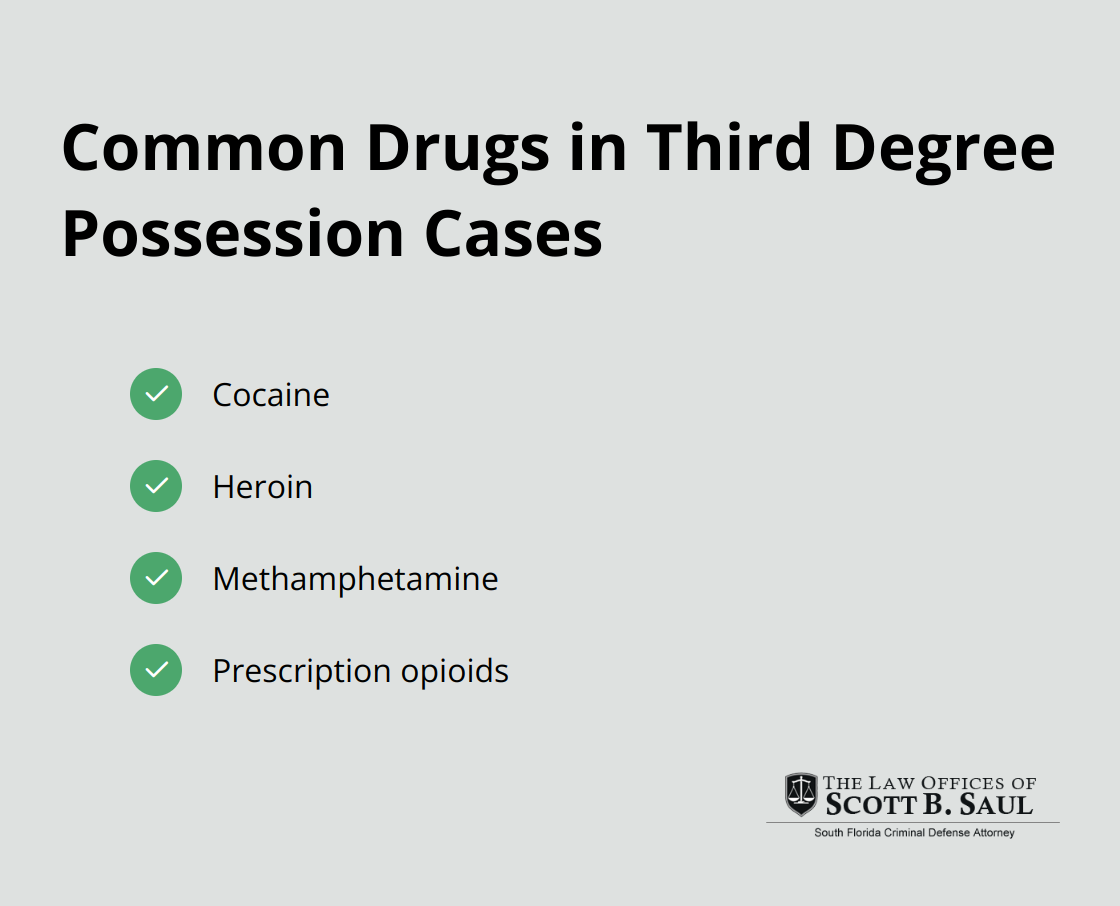
However, the specific drugs can vary depending on state laws. For example, in Minnesota, a person who unlawfully sells one or more mixtures containing a narcotic drug may face third degree charges.
Quantity Thresholds
The amount of drugs that triggers a third degree possession charge differs by substance and jurisdiction. These thresholds can change with legislative updates, so it’s essential to stay informed about current laws.
Impact of Quantity on Charges
The quantity of drugs involved can significantly impact a case. Even small differences in the amount can mean the difference between a misdemeanor and a felony charge (potentially altering the course of a person’s life). For instance, possession of marijuana can result in different penalties depending on the amount. According to FindLaw, penalties for marijuana possession can range from fines for small amounts to up to 60 years in prison for large quantities in some states.
Legal Implications
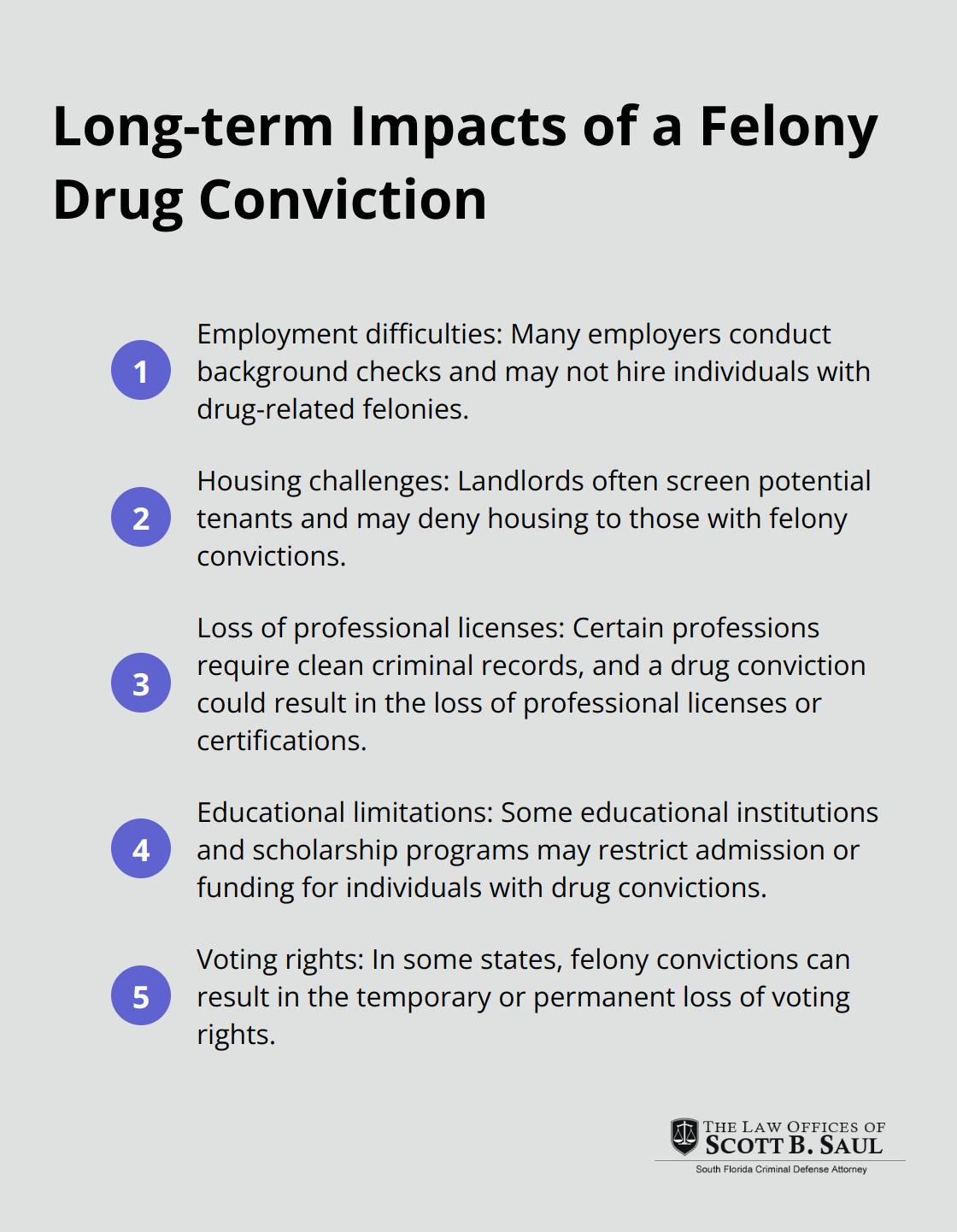
Third degree drug possession charges carry serious legal implications. Convictions often result in hefty fines, probation, and potential jail time. Moreover, a felony conviction can have long-lasting effects on employment opportunities, housing options, and various civil rights (such as voting or owning firearms). The severity of these consequences underscores the importance of understanding the specifics of third degree drug possession charges and seeking appropriate legal representation.
What Are the Legal Consequences of Third Degree Drug Possession?
Third degree drug possession carries severe legal repercussions that can significantly impact an individual’s life. The penalties for this offense vary by jurisdiction but generally include substantial fines, potential jail time, and long-lasting effects on one’s criminal record and future prospects.
Fines and Financial Penalties
Fines for third degree drug possession can be steep, with penalties of up to $500,000 in some cases. These financial penalties can create a significant burden, potentially leading to long-term debt or financial instability.
Incarceration and Probation
Jail time is a real possibility for those convicted of third degree drug possession. Sentences can be up to 25 years, depending on factors such as prior convictions and the type and quantity of drugs involved. In some cases, judges may opt for probation instead of or in addition to jail time. Probation typically involves regular check-ins with a probation officer, drug testing, and restrictions on travel and association with certain individuals.
Long-Term Impact on Criminal Record
A third degree drug possession conviction affects one’s criminal record most enduringly. A felony conviction can have far-reaching implications, including:
Collateral Consequences
Beyond the immediate legal penalties, a third degree drug possession conviction can lead to various collateral consequences. These may include restrictions on international travel, loss of firearm ownership rights, and potential impacts on child custody arrangements. Additionally, the stigma associated with a drug conviction can strain personal relationships and social standing within the community.
The Importance of Legal Representation
The severity of these consequences highlights the need for experienced legal representation. A skilled attorney can navigate the complexities of drug possession cases, potentially reducing charges or negotiating alternative sentencing options (such as drug treatment programs). They can also help protect the defendant’s rights throughout the legal process, ensuring fair treatment and the best possible outcome.
As we move forward, we will explore various defense strategies that can be employed in third degree drug possession cases, providing insight into how individuals can protect their rights and future when facing these serious charges.
How Can You Defend Against Third Degree Drug Possession Charges?
Challenge the Legality of Search and Seizure
One of the most effective defenses against drug possession charges questions the legality of the search that led to the discovery of the drugs. The Fourth Amendment protects individuals from unreasonable searches and seizures, and law enforcement must follow strict procedures when conducting searches.
If the police conducted a warrantless search without probable cause or your consent, a court may deem any evidence obtained inadmissible. This can lead to the dismissal of charges or significantly weaken the prosecution’s case. For example, if an officer searched your vehicle during a routine traffic stop without reasonable suspicion of criminal activity, your attorney might file a motion to suppress the evidence.
Question Ownership and Control
Another effective strategy challenges the prosecution’s claim that you had possession or control over the drugs. This defense proves particularly relevant in cases where drugs were found in a shared space (such as a vehicle with multiple occupants or a shared apartment).
The prosecution must prove beyond a reasonable doubt that you knew about the drugs and had control over them. If your attorney can demonstrate that you were unaware of the drugs’ presence or that they belonged to someone else, it can create reasonable doubt and potentially lead to an acquittal.
Explore Alternative Sentencing Options
For some clients, especially those who struggle with substance abuse issues, exploring alternative sentencing options can provide a viable strategy. Many jurisdictions offer drug court programs or diversion programs that focus on rehabilitation rather than punishment.
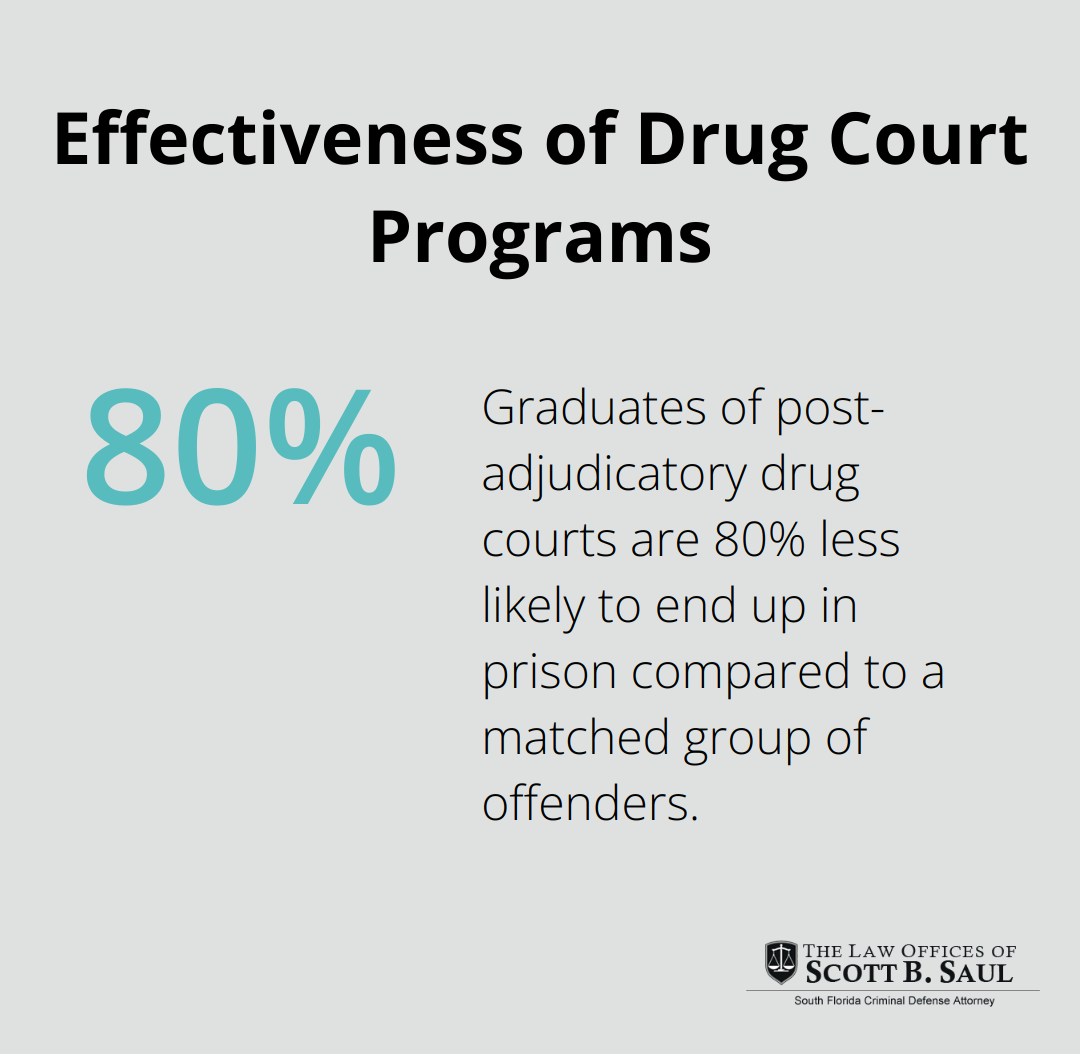
These programs typically involve drug treatment, counseling, and regular drug testing. Successful completion of such a program can result in reduced charges or even dismissal of the case. For instance, the Drug Court Program in Miami-Dade County has helped numerous individuals avoid conviction while addressing their underlying substance abuse issues. Graduates of post-adjudicatory drug courts were found to be 80% less likely to end up in prison compared to a matched group of offenders.
Negotiate Plea Bargains
In some cases, negotiating a plea bargain might offer the best course of action. This involves pleading guilty to a lesser charge in exchange for a more lenient sentence. An experienced attorney can often negotiate favorable terms, such as reduced jail time, lower fines, or probation instead of incarceration.
Scrutinize Laboratory Analysis
The accuracy of drug testing procedures can also face challenges. Errors in the handling, storage, or analysis of drug evidence can occur, potentially leading to false positive results or misidentification of substances. Scrutiny of the chain of custody and demands for independent testing may uncover discrepancies that can weaken the prosecution’s case.
Final Thoughts
Third degree drug possession carries severe consequences. It involves unlawful possession of controlled substances, often in quantities suggesting personal use rather than distribution. The legal ramifications of a conviction include hefty fines, potential jail time, and long-lasting impacts on one’s criminal record and future opportunities.
Understanding what is 3rd degree drug possession and its implications proves essential for anyone facing such charges. The complexities of drug laws, varying thresholds for different substances, and the potential for life-altering consequences highlight the need for experienced legal representation. Defending against these charges requires a strategic approach, from challenging search legality to exploring alternative sentencing options.
At the Law Offices of Scott B. Saul, we bring decades of experience in criminal defense to drug possession cases. We understand the nuances of Florida’s drug laws and provide personalized attention, comprehensive case evaluations, and aggressive representation to protect our clients’ rights and futures. If you face third degree drug possession charges, seek prompt legal counsel to improve your case outcome.
Archives
- February 2026 (5)
- January 2026 (9)
- December 2025 (9)
- November 2025 (8)
- October 2025 (8)
- September 2025 (9)
- August 2025 (8)
- July 2025 (8)
- June 2025 (9)
- May 2025 (9)
- April 2025 (8)
- March 2025 (9)
- February 2025 (8)
- January 2025 (9)
- December 2024 (10)
- November 2024 (5)
- July 2024 (2)
- June 2024 (2)
- May 2024 (2)
- April 2024 (2)
- March 2024 (2)
- February 2024 (2)
- January 2024 (2)
- December 2023 (2)
- November 2023 (2)
- October 2023 (2)
- September 2023 (2)
- August 2023 (1)
- July 2023 (2)
- June 2023 (2)
- May 2023 (2)
- April 2023 (2)
- March 2023 (2)
- February 2023 (2)
- January 2023 (2)
- December 2022 (2)
- November 2022 (2)
- October 2022 (2)
- September 2022 (2)
- August 2022 (2)
- July 2022 (2)
- June 2022 (2)
- May 2022 (2)
- April 2022 (2)
- March 2022 (2)
- February 2022 (2)
- January 2022 (2)
- December 2021 (2)
- November 2021 (2)
- October 2021 (2)
- September 2021 (2)
- August 2021 (2)
- July 2021 (2)
- June 2021 (2)
- May 2021 (2)
- April 2021 (2)
- September 2020 (5)
- July 2020 (4)
- June 2020 (4)
- May 2020 (4)
- April 2020 (5)
- March 2020 (4)
- February 2020 (4)
- January 2020 (4)
- December 2019 (1)
- November 2019 (4)
- October 2019 (4)
- September 2019 (4)
- August 2019 (4)
- July 2019 (5)
- June 2019 (4)
- May 2019 (4)
- April 2019 (4)
- March 2019 (4)
- February 2019 (4)
- January 2019 (4)
- December 2018 (4)
- November 2018 (5)
- October 2018 (5)
- September 2018 (4)
- August 2018 (4)
- July 2018 (7)
- June 2018 (4)
- May 2018 (4)
- April 2018 (8)
- March 2018 (4)
- February 2018 (4)
- January 2018 (4)
- November 2017 (4)
- October 2017 (4)
- September 2017 (4)
- August 2017 (7)
- July 2017 (6)
- June 2017 (4)
- May 2017 (4)
- April 2017 (4)
- March 2017 (4)
- February 2017 (7)
- January 2017 (4)
- December 2016 (7)
- November 2016 (4)
- October 2016 (4)
- September 2016 (10)
- August 2016 (4)
- July 2016 (4)
- June 2016 (4)
- May 2016 (4)
- April 2016 (4)
- March 2016 (4)
- February 2016 (7)
- January 2016 (4)
- December 2015 (5)
- November 2015 (4)
- October 2015 (7)
- September 2015 (4)
- August 2015 (4)
- July 2015 (13)
- June 2015 (9)
- May 2015 (8)
- April 2015 (6)
- March 2015 (4)
- February 2015 (4)
- January 2015 (4)
- December 2014 (4)
- November 2014 (4)
- October 2014 (4)
- September 2014 (3)
Categories
- Adjudication (1)
- Bankruptcy (1)
- Burglary Crimes (3)
- calendar call (1)
- Car Accident (1)
- Criminal Defense (395)
- Cyber Crimes (7)
- DNA (1)
- Domestic Violence (9)
- Drug Crimes (5)
- DUI (12)
- Embezzlement (1)
- Environmental Crimes (4)
- Expungement Law (2)
- Federal Sentencing Law (3)
- Firearm (3)
- Forgery (4)
- General (82)
- Healthcare (3)
- Immigration (1)
- Indentity Theft (1)
- Insurance (5)
- judicial sounding (2)
- Juvenile Crimes (4)
- Manslaughter (4)
- Money Laundering (3)
- Organized Crime (1)
- Racketeering (1)
- Reckless Driving (3)
- RICO (3)
- Sealing and Expunging (2)
- Sex Offense (1)
- Shoplifting (1)
- Suspended Driver's License (1)
- Traffic (4)
- Trending Topics (1)
- White-collar Offenses (1)
