
How to Deal With Credit Card Fraud Charges in Florida
By : saulcrim | Category : Criminal Defense | Comments Off on How to Deal With Credit Card Fraud Charges in Florida
8th Dec 2025

Credit card fraud charges in Florida carry serious penalties that can impact your life for years. The state prosecutes these cases aggressively, with potential consequences including hefty fines and prison time.
We at Law Offices of Scott B. Saul understand the complexities of Florida credit card fraud defense. Your response in the first 48 hours after charges are filed often determines the outcome of your case.
Understanding Credit Card Fraud Charges in Florida
Florida’s Definition of Credit Card Fraud
Florida law under Chapter 817, Section 61 defines credit card fraud with specific elements that prosecutors must prove. The state considers it fraud when someone uses a credit card obtained illegally, uses a forged card, or misrepresents identity as the cardholder without consent. Intent to defraud the credit card issuer forms the cornerstone of every prosecution. The law captures various scenarios that include stolen physical cards, unauthorized online transactions, and identity theft schemes.
Penalties That Impact Your Future
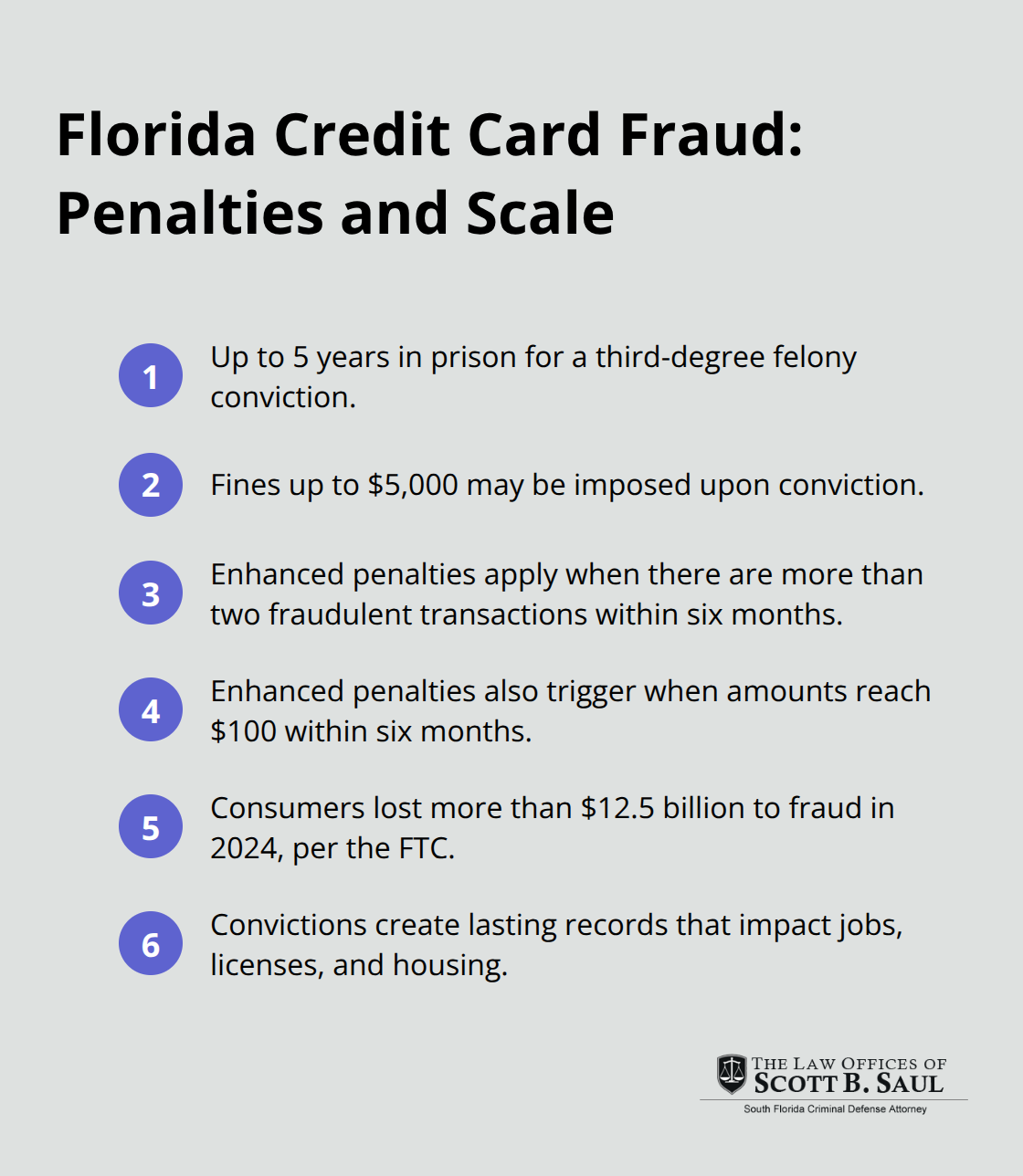
Florida classifies credit card fraud as a third-degree felony that carries up to 5 years in prison and $5,000 in fines. The severity escalates based on transaction frequency and amounts involved. More than two fraudulent transactions or amounts that reach $100 within six months trigger enhanced penalties. Beyond imprisonment and fines, convictions create permanent criminal records that affect employment opportunities, professional licenses, and housing applications. The Federal Trade Commission reports that consumers lost more than $12.5 billion to fraud in 2024, which drives aggressive prosecution efforts.
How Prosecutors Build Strong Cases
Prosecutors rely heavily on digital evidence that includes IP addresses, transaction histories, and surveillance footage from ATMs or retail locations. They analyze patterns to establish intent and often present expert testimony about card devices or online fraud techniques. The prosecution must prove intent beyond reasonable doubt, which creates opportunities for defense strategies. Financial institutions provide detailed transaction records while law enforcement traces digital footprints through computer forensics. Witness testimony from merchants or victims strengthens their cases.
Evidence Collection Methods
Law enforcement agencies use sophisticated techniques to gather evidence in credit card fraud cases. They examine computer hard drives, cell phone records, and banking statements to establish connections between suspects and fraudulent transactions. Digital forensics experts recover deleted files and trace online activities through various platforms. Surveillance cameras at retail locations and ATMs provide visual evidence (often showing suspects at the time of transactions). These comprehensive methods make early legal intervention essential for your defense strategy.
Your Rights and Legal Options When Charged
Constitutional Protections That Shield You
The Fourth Amendment protects you from unreasonable searches and seizures during credit card fraud investigations. Police must have probable cause or a valid warrant to search your home, computer, or phone records. The Fifth Amendment provides absolute protection against self-incrimination, which means authorities cannot force you to testify against yourself. The Sixth Amendment guarantees your right to legal counsel from the moment charges are filed.
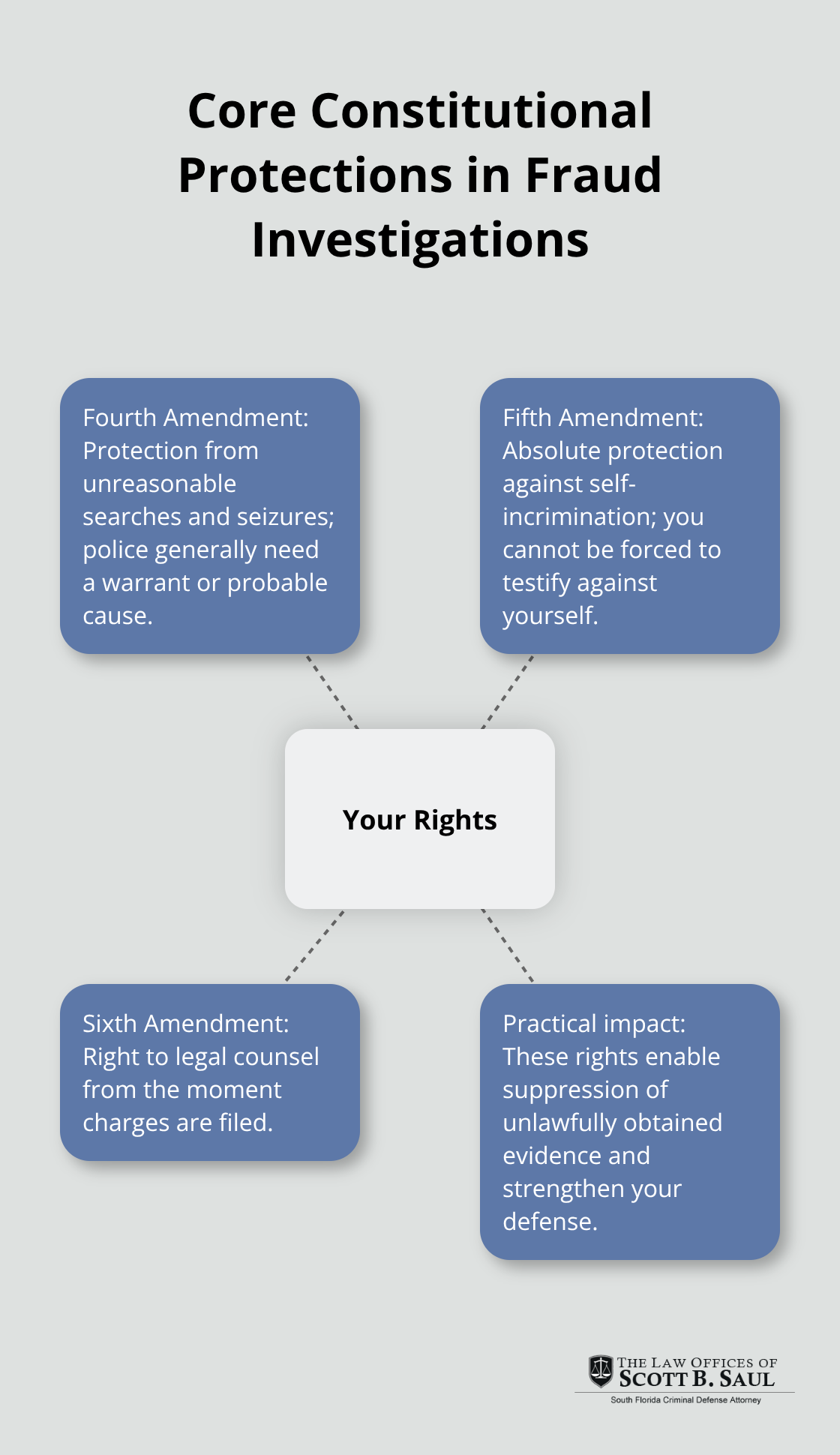
These constitutional protections serve as your strongest defense tools when law enforcement crosses legal boundaries during investigations.
When to Exercise Your Right to Counsel
Contact an attorney within hours of arrest or first contact with law enforcement. The Federal Trade Commission reports that many fraud victims never report incidents, which demonstrates how complex these cases become without proper legal guidance. Police often present themselves as helpful during initial questioning, but their primary goal remains to build a prosecution case against you. Exercise your right to remain silent until legal representation arrives at the scene. Any statements you make without counsel present can severely damage your defense strategy later in court proceedings.
How to Handle Police Questioning
Never answer questions about credit card transactions, computer usage, or financial activities without your attorney present. Police use sophisticated interrogation techniques that extract admissions or contradictory statements from suspects. Request legal representation clearly and repeatedly until all questioning stops completely. Document the time, location, and officers present during any interaction with law enforcement personnel. Record badge numbers and patrol car identification whenever possible (these details become important if evidence collection violated your constitutional rights).
Evidence Protection Strategies
Law enforcement agencies often attempt to gather evidence through voluntary consent rather than obtaining proper warrants. Refuse consent to search your devices, vehicles, or property without a valid court order. Digital evidence forms the backbone of most credit card fraud prosecutions, making early protection of your electronic devices essential. Store important documents and communications in secure locations that require warrants for access. Your proactive approach to evidence protection can prevent prosecutors from building strong cases against you.
Understanding these fundamental rights sets the foundation for developing effective defense strategies that challenge prosecution evidence and protect your future.
Building a Strong Defense Strategy
Challenging Digital Evidence at Its Source
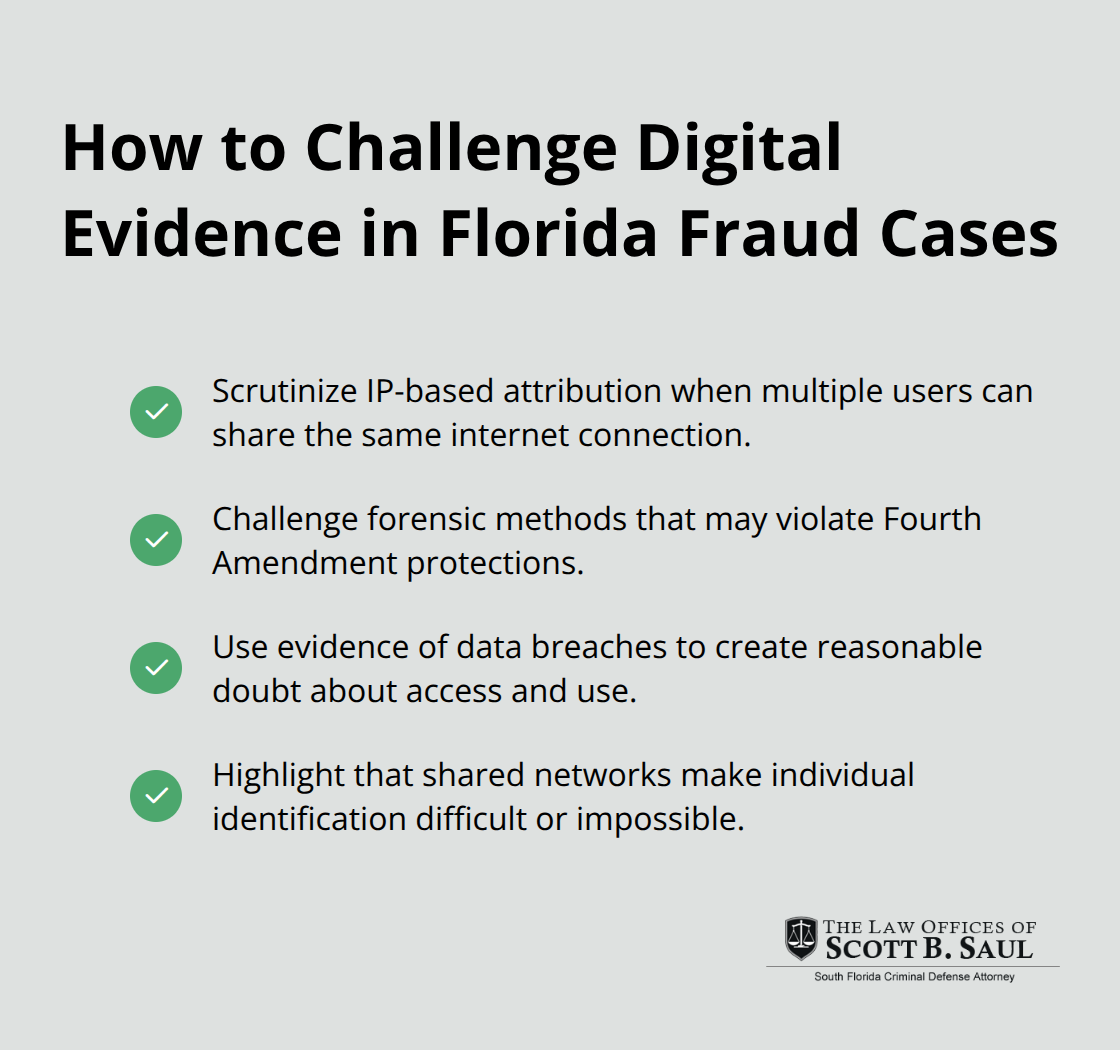
Digital evidence forms the backbone of many credit card fraud prosecutions in Florida, but this evidence often contains fatal flaws that experienced attorneys exploit. We attack the chain of custody for electronic data, which requires prosecutors to prove every person who handled digital files maintained proper protocols. IP address evidence frequently fails under scrutiny because multiple users can share internet connections (making individual identification impossible). Computer forensics experts sometimes recover data through questionable methods that violate Fourth Amendment protections. Data breaches create reasonable doubt about who actually accessed compromised information.
Proving Lack of Criminal Intent
Prosecutors must prove intent to defraud beyond reasonable doubt, which creates powerful defense opportunities in Florida courts. Legitimate cardholders sometimes make purchases that appear suspicious due to travel patterns or emergency situations. We examine transaction timing, locations, and amounts to demonstrate patterns consistent with authorized use rather than fraud. Expert testimony about normal spending behaviors can contradict prosecution theories about criminal intent. The FTC received 449,032 reports from people who said their information was misused with existing or new credit cards, but legitimate transactions occur millions of times daily.
Exposing Mistaken Identity Claims
Credit card fraud cases often rely on circumstantial evidence that fails to identify the actual perpetrator. We challenge witness identification through cross-examination that reveals poor lighting conditions, brief observation periods, or stress factors that affect memory accuracy. Surveillance footage quality varies dramatically between locations, and many recordings fail to provide clear facial identification. Multiple people often have access to the same computers, phones, or internet connections used in fraud schemes. Digital footprints can point to innocent individuals who shared devices or networks with actual perpetrators (creating reasonable doubt about guilt).
Strategic Plea Negotiations Versus Trial Preparation
Florida prosecutors often overcharge credit card fraud cases to pressure defendants into unfavorable plea agreements. We analyze prosecution evidence strength before we recommend any plea discussions because weak cases should proceed to trial. Third-degree felony charges carry maximum penalties of 5 years imprisonment, but first-time offenders frequently receive probation through skilled negotiations. Building a robust defense preparation costs more initially but often produces better outcomes when evidence problems exist. Consumers who actively monitor accounts detect fraud quickly, which supports defense strategies that challenge prosecution timelines and evidence collection methods.
Final Thoughts
Credit card fraud charges in Florida demand immediate action and strategic legal defense. Contact an attorney within hours of arrest or first police contact to protect your constitutional rights. Never provide statements about financial activities without legal representation present. Document all interactions with law enforcement (badge numbers and questioning details help your defense).
Experienced legal representation makes the difference between conviction and case dismissal in Florida credit card fraud cases. Prosecutors build cases using digital evidence that often contains constitutional violations or chain of custody problems. Defense attorneys with trial experience identify these weaknesses and challenge evidence at its source.
We at Law Offices of Scott B. Saul provide personalized attention throughout your case. We analyze digital evidence for constitutional violations, challenge witness testimony, and negotiate with prosecutors from positions of strength. Contact our criminal defense team immediately to begin your defense strategy and protect your future.
Archives
- February 2026 (5)
- January 2026 (9)
- December 2025 (9)
- November 2025 (8)
- October 2025 (8)
- September 2025 (9)
- August 2025 (8)
- July 2025 (8)
- June 2025 (9)
- May 2025 (9)
- April 2025 (8)
- March 2025 (9)
- February 2025 (8)
- January 2025 (9)
- December 2024 (10)
- November 2024 (5)
- July 2024 (2)
- June 2024 (2)
- May 2024 (2)
- April 2024 (2)
- March 2024 (2)
- February 2024 (2)
- January 2024 (2)
- December 2023 (2)
- November 2023 (2)
- October 2023 (2)
- September 2023 (2)
- August 2023 (1)
- July 2023 (2)
- June 2023 (2)
- May 2023 (2)
- April 2023 (2)
- March 2023 (2)
- February 2023 (2)
- January 2023 (2)
- December 2022 (2)
- November 2022 (2)
- October 2022 (2)
- September 2022 (2)
- August 2022 (2)
- July 2022 (2)
- June 2022 (2)
- May 2022 (2)
- April 2022 (2)
- March 2022 (2)
- February 2022 (2)
- January 2022 (2)
- December 2021 (2)
- November 2021 (2)
- October 2021 (2)
- September 2021 (2)
- August 2021 (2)
- July 2021 (2)
- June 2021 (2)
- May 2021 (2)
- April 2021 (2)
- September 2020 (5)
- July 2020 (4)
- June 2020 (4)
- May 2020 (4)
- April 2020 (5)
- March 2020 (4)
- February 2020 (4)
- January 2020 (4)
- December 2019 (1)
- November 2019 (4)
- October 2019 (4)
- September 2019 (4)
- August 2019 (4)
- July 2019 (5)
- June 2019 (4)
- May 2019 (4)
- April 2019 (4)
- March 2019 (4)
- February 2019 (4)
- January 2019 (4)
- December 2018 (4)
- November 2018 (5)
- October 2018 (5)
- September 2018 (4)
- August 2018 (4)
- July 2018 (7)
- June 2018 (4)
- May 2018 (4)
- April 2018 (8)
- March 2018 (4)
- February 2018 (4)
- January 2018 (4)
- November 2017 (4)
- October 2017 (4)
- September 2017 (4)
- August 2017 (7)
- July 2017 (6)
- June 2017 (4)
- May 2017 (4)
- April 2017 (4)
- March 2017 (4)
- February 2017 (7)
- January 2017 (4)
- December 2016 (7)
- November 2016 (4)
- October 2016 (4)
- September 2016 (10)
- August 2016 (4)
- July 2016 (4)
- June 2016 (4)
- May 2016 (4)
- April 2016 (4)
- March 2016 (4)
- February 2016 (7)
- January 2016 (4)
- December 2015 (5)
- November 2015 (4)
- October 2015 (7)
- September 2015 (4)
- August 2015 (4)
- July 2015 (13)
- June 2015 (9)
- May 2015 (8)
- April 2015 (6)
- March 2015 (4)
- February 2015 (4)
- January 2015 (4)
- December 2014 (4)
- November 2014 (4)
- October 2014 (4)
- September 2014 (3)
Categories
- Adjudication (1)
- Bankruptcy (1)
- Burglary Crimes (3)
- calendar call (1)
- Car Accident (1)
- Criminal Defense (395)
- Cyber Crimes (7)
- DNA (1)
- Domestic Violence (9)
- Drug Crimes (5)
- DUI (12)
- Embezzlement (1)
- Environmental Crimes (4)
- Expungement Law (2)
- Federal Sentencing Law (3)
- Firearm (3)
- Forgery (4)
- General (82)
- Healthcare (3)
- Immigration (1)
- Indentity Theft (1)
- Insurance (5)
- judicial sounding (2)
- Juvenile Crimes (4)
- Manslaughter (4)
- Money Laundering (3)
- Organized Crime (1)
- Racketeering (1)
- Reckless Driving (3)
- RICO (3)
- Sealing and Expunging (2)
- Sex Offense (1)
- Shoplifting (1)
- Suspended Driver's License (1)
- Traffic (4)
- Trending Topics (1)
- White-collar Offenses (1)
