
How to Find a Gun Charge Defense Lawyer
By : saulcrim | Category : Criminal Defense | Comments Off on How to Find a Gun Charge Defense Lawyer
22nd Dec 2025

A gun charge can upend your life in ways you might not expect. A conviction affects employment, housing, and your right to own firearms-consequences that extend far beyond the courtroom.
We at Law Offices of Scott B. Saul know that finding the right gun charge defense lawyer quickly makes the difference between a strong defense and a weakened one. The decisions you make in the first days after an arrest shape everything that follows.
What Gun Charges in Florida Actually Mean
State Gun Offenses and Their Consequences
Florida treats gun offenses with serious consequences that most people underestimate. Possession of a firearm by a convicted felon is a felony, and carrying a concealed weapon without a permit is a second-degree felony that carries up to 15 years in prison. Florida Statute 790.01 prohibits possession by certain individuals, including those convicted of felonies, domestic violence offenders, and individuals under restraining orders. A conviction strips away your firearm rights permanently, blocks employment in countless fields, and triggers housing discrimination that follows you for life.
How Federal Gun Charges Differ
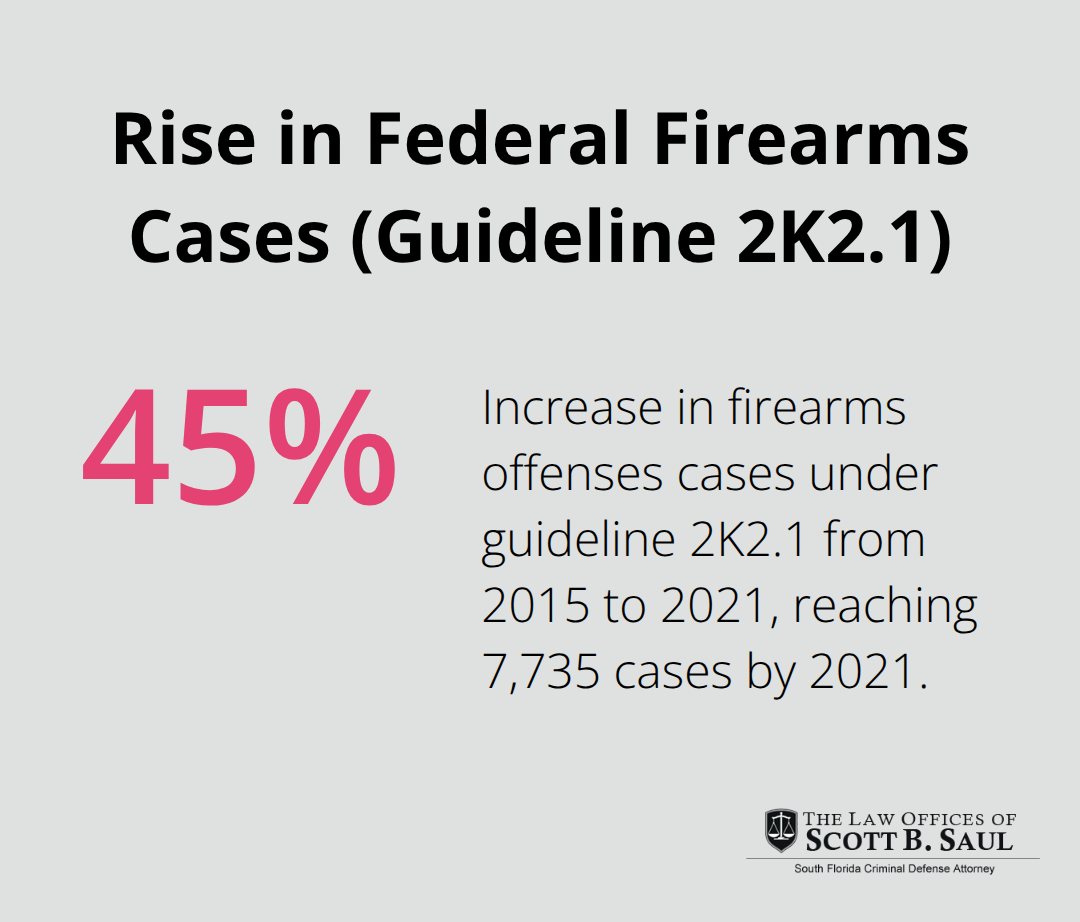
Federal gun charges operate under a completely different framework, and this distinction shapes your entire defense strategy. Federal charges typically involve trafficking across state lines, possession of illegal weapons like machine guns or short-barrel shotguns, or using a firearm during a federal crime such as drug trafficking. The U.S. Sentencing Commission reported that firearms offenses cases under guideline 2K2.1 rose 45.3 percent from 2015 to 2021, reaching 7,735 cases by 2021.
Mandatory Minimums and Sentencing Reality
Federal mandatory minimums apply in many scenarios-18 U.S.C. section 924(c) imposes a mandatory five-year minimum when a firearm is used or carried during a federal crime, with ten years for a second offense. State charges in Florida often allow for plea negotiations and potential sentence reductions, while federal charges demand aggressive defense from the investigation phase forward. Federal mandatory minimums firearm charges under section 924(c) include 83 months for individuals convicted only under that section, with sentences increasing for those also convicted of other crimes, compared to state charges where outcomes vary widely based on prosecutorial discretion and your attorney’s skill in negotiation.
Why the Distinction Matters for Your Defense
The difference between state and federal prosecution determines whether your lawyer negotiates with local prosecutors who know the judge or faces federal agents and Assistant U.S. Attorneys with different priorities and leverage. Your defense strategy must account for which system prosecutes your case-and sometimes both do simultaneously. Understanding these distinctions allows your attorney to identify the strongest arguments and weakest points in the government’s case before trial begins.
What to Look for in a Gun Charge Defense Lawyer
Specialization in Firearm Cases Matters
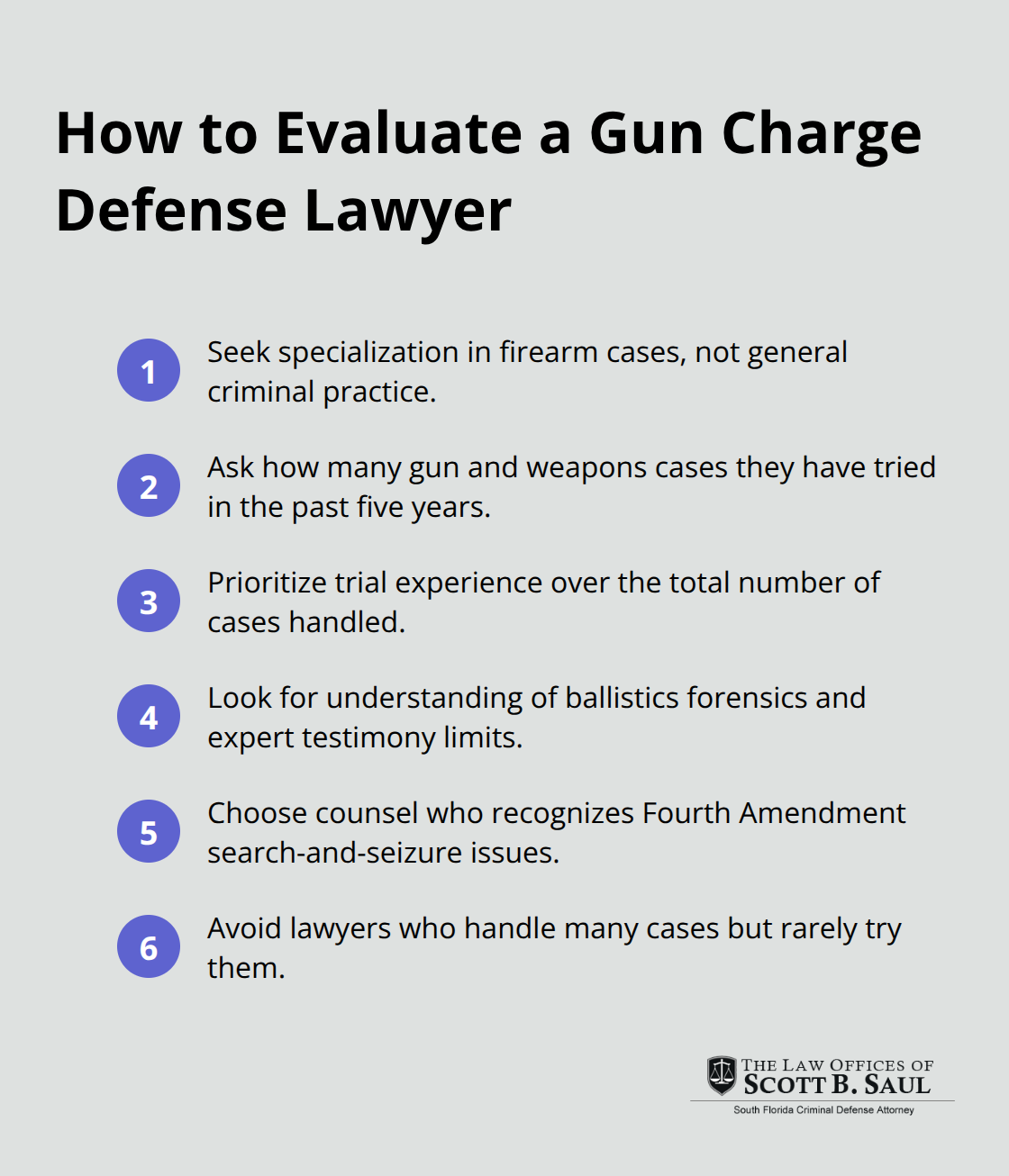
Your gun charge defense lawyer must have spent significant time defending firearm cases, not just handling them as one part of a general criminal practice. A lawyer who defends gun charges occasionally will miss critical details that determine whether evidence gets suppressed or your case gets dismissed. Criminal defense specialization matters because gun offenses involve unique procedural vulnerabilities. Ask potential lawyers how many gun and weapons cases they have tried in the past five years, not how many they have handled. A lawyer who has tried 50 gun cases understands the forensic weaknesses in ballistics evidence, knows which judges allow certain expert testimony, and recognizes when police violated your Fourth Amendment rights during a search. A lawyer who has handled 200 gun cases but tried only five will miss opportunities to challenge evidence that could collapse the prosecution’s case.
Proven Trial Results Tell the Real Story
Track record matters more than reputation. Request specific outcomes from cases similar to yours-felony gun possession cases that resulted in dismissal, reduced charges that avoided prison time, or acquittals at trial. Vague promises mean nothing. A lawyer should tell you about cases where illegal searches led to suppression hearings that weakened the government’s position, or where they negotiated mandatory minimum charges down to probation-eligible offenses. The lawyer should explain exactly how local court dynamics affect your defense and what specific weaknesses exist in the government’s case against you, not generic theories about what might work.
Local Court Knowledge Shapes Strategy
Florida courts in Miami-Dade and Broward County have particular judges and prosecutors with established patterns. Some judges grant suppression motions more readily; some prosecutors negotiate aggressively on certain charges. A lawyer who works regularly in your specific courthouse knows these patterns and can tailor strategy accordingly. Federal cases demand even more specificity-ask whether your lawyer has defended Section 924(c) charges, which carry mandatory five-year minimums, or felon-in-possession cases under federal law. The lawyer’s familiarity with your courthouse determines whether they recognize opportunities to challenge evidence or negotiate favorable terms that a less-experienced attorney would miss entirely.
Why Speed Matters in Gun Defense
Evidence Disappears Within Hours
The moment you face a gun charge, evidence starts to vanish and witnesses become harder to locate. Police reports get filed, surveillance footage gets archived or deleted, and memories fade. Within the first 48 hours after arrest, police have already documented the scene, collected ballistics evidence, and recorded witness statements. If your lawyer waits weeks to start investigation, that window closes permanently. Witness accounts change or disappear entirely. Security camera footage gets overwritten. The prosecution builds momentum while your defense remains reactive rather than proactive.
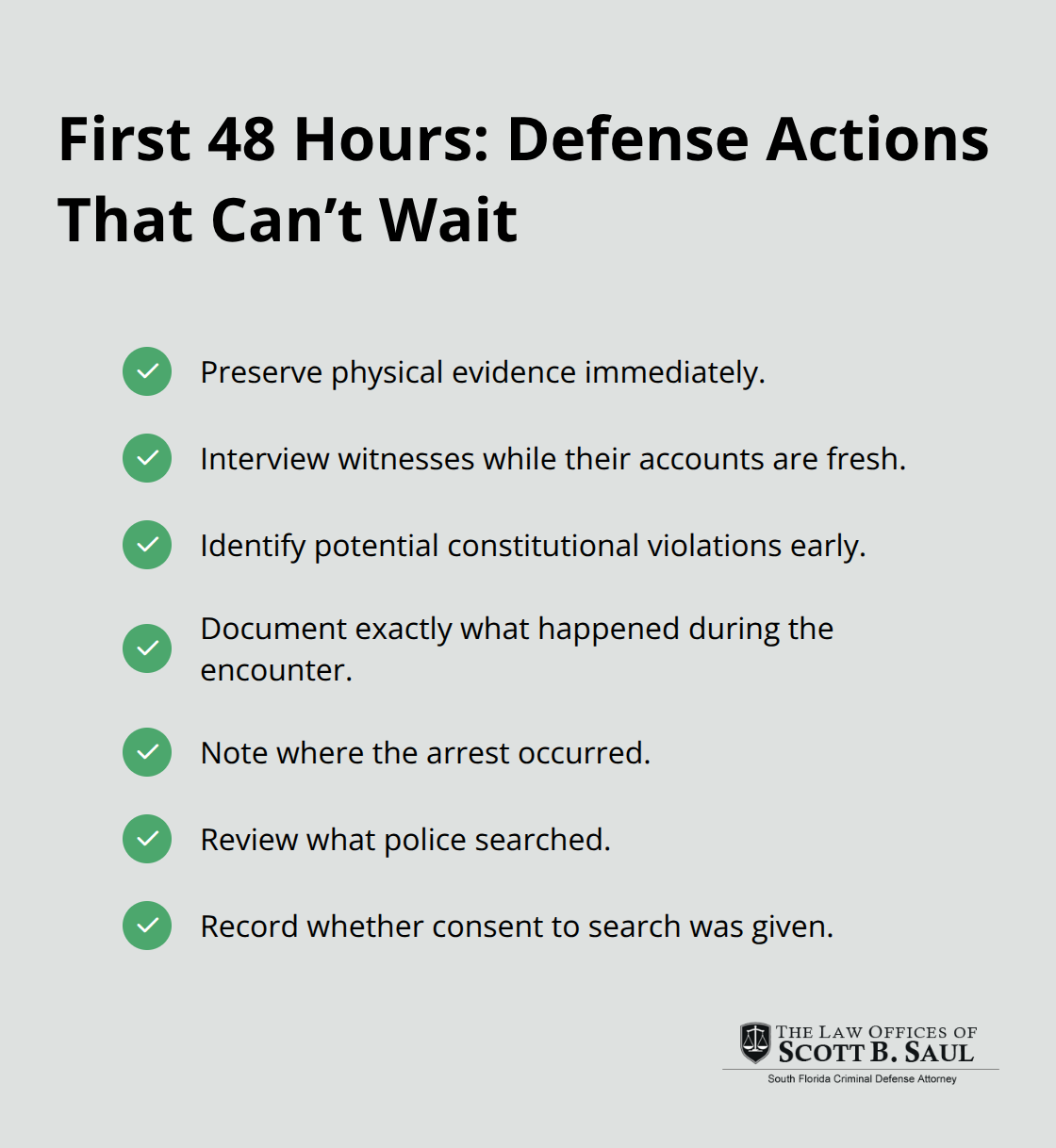
Your attorney must move immediately to preserve physical evidence, interview witnesses while their accounts remain fresh, and identify potential constitutional violations before the government solidifies its case. The first conversation with your lawyer should focus on exactly what happened, where you were arrested, what police searched, and whether consent was given. This information determines whether Fourth Amendment violations exist that could suppress critical evidence.
Constitutional Violations Require Immediate Action
Constitutional violations often become invisible without immediate examination. If police conducted a search without a warrant or failed to read your Miranda rights violations, your lawyer must file suppression motions quickly to challenge that evidence before trial. Federal gun cases move faster than state cases, and the government’s case strengthens with each passing week. An experienced defense attorney recognizes that the first days after arrest represent your best opportunity to challenge how police obtained evidence.
Many prosecutors will negotiate reduced charges early in the process when they fear losing evidence at suppression hearings (but only if your defense attorney demonstrates aggressive investigation and legal strategy from day one). Waiting six months to hire representation means the prosecution has already conducted interviews, secured forensic reports, and prepared their narrative without meaningful challenge. Your attorney cannot travel back in time to preserve evidence or interview witnesses effectively.
Federal Cases Demand Faster Response
Federal gun charges move on an accelerated timeline compared to state prosecutions. The government’s case strengthens with each passing week, and delays compound your disadvantage. Acting within days of arrest separates cases that get dismissed from cases that proceed to trial with weakened defense options. Your lawyer cannot recover lost opportunities once the prosecution has built its foundation (forensic reports, witness statements, and investigative findings all locked in place).
The difference between hiring representation immediately and waiting weeks determines whether your defense strategy succeeds before evidence becomes entrenched in the government’s narrative. Speed transforms your defense from reactive to proactive, allowing your lawyer to identify weaknesses in the prosecution’s investigation before trial preparation begins.
Final Thoughts
An effective gun charge defense lawyer combines specialized experience with immediate action. The attorney you hire must have tried numerous firearm cases in Florida courts, understand the specific judges and prosecutors in your jurisdiction, and recognize constitutional violations that weaken the government’s case. Your gun charge defense lawyer should explain exactly how they will challenge evidence, negotiate with prosecutors, and protect your rights from the first conversation forward.
Immediate legal representation separates successful defenses from compromised ones. The moment you face arrest, evidence begins disappearing and witnesses become harder to locate. A lawyer who acts quickly can preserve critical information, file suppression motions before the prosecution solidifies its case, and identify negotiation opportunities that vanish as time passes (federal charges demand even faster response because mandatory minimums create urgency that state charges often lack).
We at Law Offices of Scott B. Saul stand ready to defend your rights with aggressive representation at every stage. Contact Law Offices of Scott B. Saul today for a comprehensive consultation about your gun charge defense.
Archives
- February 2026 (5)
- January 2026 (9)
- December 2025 (9)
- November 2025 (8)
- October 2025 (8)
- September 2025 (9)
- August 2025 (8)
- July 2025 (8)
- June 2025 (9)
- May 2025 (9)
- April 2025 (8)
- March 2025 (9)
- February 2025 (8)
- January 2025 (9)
- December 2024 (10)
- November 2024 (5)
- July 2024 (2)
- June 2024 (2)
- May 2024 (2)
- April 2024 (2)
- March 2024 (2)
- February 2024 (2)
- January 2024 (2)
- December 2023 (2)
- November 2023 (2)
- October 2023 (2)
- September 2023 (2)
- August 2023 (1)
- July 2023 (2)
- June 2023 (2)
- May 2023 (2)
- April 2023 (2)
- March 2023 (2)
- February 2023 (2)
- January 2023 (2)
- December 2022 (2)
- November 2022 (2)
- October 2022 (2)
- September 2022 (2)
- August 2022 (2)
- July 2022 (2)
- June 2022 (2)
- May 2022 (2)
- April 2022 (2)
- March 2022 (2)
- February 2022 (2)
- January 2022 (2)
- December 2021 (2)
- November 2021 (2)
- October 2021 (2)
- September 2021 (2)
- August 2021 (2)
- July 2021 (2)
- June 2021 (2)
- May 2021 (2)
- April 2021 (2)
- September 2020 (5)
- July 2020 (4)
- June 2020 (4)
- May 2020 (4)
- April 2020 (5)
- March 2020 (4)
- February 2020 (4)
- January 2020 (4)
- December 2019 (1)
- November 2019 (4)
- October 2019 (4)
- September 2019 (4)
- August 2019 (4)
- July 2019 (5)
- June 2019 (4)
- May 2019 (4)
- April 2019 (4)
- March 2019 (4)
- February 2019 (4)
- January 2019 (4)
- December 2018 (4)
- November 2018 (5)
- October 2018 (5)
- September 2018 (4)
- August 2018 (4)
- July 2018 (7)
- June 2018 (4)
- May 2018 (4)
- April 2018 (8)
- March 2018 (4)
- February 2018 (4)
- January 2018 (4)
- November 2017 (4)
- October 2017 (4)
- September 2017 (4)
- August 2017 (7)
- July 2017 (6)
- June 2017 (4)
- May 2017 (4)
- April 2017 (4)
- March 2017 (4)
- February 2017 (7)
- January 2017 (4)
- December 2016 (7)
- November 2016 (4)
- October 2016 (4)
- September 2016 (10)
- August 2016 (4)
- July 2016 (4)
- June 2016 (4)
- May 2016 (4)
- April 2016 (4)
- March 2016 (4)
- February 2016 (7)
- January 2016 (4)
- December 2015 (5)
- November 2015 (4)
- October 2015 (7)
- September 2015 (4)
- August 2015 (4)
- July 2015 (13)
- June 2015 (9)
- May 2015 (8)
- April 2015 (6)
- March 2015 (4)
- February 2015 (4)
- January 2015 (4)
- December 2014 (4)
- November 2014 (4)
- October 2014 (4)
- September 2014 (3)
Categories
- Adjudication (1)
- Bankruptcy (1)
- Burglary Crimes (3)
- calendar call (1)
- Car Accident (1)
- Criminal Defense (395)
- Cyber Crimes (7)
- DNA (1)
- Domestic Violence (9)
- Drug Crimes (5)
- DUI (12)
- Embezzlement (1)
- Environmental Crimes (4)
- Expungement Law (2)
- Federal Sentencing Law (3)
- Firearm (3)
- Forgery (4)
- General (82)
- Healthcare (3)
- Immigration (1)
- Indentity Theft (1)
- Insurance (5)
- judicial sounding (2)
- Juvenile Crimes (4)
- Manslaughter (4)
- Money Laundering (3)
- Organized Crime (1)
- Racketeering (1)
- Reckless Driving (3)
- RICO (3)
- Sealing and Expunging (2)
- Sex Offense (1)
- Shoplifting (1)
- Suspended Driver's License (1)
- Traffic (4)
- Trending Topics (1)
- White-collar Offenses (1)
