
How to Report Fraud Tax Return Filing
By : saulcrim | Category : Criminal Defense | Comments Off on How to Report Fraud Tax Return Filing
15th Jan 2026

Tax fraud is more common than most people realize, and it can happen to anyone-even when you’re working with a professional. At Law Offices of Scott B. Saul, we’ve seen firsthand how fraud tax return filing can damage your finances and create years of complications with the IRS.
If you suspect something is wrong with your tax return, acting fast matters. This guide walks you through the warning signs, how to report fraud to the IRS, and steps to protect yourself going forward.
What Fraud Looks Like on Your Tax Return
Your Preparer Should Show You Everything
Your tax preparer or accountant must be transparent about every line item on your return. If they file without showing you the completed form first, that’s a red flag. Some preparers rush clients through the signing process or claim the return is too complicated to explain-this behavior indicates they may be hiding something. The IRS Criminal Investigation division reports that preparers committing fraud often file returns without client knowledge or consent. Always insist on reviewing your full return before it’s filed, and request detailed explanations for any deductions or credits you don’t recognize. If your preparer resists this step, find someone new immediately.
Spot Mismatched Numbers and Missing Records
Deductions and income figures that don’t match your actual financial records are another warning sign. Review your W-2s, 1099s, and bank statements against what appears on your return-the numbers should align exactly. Inflated deductions for home office expenses, vehicle mileage, or charitable contributions, or income that’s been mysteriously reduced, suggest deliberate manipulation. Missing documentation is equally concerning; your preparer should maintain copies of receipts, invoices, and supporting papers for every claimed expense.
If you ask for documentation and they cannot produce it, the IRS will reject those deductions during an audit, leaving you responsible for back taxes, penalties, and interest. Keep your own copies of all tax documents for at least seven years and request written confirmation from your preparer about what documentation they’re retaining. If discrepancies emerge between what you provided and what was filed, document this immediately and consider filing an amended return to correct the errors before the IRS initiates contact.
Act Before the IRS Contacts You
The moment you spot irregularities on your return, you face a choice: wait for the IRS to discover the problem, or take control of the situation yourself. Filing an amended return demonstrates good faith and significantly reduces the penalties you’ll face. The IRS treats taxpayers who self-report fraud far more favorably than those caught during an audit. Once you’ve identified the fraud and corrected your records, you’ll need to understand the formal reporting process-which involves specific forms and channels designed to protect both you and other taxpayers from similar schemes.
Report Tax Fraud to the IRS
Choose the Right Reporting Form for Your Situation
When you identify fraud on your tax return, the IRS offers multiple reporting pathways. Form 3949-A handles suspected tax fraud or violations not covered by specialized forms. This form works for cases involving false exemptions, unreported income, inflated deductions, or altered tax filings. You submit it with all supporting documentation: copies of the fraudulent return, your corrected version, bank statements showing actual income, receipts proving legitimate expenses, and any correspondence with your preparer. The IRS accepts Form 3949-A submissions by mail to your local IRS office, and processing typically takes several months as investigators review your evidence.
The strength of your case depends entirely on specificity and documentation. Vague complaints without proof won’t trigger an investigation. Gather everything before submitting: dates of fraudulent filings, names and contact information for the preparer or person who committed fraud, amounts of false deductions or unreported income, and a clear timeline of events.
Pursue a Monetary Award Through the Whistleblower Program
The IRS Whistleblower Office pays for information that leads to collected proceeds exceeding $2 million in taxes, penalties, interest, and other amounts. You file Form 211 instead of Form 3949-A, which requires your name, signature, and detailed facts about the fraud. Anonymous tips don’t qualify for awards-the IRS needs your identifying information and your willingness to sign under penalty of perjury.
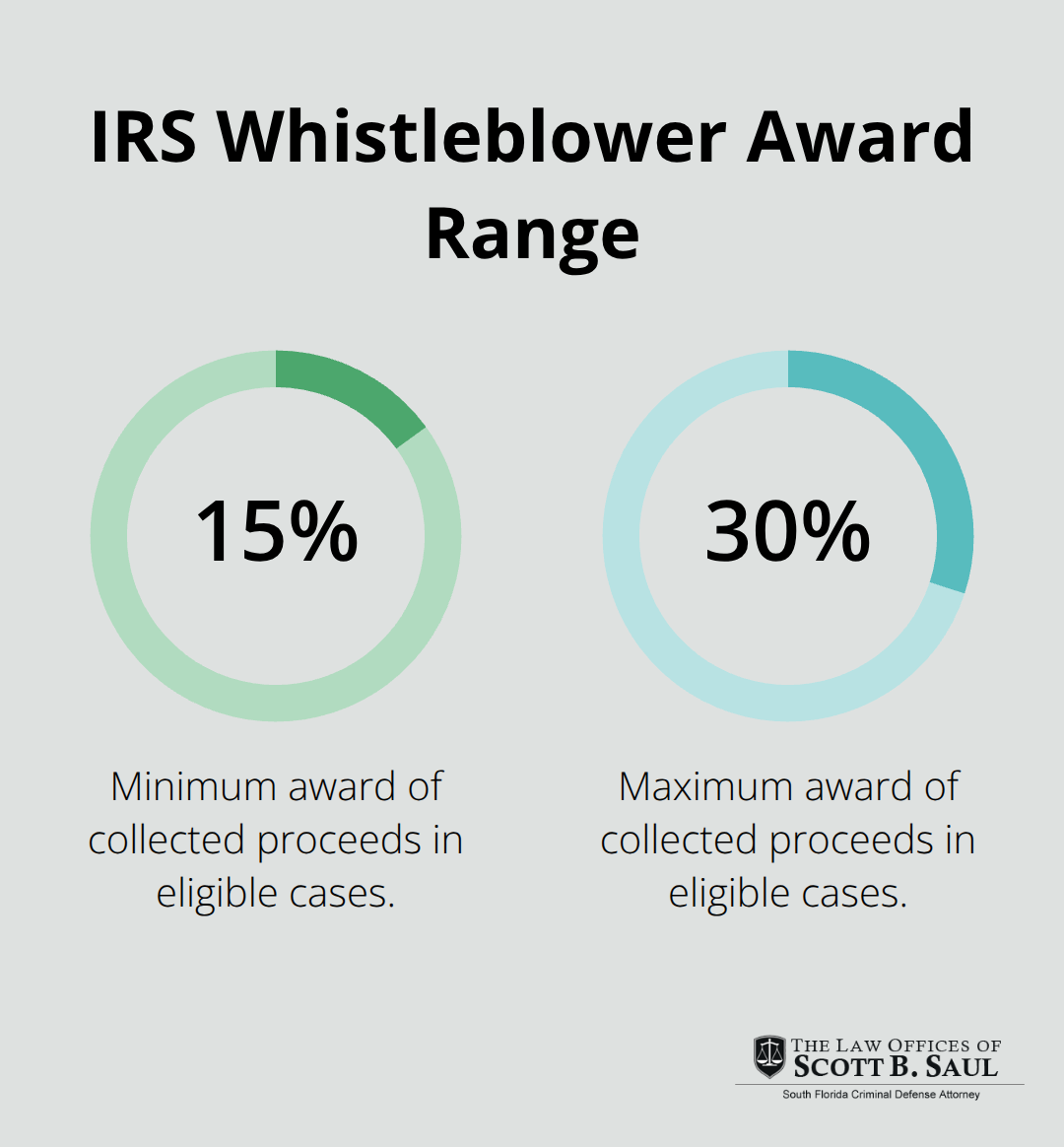
The Whistleblower Office emphasizes that awards go only to credible information that actually results in collections. Awards generally range from 15 to 30 percent of collected proceeds. Processing takes time: the IRS evaluates your claim, investigates, pursues collection, and then determines your award eligibility. This pathway makes sense if you possess substantial evidence of large-scale fraud.
Report Money Laundering and Wire Schemes to FinCEN
For fraud involving money laundering, cryptocurrency, or wire schemes, report to FinCEN (Financial Crimes Enforcement Network) instead of standard IRS channels. FinCEN coordinates with federal agencies to track financial crimes across borders and jurisdictions. Include details about financial pathways (crypto assets, shell companies, wire transfers) when submitting your report.
Contact the Criminal Investigation Division for Serious Cases
The Criminal Investigation Division handles the most serious cases, typically those involving organized fraud rings or preparers systematically defrauding dozens of clients. Direct contact with CI requires coordination through an IRS agent or attorney, as they investigate criminal violations that may result in prosecution. These cases move beyond civil penalties into potential jail time and criminal records for the perpetrators.
Understanding which channel fits your situation determines how quickly the IRS can act. Once you’ve submitted your report through the appropriate form, the investigation process begins-but your role doesn’t end there. You’ll need to protect yourself from future fraud while the IRS works on the case, which means taking specific steps to monitor your tax records and prevent similar schemes from happening again.
How to Vet and Monitor Your Tax Preparer
Verify Credentials Before You Hire
The IRS Criminal Investigation division reports that preparers committing fraud often operate for years before detection, sometimes filing false returns for dozens of clients simultaneously. Your first line of defense is verification before you hire anyone. Check this tool to research tax return preparers near you or to determine the type of credentials or qualifications held by a specific tax professional. The IRS maintains a directory of tax professionals, and you can verify licensing status through your state’s accounting board or bar association. Ask directly whether your preparer has ever faced disciplinary action, sanctions, or complaints-legitimate professionals answer without hesitation.
Request References and Follow Up
Request references from other clients and follow up by calling them to ask whether the preparer explained every deduction and provided copies of filed returns. A preparer who refuses to provide references or becomes defensive about their history is someone to avoid entirely. Trust your instincts when a professional resists transparency; that resistance signals potential problems down the road.
Review Your Return Line by Line
Once you’ve hired someone, your responsibility doesn’t end. Review your completed return line by line before you sign anything, comparing every figure against your W-2s, 1099s, bank statements, and receipts. The IRS expects you to understand your own tax situation; signing a return you haven’t thoroughly reviewed leaves you liable for penalties and back taxes even if your preparer committed the fraud. Keep digital and paper copies of all documents you provide to your preparer and request written confirmation of what they’re retaining for their records.
Monitor Your Social Security Number Actively
Monitor your Social Security number actively by checking free weekly credit reports from Equifax, Experian, and TransUnion. If you notice accounts you didn’t open or inquiries from creditors you don’t recognize, contact the Federal Trade Commission immediately at identitytheft.gov. Consider placing a credit freeze with all three bureaus if you’ve already been victimized (this costs nothing and prevents criminals from opening new accounts in your name). The IRS Taxpayer Protection Program flags suspicious returns automatically, but your personal vigilance catches fraud faster than any government system.
Final Thoughts
Reporting fraud tax return filing requires you to act on multiple fronts simultaneously. File an amended return if you discover errors on your own return, then submit Form 3949-A with complete documentation to your local IRS office. For large-scale fraud exceeding $2 million in collected proceeds, pursue the Whistleblower Program using Form 211 for potential monetary awards, while money laundering or cryptocurrency schemes warrant direct reporting to FinCEN.
Prevention protects you as effectively as reporting does. Verify your tax preparer’s credentials through the IRS directory and your state’s accounting board before hiring anyone. Review your completed return line by line against your W-2s, 1099s, and receipts before you sign, and monitor your Social Security number by checking free weekly credit reports from all three bureaus.
Speed determines your outcomes with the IRS. The agency treats taxpayers who self-report fraud far more favorably than those caught during audits, and acting quickly protects your refund while reducing penalties. If you face criminal charges related to fraud tax return filing or need aggressive representation, we at Law Offices of Scott B. Saul bring over 30 years of trial experience to your defense-contact us for a comprehensive consultation at our Miami-Dade or Broward County locations.
Archives
- February 2026 (5)
- January 2026 (9)
- December 2025 (9)
- November 2025 (8)
- October 2025 (8)
- September 2025 (9)
- August 2025 (8)
- July 2025 (8)
- June 2025 (9)
- May 2025 (9)
- April 2025 (8)
- March 2025 (9)
- February 2025 (8)
- January 2025 (9)
- December 2024 (10)
- November 2024 (5)
- July 2024 (2)
- June 2024 (2)
- May 2024 (2)
- April 2024 (2)
- March 2024 (2)
- February 2024 (2)
- January 2024 (2)
- December 2023 (2)
- November 2023 (2)
- October 2023 (2)
- September 2023 (2)
- August 2023 (1)
- July 2023 (2)
- June 2023 (2)
- May 2023 (2)
- April 2023 (2)
- March 2023 (2)
- February 2023 (2)
- January 2023 (2)
- December 2022 (2)
- November 2022 (2)
- October 2022 (2)
- September 2022 (2)
- August 2022 (2)
- July 2022 (2)
- June 2022 (2)
- May 2022 (2)
- April 2022 (2)
- March 2022 (2)
- February 2022 (2)
- January 2022 (2)
- December 2021 (2)
- November 2021 (2)
- October 2021 (2)
- September 2021 (2)
- August 2021 (2)
- July 2021 (2)
- June 2021 (2)
- May 2021 (2)
- April 2021 (2)
- September 2020 (5)
- July 2020 (4)
- June 2020 (4)
- May 2020 (4)
- April 2020 (5)
- March 2020 (4)
- February 2020 (4)
- January 2020 (4)
- December 2019 (1)
- November 2019 (4)
- October 2019 (4)
- September 2019 (4)
- August 2019 (4)
- July 2019 (5)
- June 2019 (4)
- May 2019 (4)
- April 2019 (4)
- March 2019 (4)
- February 2019 (4)
- January 2019 (4)
- December 2018 (4)
- November 2018 (5)
- October 2018 (5)
- September 2018 (4)
- August 2018 (4)
- July 2018 (7)
- June 2018 (4)
- May 2018 (4)
- April 2018 (8)
- March 2018 (4)
- February 2018 (4)
- January 2018 (4)
- November 2017 (4)
- October 2017 (4)
- September 2017 (4)
- August 2017 (7)
- July 2017 (6)
- June 2017 (4)
- May 2017 (4)
- April 2017 (4)
- March 2017 (4)
- February 2017 (7)
- January 2017 (4)
- December 2016 (7)
- November 2016 (4)
- October 2016 (4)
- September 2016 (10)
- August 2016 (4)
- July 2016 (4)
- June 2016 (4)
- May 2016 (4)
- April 2016 (4)
- March 2016 (4)
- February 2016 (7)
- January 2016 (4)
- December 2015 (5)
- November 2015 (4)
- October 2015 (7)
- September 2015 (4)
- August 2015 (4)
- July 2015 (13)
- June 2015 (9)
- May 2015 (8)
- April 2015 (6)
- March 2015 (4)
- February 2015 (4)
- January 2015 (4)
- December 2014 (4)
- November 2014 (4)
- October 2014 (4)
- September 2014 (3)
Categories
- Adjudication (1)
- Bankruptcy (1)
- Burglary Crimes (3)
- calendar call (1)
- Car Accident (1)
- Criminal Defense (395)
- Cyber Crimes (7)
- DNA (1)
- Domestic Violence (9)
- Drug Crimes (5)
- DUI (12)
- Embezzlement (1)
- Environmental Crimes (4)
- Expungement Law (2)
- Federal Sentencing Law (3)
- Firearm (3)
- Forgery (4)
- General (82)
- Healthcare (3)
- Immigration (1)
- Indentity Theft (1)
- Insurance (5)
- judicial sounding (2)
- Juvenile Crimes (4)
- Manslaughter (4)
- Money Laundering (3)
- Organized Crime (1)
- Racketeering (1)
- Reckless Driving (3)
- RICO (3)
- Sealing and Expunging (2)
- Sex Offense (1)
- Shoplifting (1)
- Suspended Driver's License (1)
- Traffic (4)
- Trending Topics (1)
- White-collar Offenses (1)
