
Identity Theft and Tax Fraud Protection Guide
By : saulcrim | Category : Criminal Defense | Comments Off on Identity Theft and Tax Fraud Protection Guide
29th Dec 2025

Identity theft and tax fraud cost Americans over $20 billion annually, with the IRS reporting a significant rise in fraudulent tax filings. Criminals are getting smarter about stealing personal information and using it to file false returns before you even know your data is compromised.
We at Law Offices of Scott B. Saul created this guide to help you spot the warning signs early, strengthen your defenses, and know exactly what to do if you become a victim. The faster you act, the less damage these crimes can inflict on your finances and credit.
Spotting the Red Flags Before Criminals Win
The IRS does not contact you first about problems-you contact them. If you receive an unexpected notice claiming unpaid taxes, a refund offset, or wage garnishment tied to income you never earned, that’s your first alarm bell. According to the IRS, common warning signs include a tax return rejection notice, a W-2 or 1099 from an employer where you never worked, and CP2000 notices reporting unreported income. Criminals file fraudulent returns early in the tax season (often between January and March), which means you might discover the theft months later when you attempt to file legitimately. The IRS has an Identity Theft and Tax Return Verification Service available at 800-908-4490 where you can confirm whether a notice is authentic or fraudulent.
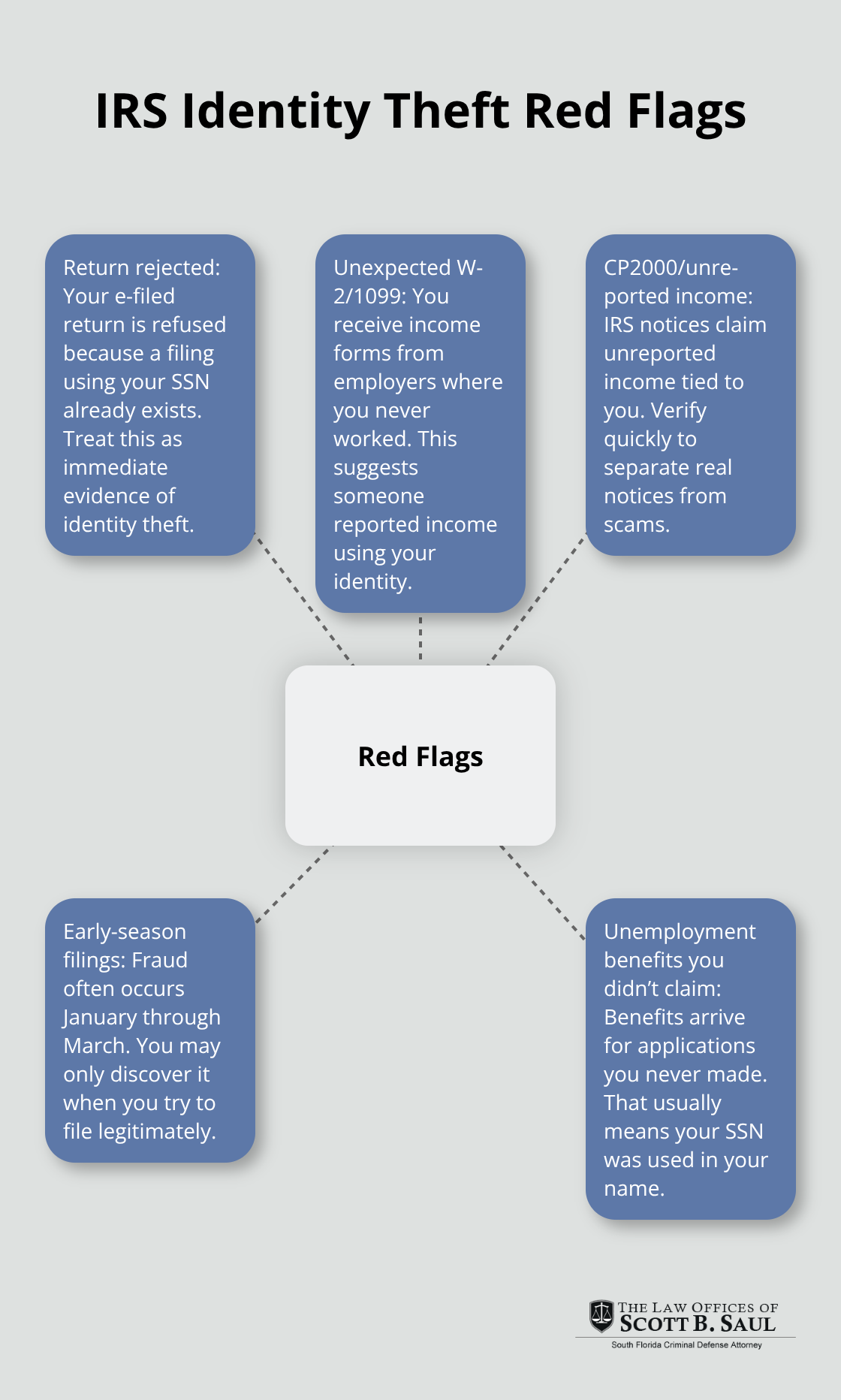
Another red flag occurs when you receive unemployment benefits you never applied for-this means someone used your Social Security number to claim benefits in your name, a tactic that spiked significantly over recent years as criminals expanded beyond tax fraud.
Watch Your Financial Accounts Like a Hawk
Unauthorized charges on credit cards or unexpected withdrawals from bank accounts often precede tax fraud because criminals test stolen payment information before committing larger crimes. Open and review your bank and credit statements the moment they arrive each month, not weeks later. If a statement goes missing, that’s suspicious-someone may have changed your mailing address to hide fraudulent activity. You should order a free credit report annually through annualcreditreport.com or by calling 1-877-322-8228, and monitor it specifically for accounts you never opened. The FTC recommends checking your credit report at least once yearly, though quarterly checks work better if you suspect exposure. Additionally, log into your IRS Online Account and Social Security account regularly to verify no one accessed them without permission and that income information matches your actual employment history.
Document Discrepancies Demand Immediate Attention
If you receive multiple W-2 forms from the same employer, or W-2s from employers you never worked for, someone has already filed a fraudulent return using your information. The IRS processes legitimate returns first, so your authentic return gets rejected when it arrives later. Similarly, missing tax documents that should have arrived by January 31st-especially if you worked all year-indicates either address tampering or that a criminal intercepted them. If a dependent’s identity is stolen and someone else claims them on a fraudulent return, the IRS processing delay extends to 6–8 weeks minimum, sometimes longer if duplicate claims require investigation. Do not ignore these discrepancies hoping they will resolve themselves. Contact the IRS immediately and file Form 14039 Identity Theft Affidavit if instructed, which formally notifies the agency of the theft and protects you during investigation. Once you identify these warning signs, your next move determines how quickly you can stop the damage and reclaim your financial security.
How to Lock Down Your Tax Security Now
Waiting passively for trouble is how identity thieves win. You need to act aggressively on three fronts: monitoring what criminals can access, hardening your accounts against breach, and filing before fraudsters do.
Monitor Your Credit Reports for Unauthorized Accounts
Start with your credit reports since unauthorized accounts appear there first. The FTC recommends checking your credit file at least once yearly, though quarterly checks catch fraud faster if you suspect exposure. When you pull your report, look specifically for accounts you never opened, inquiries from companies you never contacted, and address changes you did not authorize. If you spot fraud, contact the credit bureau immediately and request a fraud alert, which forces creditors to verify your identity before opening new accounts. Many people ignore this step and pay the price months later when fraudsters max out stolen credit lines in their name.
Strengthen Your Online Accounts with Passwords and Two-Factor Authentication
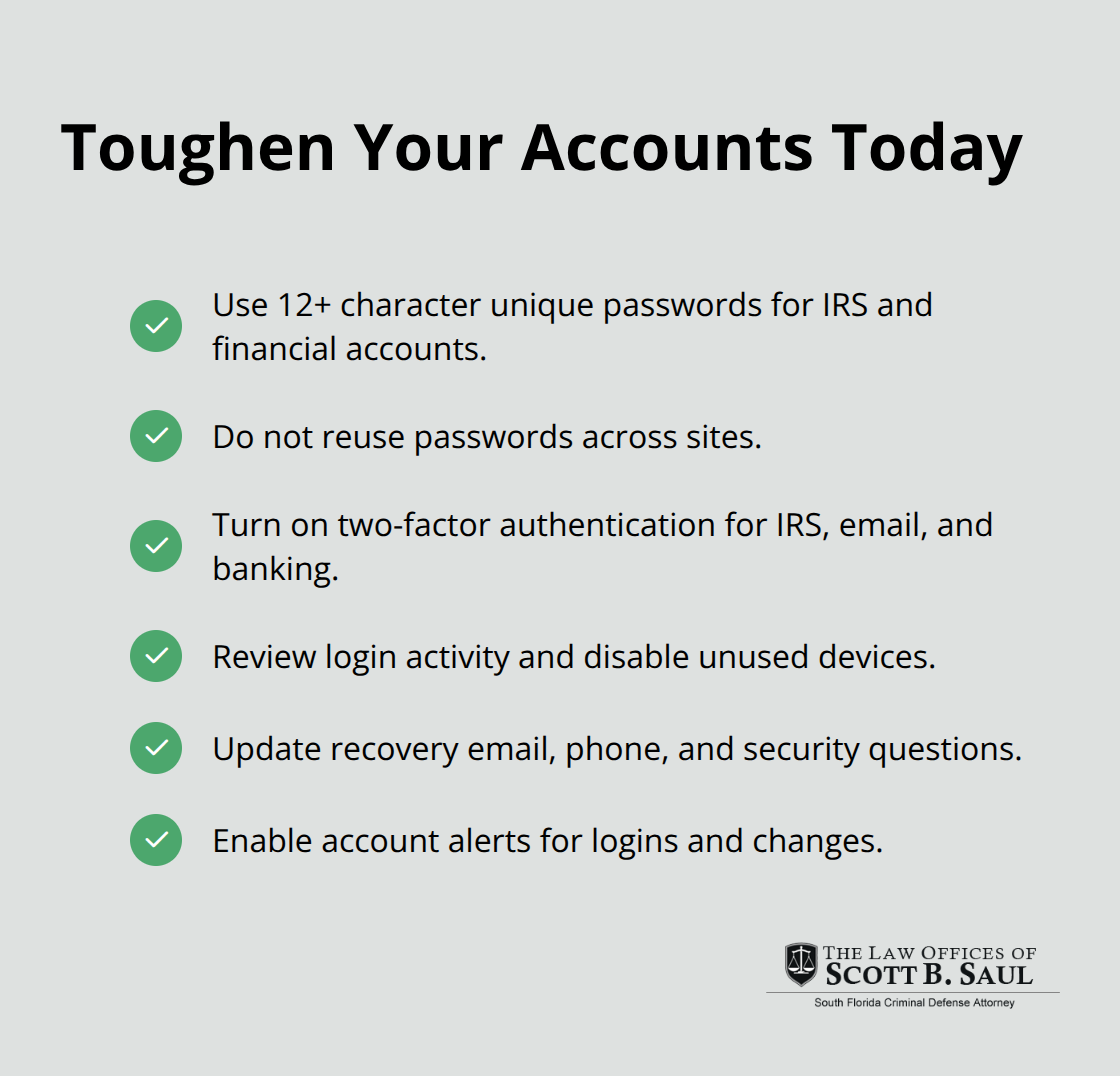
Your IRS Online Account and Social Security account are primary targets because criminals use them to intercept tax documents and file fraudulent returns. Change your IRS password to a minimum of 12 characters mixing uppercase, lowercase, numbers, and symbols, then do the same for every financial account you own. Do not reuse passwords across sites because one data breach exposes everything. Enable two-factor authentication on your IRS Online Account, email, and banking immediately since this stops thieves even if they steal your password.
Use an Identity Protection PIN to Block Fraudulent Filings
The IRS offers Identity Protection PINs, a six-digit code that only you know, which prevents someone else from filing a return using your Social Security number. You can request an IP PIN through the IRS if you are eligible, and this single step blocks most fraudulent filings. This protection works because criminals cannot file a return without the correct PIN, forcing them to move on to easier targets.
File Your Return Early to Beat the Criminals
Filing your tax return in early February rather than waiting until April gives you a critical timing advantage because the IRS processes returns in the order they arrive. Criminals typically file fraudulent returns between January and March, so submitting your legitimate return first means the IRS rejects any fraudulent filing that arrives later. This is not optional strategy for high-risk individuals; it is the standard you should adopt every single year. Once you implement these defenses, you shift from reactive victim to proactive protector of your own financial identity-but knowing what to do after a theft occurs separates those who recover quickly from those who face years of complications.
What to Do Right Now If Your Identity Is Stolen
Contact the IRS Immediately to Report the Fraud
Call 800-908-4490 to report the fraudulent filing and verify whether notices you received are legitimate or part of the theft. The IRS operates a dedicated Identity Theft and Tax Return Verification Service specifically for this purpose, and speaking with them directly prevents you from wasting time on fake notices or scams impersonating the agency. Have your Social Security number, date of birth, and any suspicious notices ready when you call. The IRS will flag your account and may issue you an Identity Protection PIN if you do not already have one, which blocks future fraudulent filings. Do not wait for the agency to contact you first because the longer criminals have access to your information, the more damage they inflict across multiple tax years.
Place a Fraud Alert with Credit Bureaus Immediately
After contacting the IRS, immediately place a fraud alert with all three credit bureaus by calling Equifax, Experian, or TransUnion. You only need to contact one bureau since they communicate with each other, and the alert forces creditors to verify your identity before opening new accounts in your name. This single action stops most credit-based fraud in its tracks, though the alert lasts only one year, so you must renew it annually if you remain at risk.
File a Police Report and Document Everything
File a police report in your jurisdiction and obtain the report number because this documentation strengthens your case when disputing fraudulent charges and proves to the IRS that you took immediate action. The FTC’s IdentityTheft.gov portal walks you through creating a recovery plan specific to your situation and generates a personalized checklist of next steps based on what was stolen. Document every piece of communication related to the theft, including the dates you discovered fraudulent accounts, the IRS notices you received, confirmation numbers from calls, the police report number, and copies of fraudulent W-2s or tax returns filed in your name. Store these documents in one secure location because you will reference them repeatedly during the investigation and recovery process.
File Your Legitimate Return and Handle Rejections
The IRS processes identity theft cases over weeks or months, so do not expect immediate resolution. If a dependent’s identity was stolen and claimed on a fraudulent return, expect processing delays of 6–8 weeks minimum while the IRS investigates which return is legitimate. File your own legitimate tax return on time regardless of the theft because failing to file only complicates matters and may result in additional penalties.
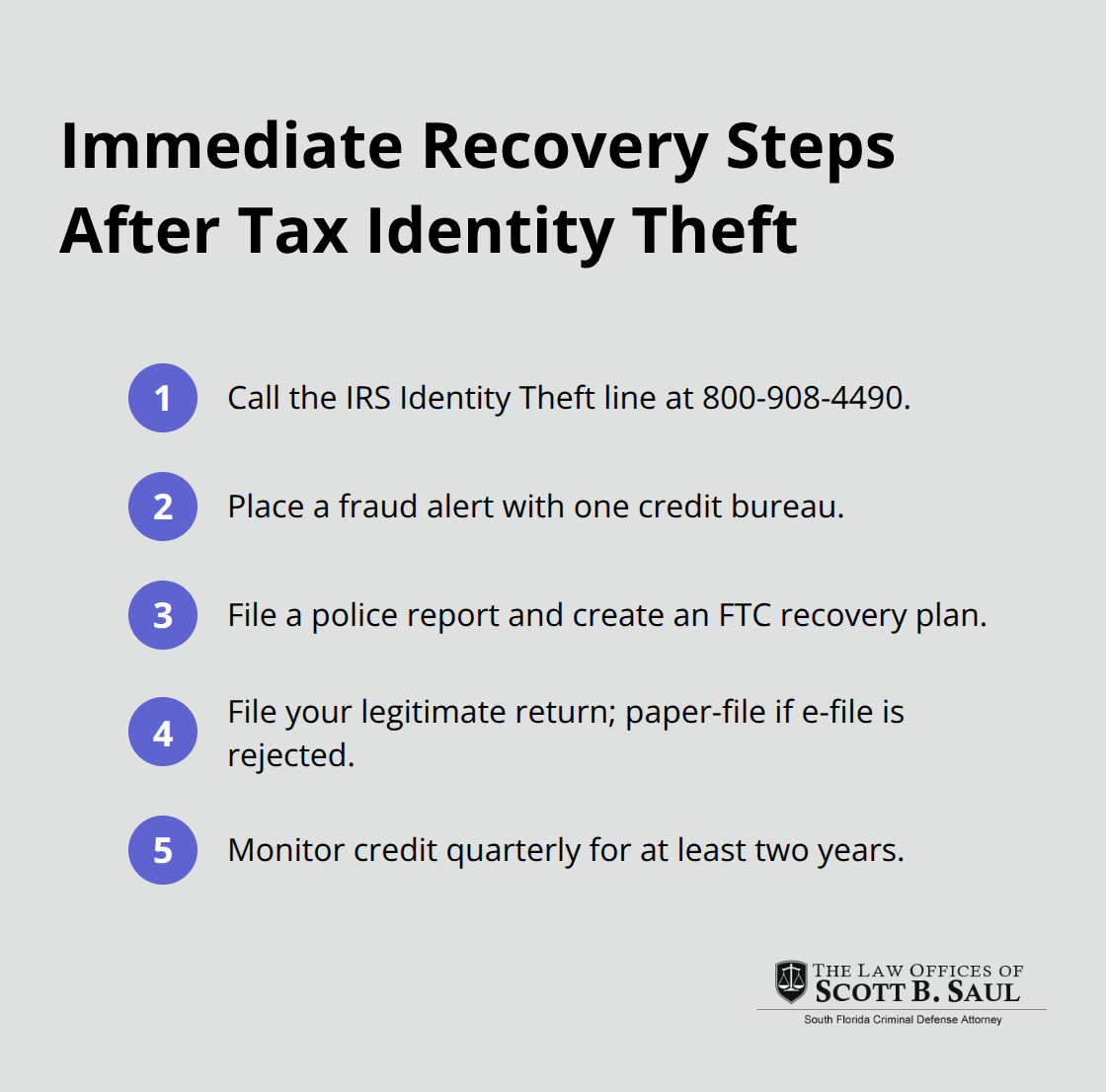
If the IRS rejects your return due to a duplicate filing, submit a paper return instead along with copies of your police report, the fraudulent return, and Form 14039 Identity Theft Affidavit to prove the theft occurred.
Monitor Your Accounts for Months After the Theft
Monitor your credit reports quarterly for at least two years after the theft since criminals sometimes use stolen information repeatedly or sell it to other fraudsters who attempt fraud months later. Set up fraud monitoring services through your bank and credit card companies, which alert you to suspicious activity in real time rather than waiting for monthly statements. These ongoing checks catch secondary fraud attempts that occur long after the initial theft, protecting you from compounding damage.
Final Thoughts
Speed matters more than perfection when you discover identity theft and tax fraud. The moment you spot a fraudulent notice, unauthorized account, or missing tax document, contact the IRS at 800-908-4490 and place a fraud alert with credit bureaus. File a police report and document everything in one secure location because every day of inaction gives criminals more time to file additional fraudulent returns or open more accounts in your name. The IRS processes identity theft cases over weeks or months, so patience becomes necessary, but your immediate actions determine whether recovery takes months or years.
Ongoing monitoring protects you long after the initial theft occurs. Check your credit reports quarterly for at least two years since criminals sometimes sell stolen information to other fraudsters who attempt fraud months later. Set up fraud alerts through your bank and credit card companies for real-time notifications rather than waiting for monthly statements, and these continuing checks catch secondary fraud attempts that would otherwise compound your damage.
We at Law Offices of Scott B. Saul understand that identity theft often intersects with other legal concerns, and if you face criminal charges related to identity theft or need legal guidance during recovery, our experienced team stands ready to help. With over 30 years of expertise in criminal defense across South Florida, we provide personalized attention and aggressive representation. Contact Law Offices of Scott B. Saul for a comprehensive consultation about your situation.
Archives
- February 2026 (5)
- January 2026 (9)
- December 2025 (9)
- November 2025 (8)
- October 2025 (8)
- September 2025 (9)
- August 2025 (8)
- July 2025 (8)
- June 2025 (9)
- May 2025 (9)
- April 2025 (8)
- March 2025 (9)
- February 2025 (8)
- January 2025 (9)
- December 2024 (10)
- November 2024 (5)
- July 2024 (2)
- June 2024 (2)
- May 2024 (2)
- April 2024 (2)
- March 2024 (2)
- February 2024 (2)
- January 2024 (2)
- December 2023 (2)
- November 2023 (2)
- October 2023 (2)
- September 2023 (2)
- August 2023 (1)
- July 2023 (2)
- June 2023 (2)
- May 2023 (2)
- April 2023 (2)
- March 2023 (2)
- February 2023 (2)
- January 2023 (2)
- December 2022 (2)
- November 2022 (2)
- October 2022 (2)
- September 2022 (2)
- August 2022 (2)
- July 2022 (2)
- June 2022 (2)
- May 2022 (2)
- April 2022 (2)
- March 2022 (2)
- February 2022 (2)
- January 2022 (2)
- December 2021 (2)
- November 2021 (2)
- October 2021 (2)
- September 2021 (2)
- August 2021 (2)
- July 2021 (2)
- June 2021 (2)
- May 2021 (2)
- April 2021 (2)
- September 2020 (5)
- July 2020 (4)
- June 2020 (4)
- May 2020 (4)
- April 2020 (5)
- March 2020 (4)
- February 2020 (4)
- January 2020 (4)
- December 2019 (1)
- November 2019 (4)
- October 2019 (4)
- September 2019 (4)
- August 2019 (4)
- July 2019 (5)
- June 2019 (4)
- May 2019 (4)
- April 2019 (4)
- March 2019 (4)
- February 2019 (4)
- January 2019 (4)
- December 2018 (4)
- November 2018 (5)
- October 2018 (5)
- September 2018 (4)
- August 2018 (4)
- July 2018 (7)
- June 2018 (4)
- May 2018 (4)
- April 2018 (8)
- March 2018 (4)
- February 2018 (4)
- January 2018 (4)
- November 2017 (4)
- October 2017 (4)
- September 2017 (4)
- August 2017 (7)
- July 2017 (6)
- June 2017 (4)
- May 2017 (4)
- April 2017 (4)
- March 2017 (4)
- February 2017 (7)
- January 2017 (4)
- December 2016 (7)
- November 2016 (4)
- October 2016 (4)
- September 2016 (10)
- August 2016 (4)
- July 2016 (4)
- June 2016 (4)
- May 2016 (4)
- April 2016 (4)
- March 2016 (4)
- February 2016 (7)
- January 2016 (4)
- December 2015 (5)
- November 2015 (4)
- October 2015 (7)
- September 2015 (4)
- August 2015 (4)
- July 2015 (13)
- June 2015 (9)
- May 2015 (8)
- April 2015 (6)
- March 2015 (4)
- February 2015 (4)
- January 2015 (4)
- December 2014 (4)
- November 2014 (4)
- October 2014 (4)
- September 2014 (3)
Categories
- Adjudication (1)
- Bankruptcy (1)
- Burglary Crimes (3)
- calendar call (1)
- Car Accident (1)
- Criminal Defense (395)
- Cyber Crimes (7)
- DNA (1)
- Domestic Violence (9)
- Drug Crimes (5)
- DUI (12)
- Embezzlement (1)
- Environmental Crimes (4)
- Expungement Law (2)
- Federal Sentencing Law (3)
- Firearm (3)
- Forgery (4)
- General (82)
- Healthcare (3)
- Immigration (1)
- Indentity Theft (1)
- Insurance (5)
- judicial sounding (2)
- Juvenile Crimes (4)
- Manslaughter (4)
- Money Laundering (3)
- Organized Crime (1)
- Racketeering (1)
- Reckless Driving (3)
- RICO (3)
- Sealing and Expunging (2)
- Sex Offense (1)
- Shoplifting (1)
- Suspended Driver's License (1)
- Traffic (4)
- Trending Topics (1)
- White-collar Offenses (1)
