
Is 5th Degree Drug Possession a Felony in Your State?
By : saulcrim | Category : Criminal Defense | Comments Off on Is 5th Degree Drug Possession a Felony in Your State?
28th Aug 2025

Drug possession charges can have serious consequences, and understanding the legal landscape is vital. At Law Offices of Scott B. Saul, we often encounter clients wondering if 5th degree drug possession is a felony in their state.
This blog post will explore the nuances of 5th degree drug possession laws across different states, helping you grasp the potential legal ramifications and the importance of skilled legal representation in these cases.
What Is 5th Degree Drug Possession?
Definition and Scope
5th degree drug possession is a legal term that varies by state, typically referring to the lowest level of drug possession charges. Some state laws escalate possession to trafficking or similarly serious charges based only on the amount possessed. The specifics of what constitutes 5th degree possession differ significantly across jurisdictions.
Common Substances Involved
The substances involved in 5th degree drug possession cases often include:
- Marijuana
- Small amounts of cocaine
- Heroin
- Prescription drugs without a valid prescription
In Minnesota, manufacturing any amount of methamphetamine can result in a controlled substance crime in the first degree. It’s important to note that even trace amounts of these substances can lead to charges.
Factors Determining Charges
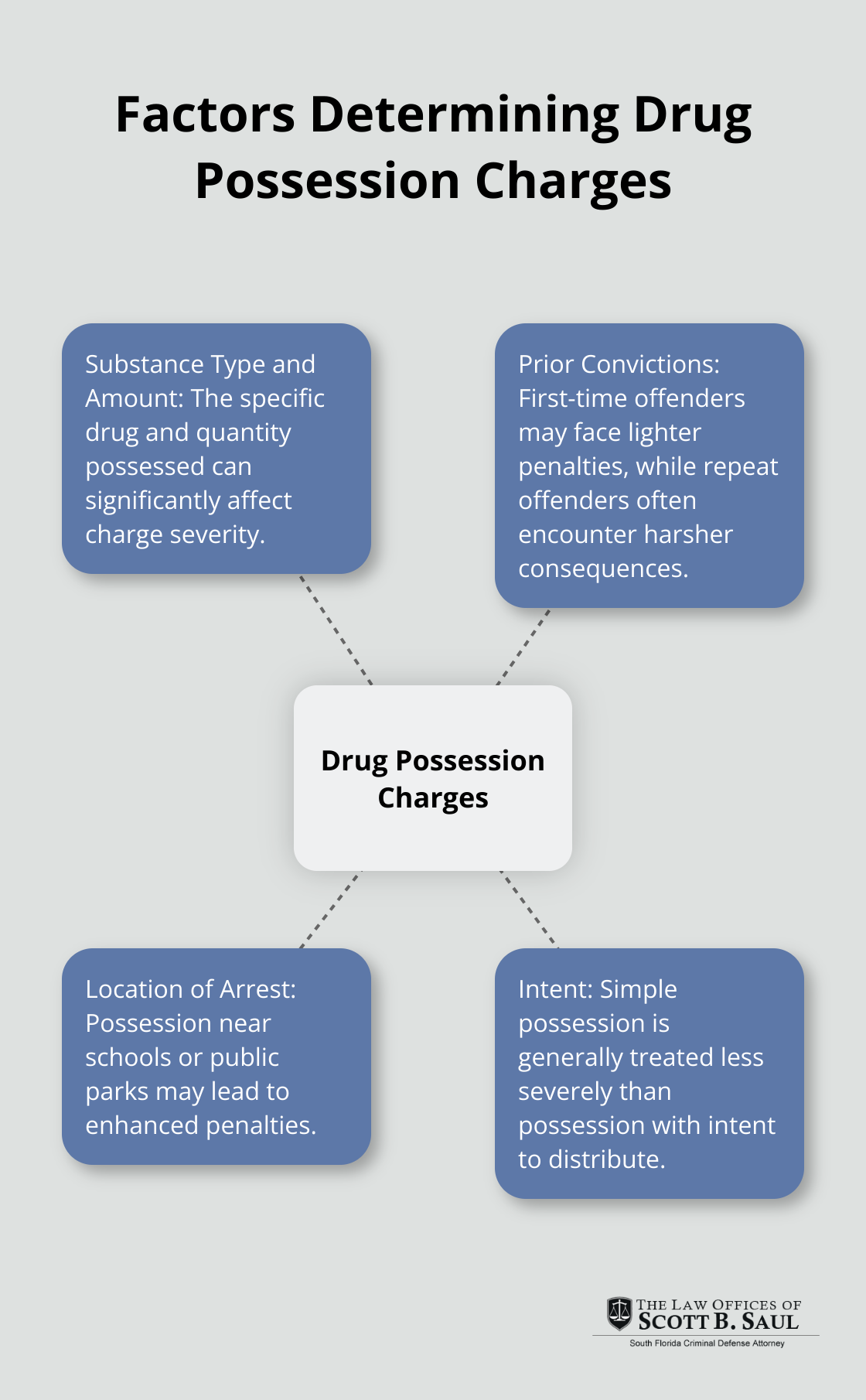
Several factors influence how drug possession charges are determined:
- Type and Amount of Substance: The amount of a substance possessed can affect the severity of charges.
- Prior Convictions: First-time offenders may face less severe penalties or qualify for diversion programs. Repeat offenders often face harsher consequences.
- Location of Arrest: Possession near schools or public parks may lead to enhanced penalties.
- Intent: Simple possession for personal use is generally treated less severely than possession with intent to distribute. Law enforcement and prosecutors consider factors like drug packaging, large amounts of cash, or drug paraphernalia to determine intent.
Impact of Legal Expertise
The Law Offices of Scott B. Saul has seen how these factors can significantly impact case outcomes. Our experience as former prosecutors provides unique insights into how these cases are built and prosecuted, allowing us to build stronger defenses for our clients.
Understanding the nuances of 5th degree drug possession charges is essential for anyone facing such allegations. The specific laws and penalties can vary widely between states, making it necessary to consult with a knowledgeable attorney familiar with local drug laws and court procedures. This understanding sets the stage for our next section, where we’ll compare 5th degree drug possession laws across different states.
How 5th Degree Drug Possession Laws Differ Across States
Felony vs. Misdemeanor Classifications
The classification of 5th degree drug possession varies significantly across the United States. Some states treat it as a felony, while others classify it as a misdemeanor. This distinction can dramatically affect the legal consequences an individual might face.
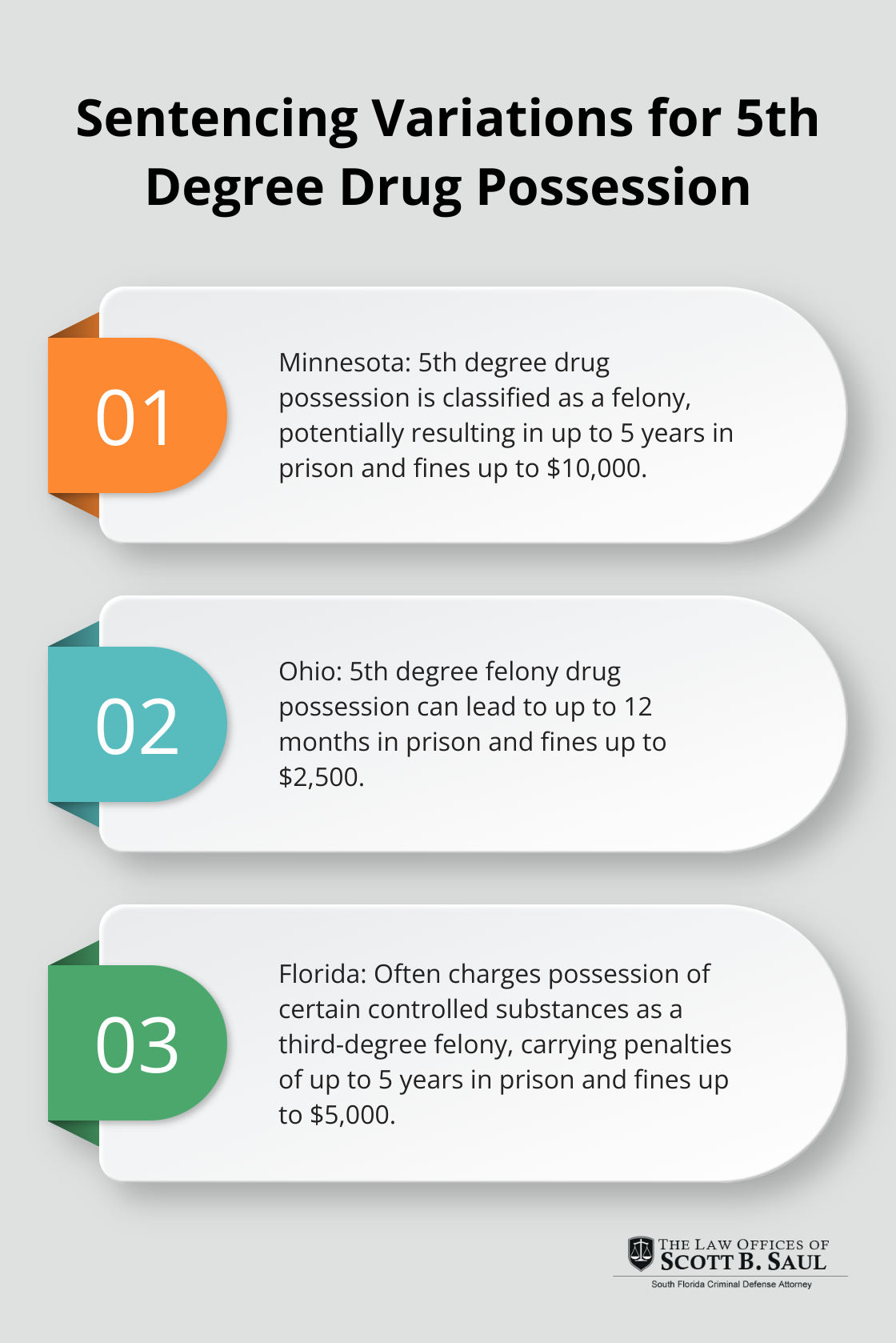
In Minnesota, 5th degree drug possession can result in felony charges. Conviction may lead to penalties as provided in the statute. Conversely, New Jersey classifies possession of small amounts of marijuana (under 50 grams) as a disorderly conduct misdemeanor, which carries much lighter penalties.
Sentencing Variations
The sentences for 5th degree drug possession show stark differences from state to state. Ohio, for example, treats 5th degree felony drug possession with severity. A conviction can result in up to 12 months in prison and fines up to $2,500. Florida takes an even harsher stance, often charging possession of certain controlled substances as a third-degree felony. This classification carries penalties of up to five years in prison and fines up to $5,000.
Alternative Sentencing Options
Many states have introduced alternative sentencing options for drug possession charges, particularly for first-time offenders. These programs often prioritize rehabilitation over punishment. North Carolina offers community punishment instead of prison time for first-time offenders. Virginia provides deferred prosecution for individuals without prior drug convictions, allowing for probation and treatment options.
Impact of State Laws on Legal Strategy
The wide range of laws and penalties across states underscores the importance of understanding local drug laws. This knowledge becomes critical when developing effective defense strategies. Attorneys must stay current with these variations to provide their clients with the most effective representation possible.
The Role of Legal Expertise
Given the complexity and variability of drug possession laws, the role of experienced legal representation cannot be overstated. A knowledgeable attorney (such as those at Law Offices of Scott B. Saul) can navigate the intricacies of state-specific laws, potentially leading to more favorable outcomes for their clients.
The significant differences in how states handle 5th degree drug possession charges highlight the need for a thorough understanding of local laws. This knowledge forms the foundation for exploring the specific legal consequences that individuals might face when charged with 5th degree drug possession.
Real-World Consequences of 5th Degree Drug Possession
Immediate Legal Penalties
The penalties for 5th degree drug possession vary significantly by state. In Minnesota, a conviction can result in up to five years in prison and fines of $10,000. Ohio imposes sentences of up to 12 months in prison and fines up to $2,500. These penalties highlight the serious nature of even lower-level drug charges.
First-time offenders may face less severe consequences. Many states offer diversion programs or probation instead of jail time for those without prior convictions. However, repeat offenders often face harsher sentences, which emphasizes the importance of avoiding subsequent charges.
Impact on Employment Opportunities
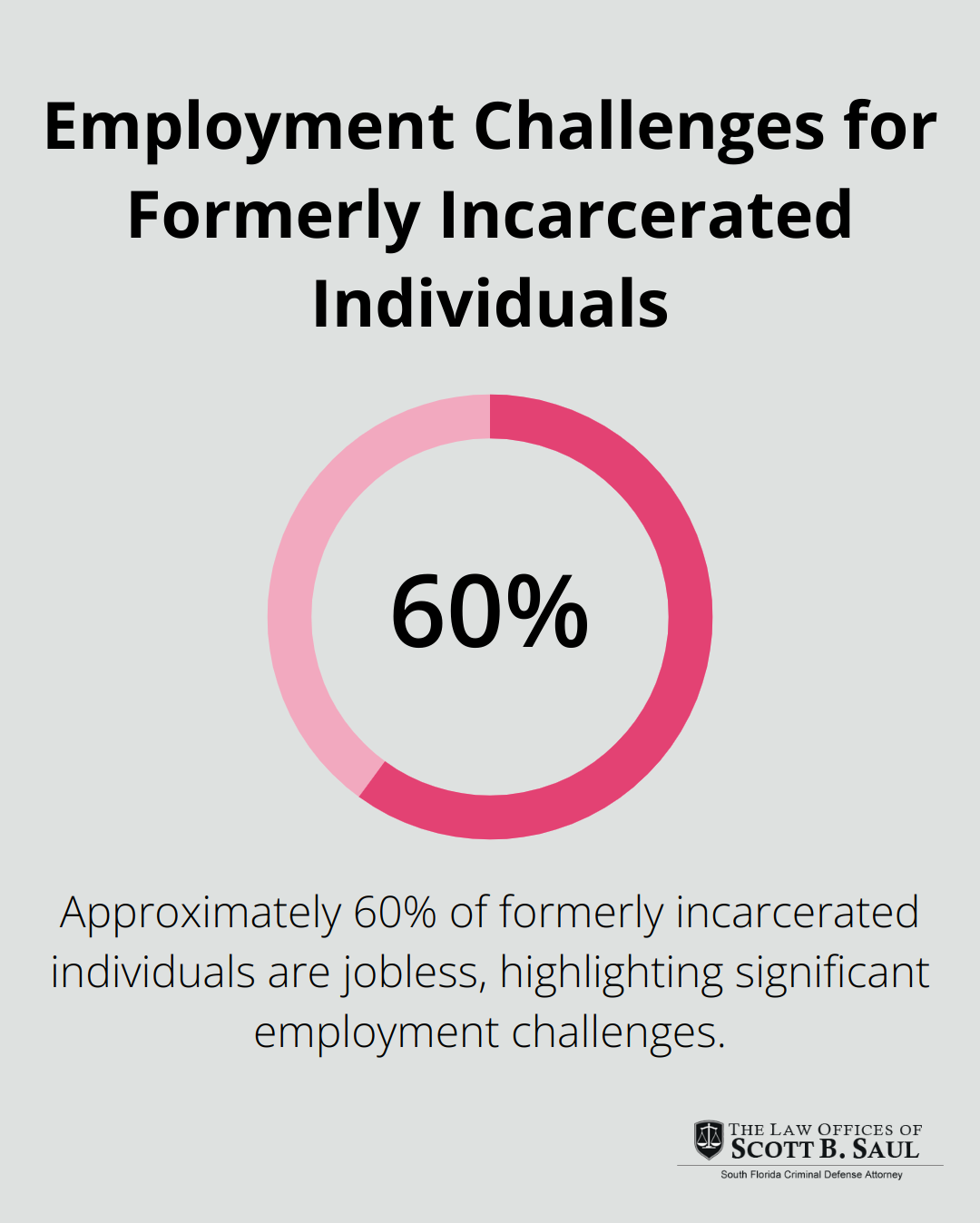
A drug possession conviction can significantly affect employment prospects. Many employers conduct background checks, and a drug-related felony can create a substantial barrier to securing a job. Approximately 60% of formerly incarcerated individuals are jobless, according to a recent report.
Housing Challenges
Housing opportunities can become limited after a drug possession conviction. Many landlords and property management companies perform background checks and may deny housing to individuals with drug convictions. This limitation can lead to housing instability and complicate reintegration into society.
Professional and Personal Repercussions
The collateral consequences of a drug possession conviction extend far beyond legal penalties. Professional licenses in fields such as healthcare, education, and law may face suspension or revocation. For instance, the Florida Board of Nursing may suspend or revoke a nursing license for drug-related convictions, especially if found guilty on three separate occasions.
Personal relationships can also suffer. The stigma associated with drug convictions can strain family ties and friendships. Additionally, child custody arrangements may change, with courts often considering drug convictions when determining a parent’s fitness for custody or visitation rights.
Long-Term Financial Impact
The financial repercussions of a drug possession conviction can be long-lasting. Legal fees, fines, and potential loss of income due to incarceration or job loss can create significant financial strain. Moreover, individuals with drug convictions may face higher insurance premiums (both for auto and life insurance) and difficulties in obtaining loans or credit. More serious charges, such as possession of cocaine or heroin, can result in even harsher penalties and longer-lasting impacts on one’s life and future opportunities.
Final Thoughts
The question “Is 5th degree drug possession a felony?” lacks a simple answer. The classification and consequences of drug possession charges differ widely across states, with some treating it as a felony and others as a misdemeanor. Many states now focus on rehabilitation rather than punishment for low-level drug offenses, recognizing addiction as a public health issue.
Experienced legal representation proves essential when facing drug possession charges. An attorney with in-depth knowledge of local drug laws and court procedures can significantly impact case outcomes. At Law Offices of Scott B. Saul, we offer extensive experience in criminal defense, including a unique perspective from our time as former prosecutors.
Drug possession charges, even at the 5th degree level, can have far-reaching consequences beyond immediate legal penalties. These charges can affect employment opportunities, housing options, professional licenses, and personal relationships (among other aspects of life). As drug laws continue to evolve, staying informed about local regulations and seeking qualified legal representation when needed remain your best defenses against potentially life-altering consequences.
Archives
- February 2026 (5)
- January 2026 (9)
- December 2025 (9)
- November 2025 (8)
- October 2025 (8)
- September 2025 (9)
- August 2025 (8)
- July 2025 (8)
- June 2025 (9)
- May 2025 (9)
- April 2025 (8)
- March 2025 (9)
- February 2025 (8)
- January 2025 (9)
- December 2024 (10)
- November 2024 (5)
- July 2024 (2)
- June 2024 (2)
- May 2024 (2)
- April 2024 (2)
- March 2024 (2)
- February 2024 (2)
- January 2024 (2)
- December 2023 (2)
- November 2023 (2)
- October 2023 (2)
- September 2023 (2)
- August 2023 (1)
- July 2023 (2)
- June 2023 (2)
- May 2023 (2)
- April 2023 (2)
- March 2023 (2)
- February 2023 (2)
- January 2023 (2)
- December 2022 (2)
- November 2022 (2)
- October 2022 (2)
- September 2022 (2)
- August 2022 (2)
- July 2022 (2)
- June 2022 (2)
- May 2022 (2)
- April 2022 (2)
- March 2022 (2)
- February 2022 (2)
- January 2022 (2)
- December 2021 (2)
- November 2021 (2)
- October 2021 (2)
- September 2021 (2)
- August 2021 (2)
- July 2021 (2)
- June 2021 (2)
- May 2021 (2)
- April 2021 (2)
- September 2020 (5)
- July 2020 (4)
- June 2020 (4)
- May 2020 (4)
- April 2020 (5)
- March 2020 (4)
- February 2020 (4)
- January 2020 (4)
- December 2019 (1)
- November 2019 (4)
- October 2019 (4)
- September 2019 (4)
- August 2019 (4)
- July 2019 (5)
- June 2019 (4)
- May 2019 (4)
- April 2019 (4)
- March 2019 (4)
- February 2019 (4)
- January 2019 (4)
- December 2018 (4)
- November 2018 (5)
- October 2018 (5)
- September 2018 (4)
- August 2018 (4)
- July 2018 (7)
- June 2018 (4)
- May 2018 (4)
- April 2018 (8)
- March 2018 (4)
- February 2018 (4)
- January 2018 (4)
- November 2017 (4)
- October 2017 (4)
- September 2017 (4)
- August 2017 (7)
- July 2017 (6)
- June 2017 (4)
- May 2017 (4)
- April 2017 (4)
- March 2017 (4)
- February 2017 (7)
- January 2017 (4)
- December 2016 (7)
- November 2016 (4)
- October 2016 (4)
- September 2016 (10)
- August 2016 (4)
- July 2016 (4)
- June 2016 (4)
- May 2016 (4)
- April 2016 (4)
- March 2016 (4)
- February 2016 (7)
- January 2016 (4)
- December 2015 (5)
- November 2015 (4)
- October 2015 (7)
- September 2015 (4)
- August 2015 (4)
- July 2015 (13)
- June 2015 (9)
- May 2015 (8)
- April 2015 (6)
- March 2015 (4)
- February 2015 (4)
- January 2015 (4)
- December 2014 (4)
- November 2014 (4)
- October 2014 (4)
- September 2014 (3)
Categories
- Adjudication (1)
- Bankruptcy (1)
- Burglary Crimes (3)
- calendar call (1)
- Car Accident (1)
- Criminal Defense (395)
- Cyber Crimes (7)
- DNA (1)
- Domestic Violence (9)
- Drug Crimes (5)
- DUI (12)
- Embezzlement (1)
- Environmental Crimes (4)
- Expungement Law (2)
- Federal Sentencing Law (3)
- Firearm (3)
- Forgery (4)
- General (82)
- Healthcare (3)
- Immigration (1)
- Indentity Theft (1)
- Insurance (5)
- judicial sounding (2)
- Juvenile Crimes (4)
- Manslaughter (4)
- Money Laundering (3)
- Organized Crime (1)
- Racketeering (1)
- Reckless Driving (3)
- RICO (3)
- Sealing and Expunging (2)
- Sex Offense (1)
- Shoplifting (1)
- Suspended Driver's License (1)
- Traffic (4)
- Trending Topics (1)
- White-collar Offenses (1)
