
Understanding Florida’s Public Intoxication Laws
By : saulcrim | Category : Criminal Defense | Comments Off on Understanding Florida’s Public Intoxication Laws
11th Dec 2025

Florida public intoxication laws can lead to serious criminal charges that affect your future employment and personal life. Many people don’t realize that simply appearing drunk in public spaces can result in arrest and prosecution.
We at Law Offices of Scott B. Saul see clients who face these charges without understanding their rights or available defenses.
What Defines Public Intoxication Under Florida Law
Florida’s approach to public intoxication differs significantly from many other states through its specific disorderly intoxication statute under Section 856.011 of Florida Statutes. The law requires that no person shall be intoxicated and endanger the safety of another person or property. Simply being drunk in public without these additional factors won’t result in charges. This distinction matters because many visitors from other states expect broader public intoxication laws that criminalize mere public drunkenness.
The Two-Prong Legal Test Florida Courts Apply
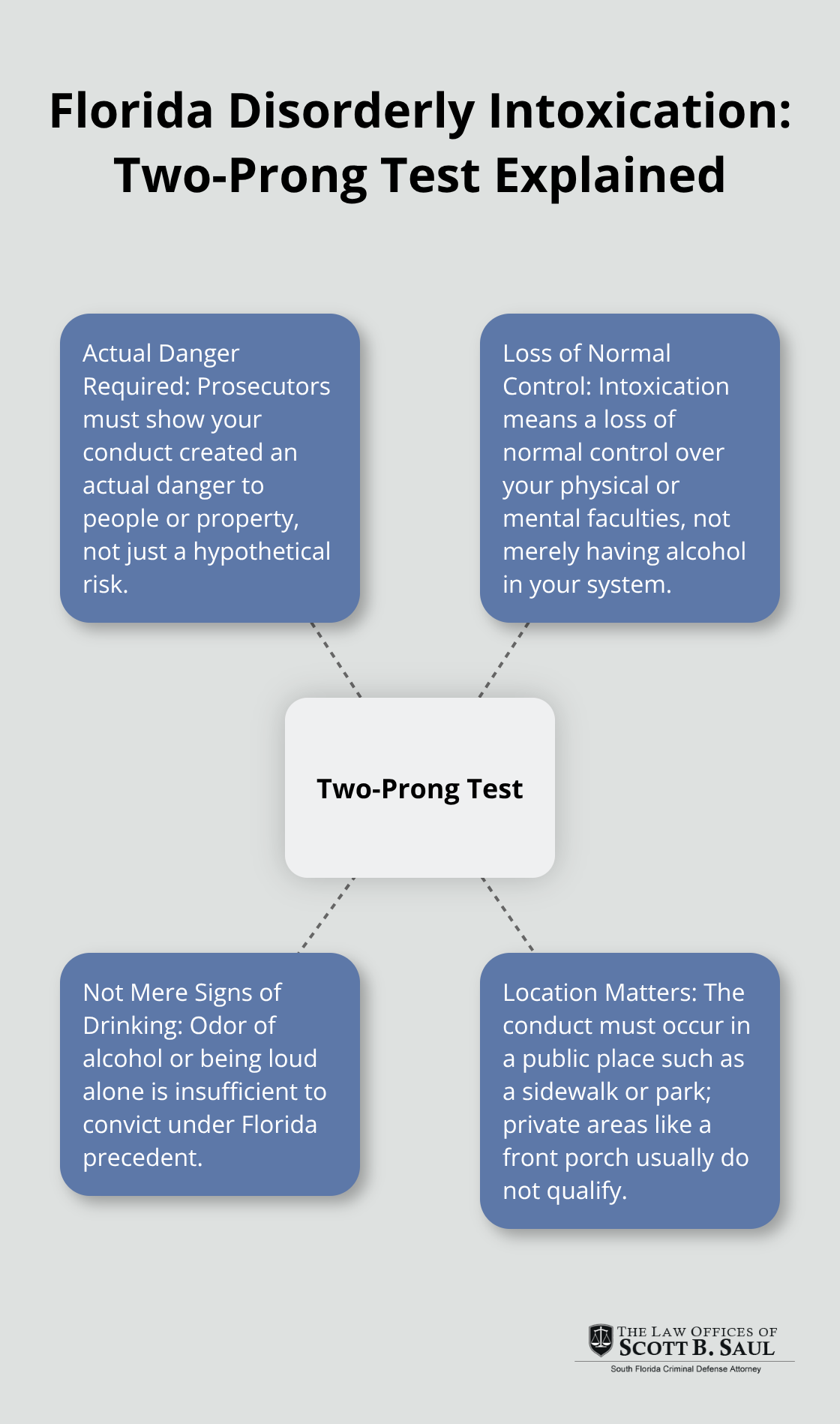
Florida courts established in State v. Holden that prosecutors must prove actual danger to public safety, not just potential risk. The legal definition of intoxication means you lose normal control over your body or mental faculties due to alcohol consumption. Strong alcohol odor or loud behavior alone doesn’t meet this standard according to Florida precedent. Public places include sidewalks, parks, and business areas, but private property like front porches typically don’t qualify.
How Florida’s Law Compares to Other Jurisdictions
Unlike states with broad public intoxication statutes that criminalize simply appearing drunk in public, Florida’s law protects individuals who remain peaceful despite being intoxicated. Texas and California allow arrests for public intoxication without requiring additional disruptive behavior. Florida’s second-degree misdemeanor classification carries up to 60 days in jail and $500 in fines, but the higher burden of proof makes these charges more defensible than in many other states.
Habitual Offender Consequences
Three convictions within 12 months triggers habitual offender status with mandatory treatment requirements up to 60 days. Courts may order substance abuse treatment instead of jail time (reflecting Florida’s rehabilitative approach). This classification affects future charges and can impact employment opportunities and professional licenses.
These legal complexities create numerous opportunities for defense attorneys to challenge charges and protect clients’ rights through various procedural and substantive defenses.
What Happens During Public Intoxication Arrests
Police Response and Arrest Procedures
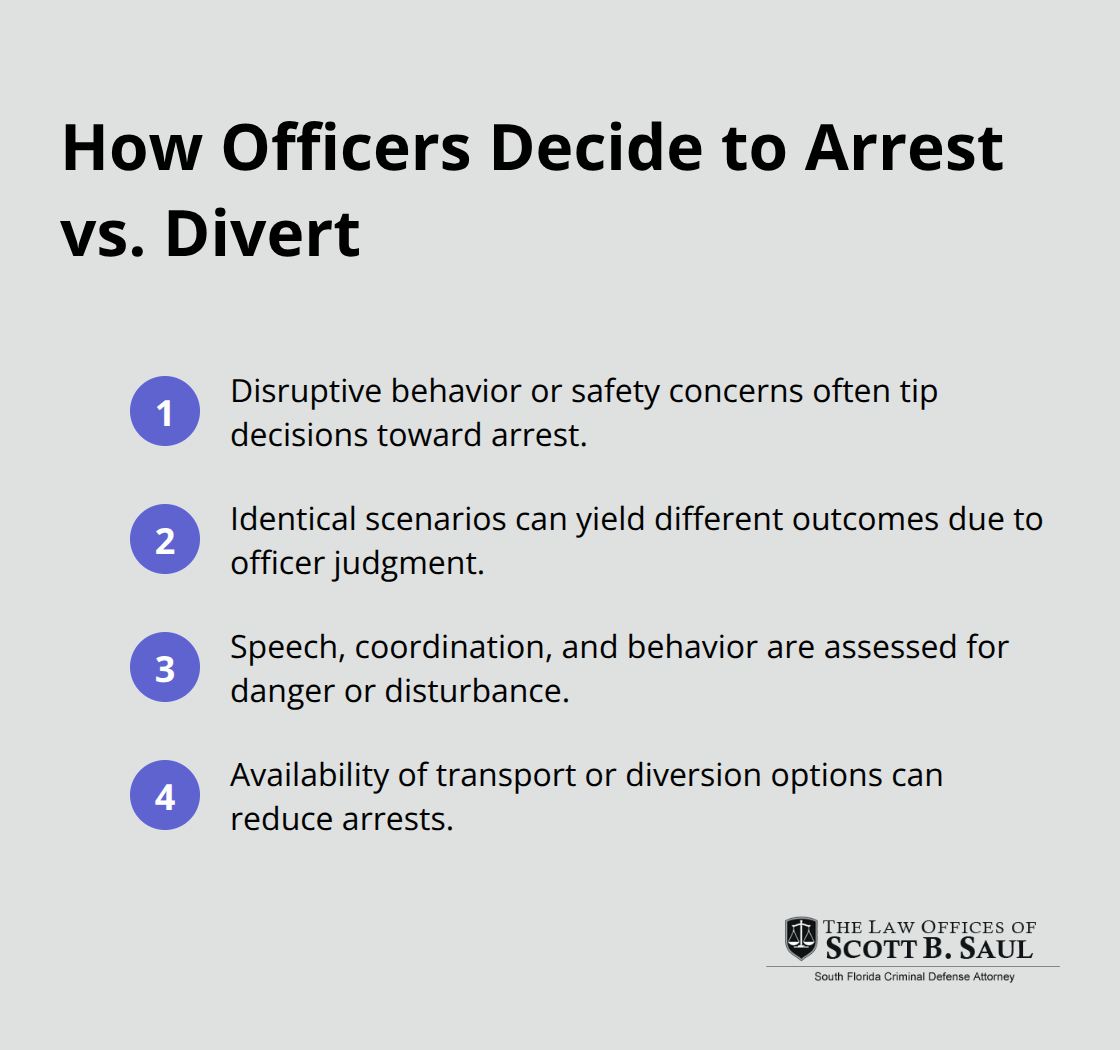
Florida law enforcement officers possess significant discretion when they encounter intoxicated individuals in public spaces. Officers can transport you home or to a health facility instead of arrest, but you must pay for commercial transportation in advance. This alternative approach can reduce arrests when diversion programs are available.
However, officers frequently choose arrest when they observe disruptive behavior or safety concerns. The subjective nature of these assessments means identical situations can result in different outcomes depending on the officer’s judgment. Officers evaluate your speech patterns, coordination, and behavior to determine whether you endanger public safety or cause disturbances.
Field Sobriety Tests and Evidence Collection
Police officers often administer field sobriety tests during public intoxication investigations, though these tests prove unreliable indicators of actual impairment. Health conditions, medications, and physical disabilities can affect your performance on these tests regardless of alcohol consumption. Officers also document your appearance, speech, and behavior through written reports and sometimes body camera footage.
The prosecution relies heavily on officer testimony about your condition and actions. Witness statements from bystanders may support or contradict police observations. Officers must establish that your intoxication occurred in a public place and that you either endangered others or caused a disturbance.
Criminal Record Consequences and Employment Impact
A disorderly intoxication conviction creates a permanent criminal record that cannot be sealed or expunged under Florida law. This second-degree misdemeanor appears on background checks conducted by employers, landlords, and licensing boards. Professional licenses in healthcare, education, and finance face particular scrutiny from regulatory agencies.
Healthcare practitioners must comply with background screening requirements when applying for initial licensure or renewing their licenses. Employment screening companies like HireRight and Sterling Talent Solutions flag these convictions during standard seven-year background checks. Federal employment positions and security clearances become significantly more difficult to obtain with any alcohol-related conviction on your record.
Financial Penalties and Court Costs
Second-degree misdemeanor penalties include fines up to $500 and potential jail time up to 60 days. Court costs typically add another $200-400 to your total financial burden (depending on the county where charges are filed). Probation supervision fees may apply if the court orders supervised probation instead of jail time.
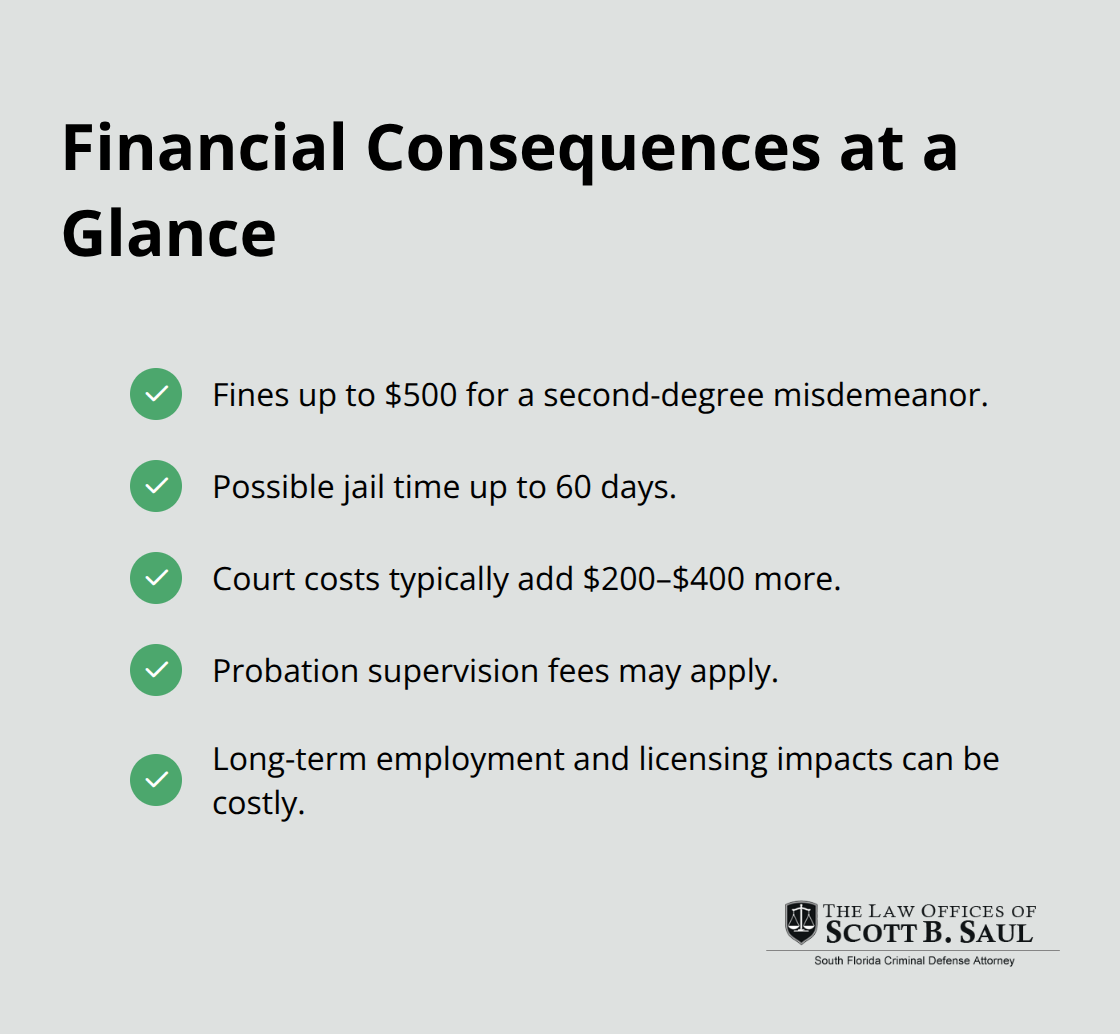
These immediate costs pale compared to long-term financial impacts from employment difficulties and professional license complications. Understanding your defense options becomes essential when facing these serious consequences.
How Can You Fight Public Intoxication Charges
Attack Field Sobriety Test Results and Officer Testimony
Field sobriety tests fail to accurately measure intoxication, as research shows the importance of obtaining BAC estimates from individuals who had both passed and failed standardized field sobriety tests. Medical conditions like diabetes, inner ear problems, and neurological disorders create false positives that defense attorneys can exploit. Officers frequently fail to follow proper protocols or document environmental factors that affect performance such as uneven surfaces, poor weather, or inadequate street lights.
Cross-examination reveals inconsistencies between officers’ written reports and their testimony. Video evidence from body cameras or surveillance footage often contradicts police descriptions of your behavior or speech patterns. The prosecution must prove you lost normal control over your mental faculties, not just that you consumed alcohol. Defense attorneys challenge the officer’s experience with intoxication cases and ability to accurately assess impairment to create reasonable doubt.
Explore Alternative Sentence Options That Avoid Conviction
Florida courts offer diversion programs for first-time offenders that result in charge dismissal upon completion. Pretrial intervention programs for first-time DUI offenders include substance abuse education and other requirements designed to address drunk driving behavior. These programs last 6-12 months but prevent permanent criminal records that damage employment prospects.
Plea negotiations can reduce charges to lesser offenses like breach of peace or disorderly conduct that carry lighter penalties. Some prosecutors accept guilty pleas to municipal ordinance violations instead of state criminal charges. Treatment court programs focus on substance abuse counseling rather than punishment for defendants with addiction issues (particularly effective for repeat offenders). Deferred prosecution agreements allow charges to be dropped after you complete court-ordered requirements without entering a guilty plea.
Act Quickly to Secure Legal Representation
Contact an attorney within 24 hours of arrest to preserve evidence and witness testimony before memories fade. Defense attorneys can file motions to suppress evidence obtained through illegal searches or improper police procedures. Early intervention allows lawyers to investigate alternative witnesses and gather surveillance footage before deletion occurs. Prosecutors often offer better plea deals during initial negotiations than after formal charges are filed.
Scott B. Saul’s unique experience as a former federal and state prosecutor provides unparalleled insights for effective defense strategies. His firm has successfully tried over 300 jury cases and understands how prosecutors build these cases. Delays in hiring an attorney severely limit defense options and allow the prosecution to strengthen their case through additional investigation and witness preparation (making early action essential for the best outcomes).
Final Thoughts
Florida public intoxication laws create complex legal challenges that demand immediate professional attention. The state’s disorderly intoxication statute requires prosecutors to prove actual endangerment or public disturbance beyond mere alcohol consumption. These higher legal standards provide defense opportunities that many defendants miss without proper representation.
Your rights protect against wrongful conviction and permanent criminal records that damage employment prospects. Field sobriety tests prove unreliable, officer testimony contains inconsistencies, and alternative sentence options exist for first-time offenders. Quick action preserves evidence and witness testimony while prosecutors remain open to favorable plea negotiations.
We at Law Offices of Scott B. Saul bring extensive trial experience to every case. Our firm has successfully tried over 300 jury cases and focuses on defense strategies that challenge prosecution evidence (particularly for tourists and foreign travelers who face criminal charges). Contact our experienced criminal defense team immediately if you face public intoxication charges.
Archives
- December 2025 (4)
- November 2025 (8)
- October 2025 (8)
- September 2025 (9)
- August 2025 (8)
- July 2025 (8)
- June 2025 (9)
- May 2025 (9)
- April 2025 (8)
- March 2025 (9)
- February 2025 (8)
- January 2025 (9)
- December 2024 (10)
- November 2024 (5)
- July 2024 (2)
- June 2024 (2)
- May 2024 (2)
- April 2024 (2)
- March 2024 (2)
- February 2024 (2)
- January 2024 (2)
- December 2023 (2)
- November 2023 (2)
- October 2023 (2)
- September 2023 (2)
- August 2023 (1)
- July 2023 (2)
- June 2023 (2)
- May 2023 (2)
- April 2023 (2)
- March 2023 (2)
- February 2023 (2)
- January 2023 (2)
- December 2022 (2)
- November 2022 (2)
- October 2022 (2)
- September 2022 (2)
- August 2022 (2)
- July 2022 (2)
- June 2022 (2)
- May 2022 (2)
- April 2022 (2)
- March 2022 (2)
- February 2022 (2)
- January 2022 (2)
- December 2021 (2)
- November 2021 (2)
- October 2021 (2)
- September 2021 (2)
- August 2021 (2)
- July 2021 (2)
- June 2021 (2)
- May 2021 (2)
- April 2021 (2)
- September 2020 (5)
- July 2020 (4)
- June 2020 (4)
- May 2020 (4)
- April 2020 (5)
- March 2020 (4)
- February 2020 (4)
- January 2020 (4)
- December 2019 (1)
- November 2019 (4)
- October 2019 (4)
- September 2019 (4)
- August 2019 (4)
- July 2019 (5)
- June 2019 (4)
- May 2019 (4)
- April 2019 (4)
- March 2019 (4)
- February 2019 (4)
- January 2019 (4)
- December 2018 (4)
- November 2018 (5)
- October 2018 (5)
- September 2018 (4)
- August 2018 (4)
- July 2018 (7)
- June 2018 (4)
- May 2018 (4)
- April 2018 (8)
- March 2018 (4)
- February 2018 (4)
- January 2018 (4)
- November 2017 (4)
- October 2017 (4)
- September 2017 (4)
- August 2017 (7)
- July 2017 (6)
- June 2017 (4)
- May 2017 (4)
- April 2017 (4)
- March 2017 (4)
- February 2017 (7)
- January 2017 (4)
- December 2016 (7)
- November 2016 (4)
- October 2016 (4)
- September 2016 (10)
- August 2016 (4)
- July 2016 (4)
- June 2016 (4)
- May 2016 (4)
- April 2016 (4)
- March 2016 (4)
- February 2016 (7)
- January 2016 (4)
- December 2015 (5)
- November 2015 (4)
- October 2015 (7)
- September 2015 (4)
- August 2015 (4)
- July 2015 (13)
- June 2015 (9)
- May 2015 (8)
- April 2015 (6)
- March 2015 (4)
- February 2015 (4)
- January 2015 (4)
- December 2014 (4)
- November 2014 (4)
- October 2014 (4)
- September 2014 (3)
Categories
- Adjudication (1)
- Bankruptcy (1)
- Burglary Crimes (3)
- calendar call (1)
- Car Accident (1)
- Criminal Defense (376)
- Cyber Crimes (7)
- DNA (1)
- Domestic Violence (9)
- Drug Crimes (5)
- DUI (12)
- Embezzlement (1)
- Environmental Crimes (4)
- Expungement Law (2)
- Federal Sentencing Law (3)
- Firearm (3)
- Forgery (4)
- General (82)
- Healthcare (3)
- Immigration (1)
- Indentity Theft (1)
- Insurance (5)
- judicial sounding (2)
- Juvenile Crimes (4)
- Manslaughter (4)
- Money Laundering (3)
- Organized Crime (1)
- Racketeering (1)
- Reckless Driving (3)
- RICO (3)
- Sealing and Expunging (2)
- Sex Offense (1)
- Shoplifting (1)
- Suspended Driver's License (1)
- Traffic (4)
- Trending Topics (1)
- White-collar Offenses (1)
