
What Is Tax Return Fraud and How to Avoid It?
By : saulcrim | Category : Criminal Defense | Comments Off on What Is Tax Return Fraud and How to Avoid It?
18th Dec 2025

Tax return fraud costs Americans billions of dollars annually and affects millions of taxpayers each year. Criminals use stolen personal information to file fake returns and claim refunds before legitimate taxpayers can act.
We at Law Offices of Scott B. Saul see firsthand how devastating these crimes can be for victims. Understanding what is tax return fraud and taking preventive steps protects your finances and legal standing.
How Does Tax Return Fraud Actually Work
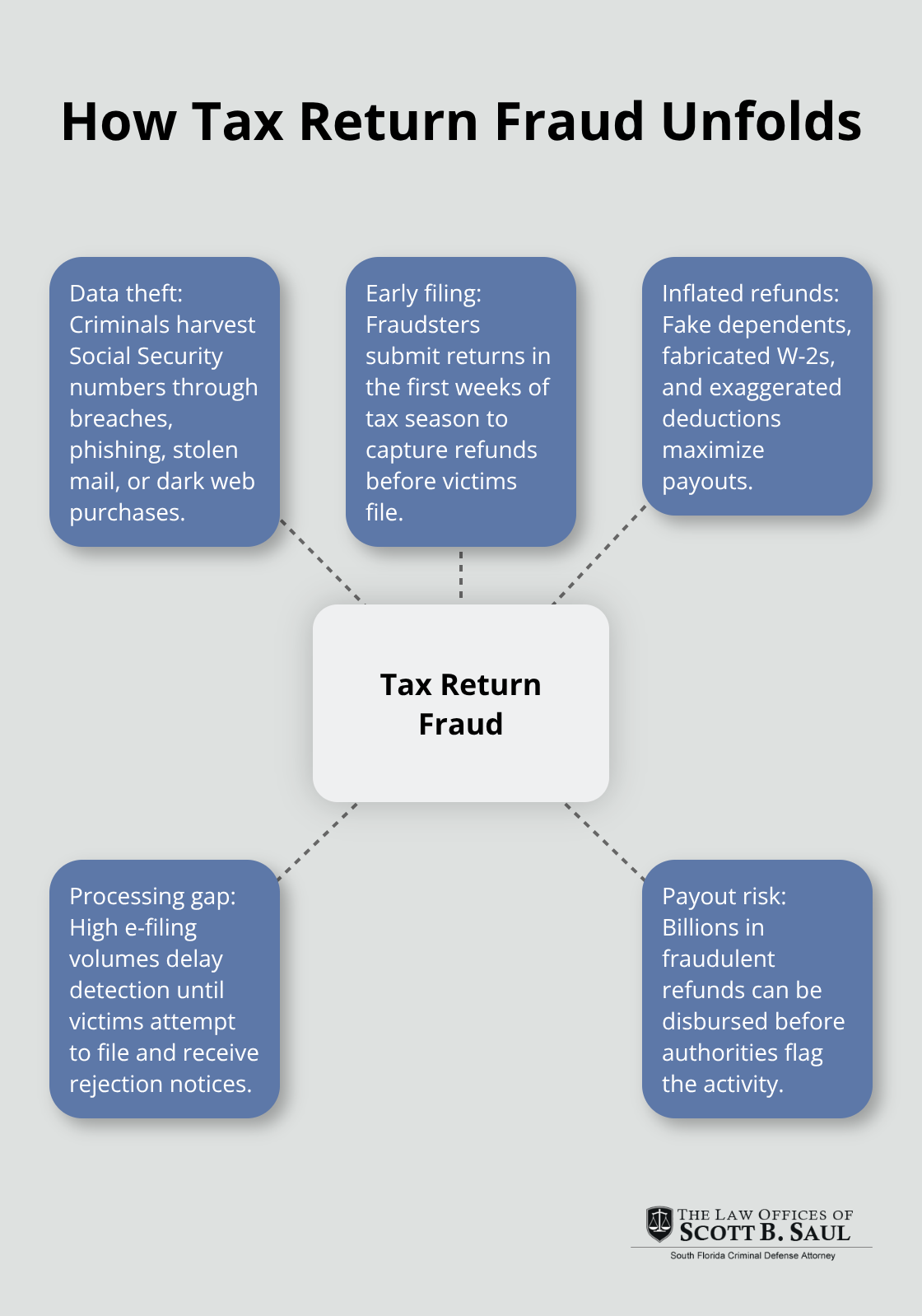
Tax return fraud operates through several distinct schemes that target your personal information and government refunds. The Federal Trade Commission reports that tax-related identity theft affects over 1.4 million Americans annually, with criminals who steal Social Security numbers, names, and addresses to file fraudulent returns. These criminals typically file fake returns within the first few weeks of tax season and claim large refunds before legitimate taxpayers submit their actual returns. The IRS paid out approximately $5.2 billion in fraudulent refunds in 2022 alone, according to Treasury Inspector General data.
Identity Theft Creates the Perfect Storm
Criminals obtain your personal information through data breaches, stolen mail, phishing emails, or by purchasing details from dark web marketplaces. Once they have your Social Security number and basic information, they fabricate income documents and claim maximum refunds through fake W-2 forms or inflated deductions. The IRS processes millions of returns electronically, which makes it difficult to immediately detect these fraudulent filings. Most victims only learn about the fraud when they attempt to file their legitimate return and receive a rejection notice that states a return has already been filed under their Social Security number.
Common Fraud Schemes Target Maximum Refunds
Fraudsters focus on returns that generate the largest refunds, particularly those that claim the Earned Income Tax Credit (EITC) or Additional Child Tax Credit. They create fake dependents, inflate charitable deductions, or report false business expenses to maximize refund amounts. Professional tax preparers sometimes participate in these schemes by knowingly filing false returns for clients in exchange for a portion of the fraudulent refund.
Warning Signs Point to Fraud Activity
Several warning signs indicate you may be a victim of tax return fraud. You receive an IRS notice about unreported income from an employer you never worked for, or you get a refund you never requested. Tax preparation software rejects your e-filed return because someone already used your Social Security number. You receive IRS correspondence about an amended return you never filed, or debt collection notices for taxes you don’t owe. The IRS estimates that detection typically occurs 6-8 months after the fraudulent filing, giving criminals significant time to cash fraudulent refunds.
These fraud schemes create serious legal consequences that extend far beyond the initial theft, affecting both victims and perpetrators in ways that can last for years.
What Penalties Do Tax Fraud Perpetrators Face
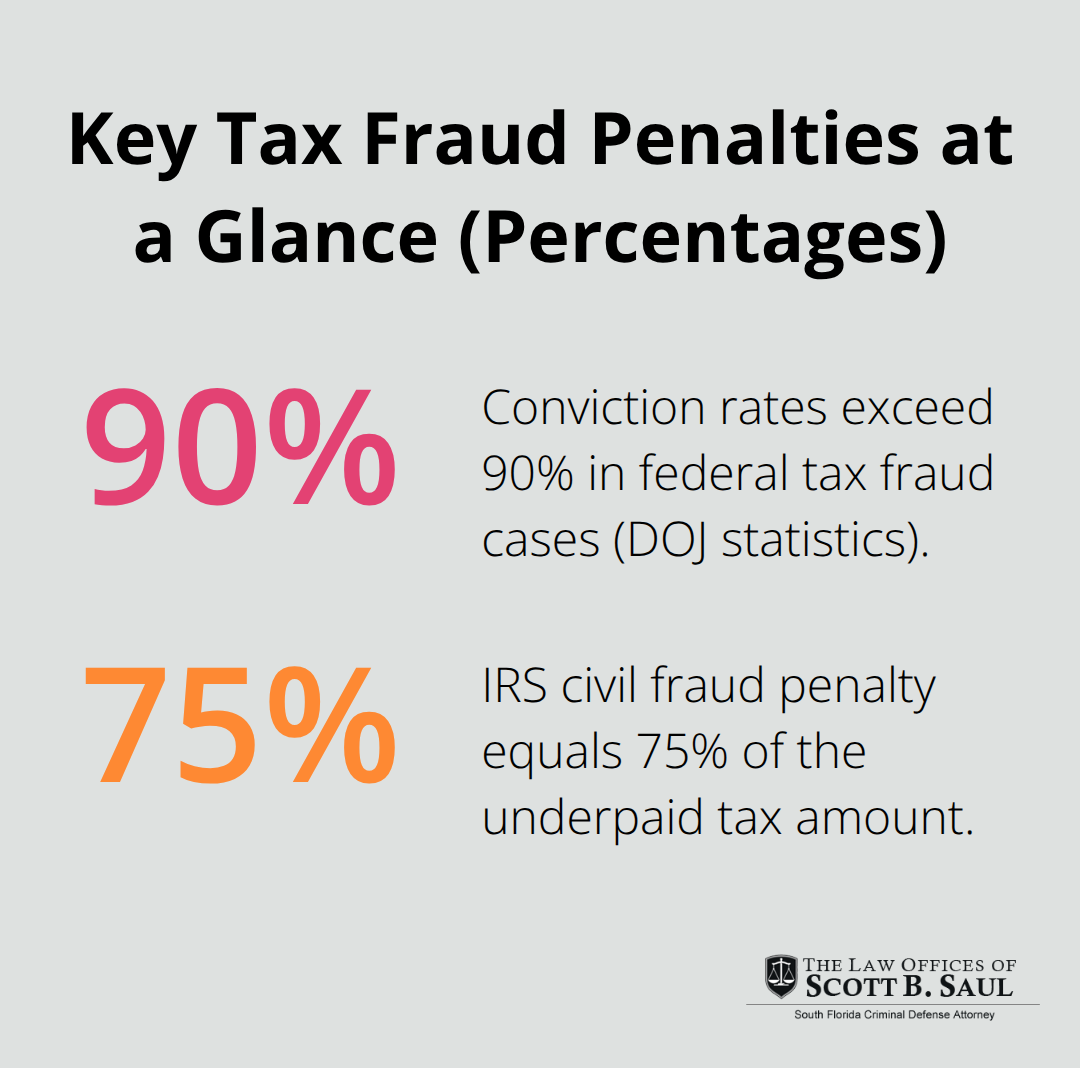
Tax return fraud carries severe federal penalties that destroy lives and futures. The Internal Revenue Service Criminal Investigation division prosecutes tax fraud cases annually, with conviction rates that exceed 90 percent according to Department of Justice statistics. Federal courts impose prison terms that range from one to five years for first-time offenders, while repeat offenders face up to 20 years in federal prison. The average sentence for tax fraud varies, but judges impose harsher penalties when fraud amounts exceed $100,000 or involve sophisticated schemes.
Prison Time Devastates Personal and Professional Lives
Federal tax fraud convictions result in mandatory incarceration in most cases. Judges rarely grant probation for fraud that exceeds $50,000, and the Federal Bureau of Prisons houses tax fraud offenders in medium-security facilities far from family support systems. Criminal records create permanent barriers to employment, professional licenses, and housing opportunities. The Administrative Office of US Courts reports that tax fraud defendants receive active prison sentences, with white-collar offenders who serve time alongside violent criminals in overcrowded federal facilities.
Financial Penalties Multiply Original Tax Debt
Courts impose restitution requirements that often exceed the original fraud amount by 300 to 400 percent. Defendants must repay stolen refunds plus interest, penalties, and prosecution costs that accumulate during lengthy court proceedings. The IRS adds civil penalties of 75 percent of the underpaid tax amount, while criminal fines reach $250,000 per violation (with additional penalties for repeat offenses). Asset forfeiture laws allow prosecutors to seize bank accounts, real estate, and personal property connected to fraud proceeds.
Long-Term Consequences Extend Beyond Prison
Tax fraud convictions create lasting damage that affects defendants for decades after they complete their sentences. Federal background checks reveal these convictions to employers, landlords, and financial institutions permanently. Professional licenses face suspension or revocation in fields such as accounting, law, and finance. Credit scores plummet due to unpaid restitution and civil penalties, which makes it nearly impossible to secure loans or mortgages (even years after release).
These severe consequences make prevention strategies absolutely essential for taxpayers who want to protect themselves from both perpetrators and false accusations.
How Can You Protect Yourself from Tax Fraud
Tax return fraud protection demands aggressive action across multiple fronts, with absolute control over your personal information as the foundation. Identity thieves target Social Security numbers through data breaches and unsecured documents. Never carry your Social Security card in your wallet. Store tax documents in a locked cabinet or safe.
Shred all tax-related paperwork before disposal, including W-2 forms, bank statements, and IRS correspondence. Use a cross-cut shredder that creates particles smaller than 3/8 inch (identity thieves can reconstruct documents from strip-cut shredders). Install security software on all devices and never respond to emails or phone calls that request tax information, even if they appear to come from legitimate sources.
File Your Return Within the First Week of Tax Season
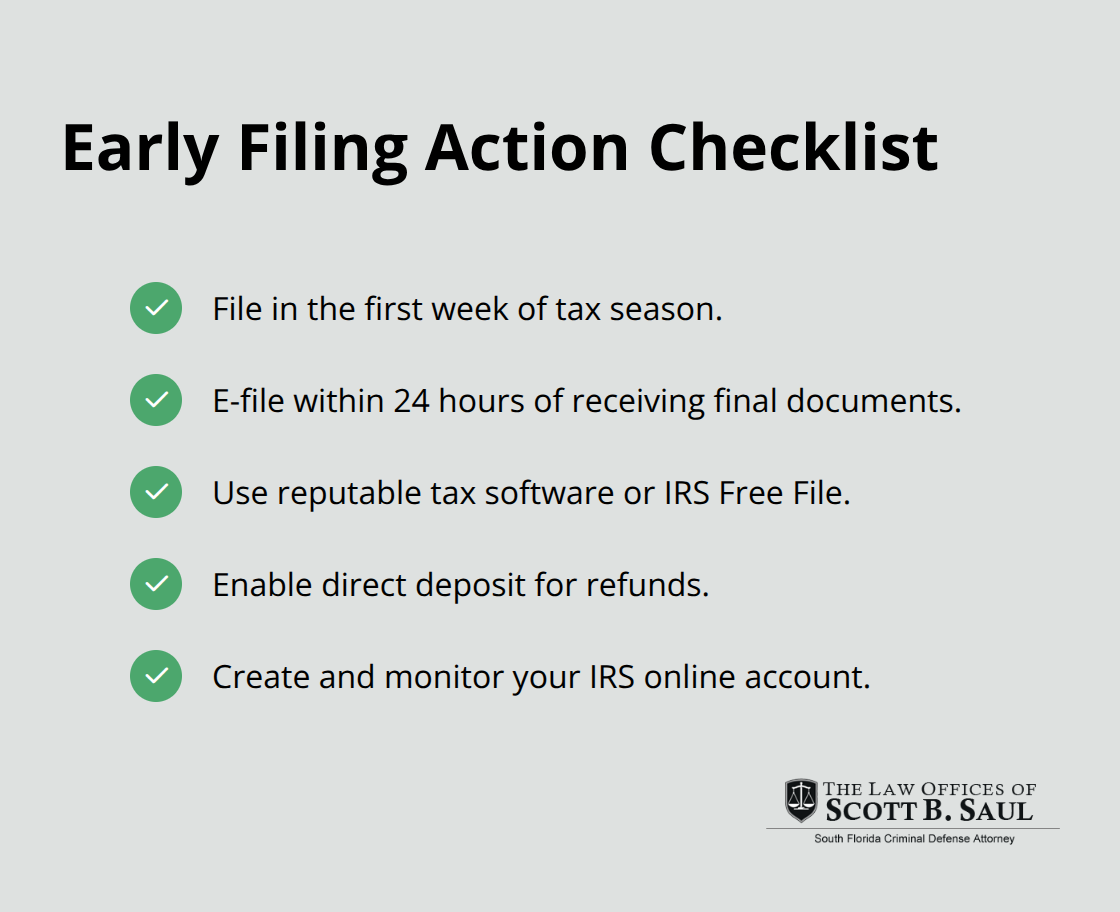
Early tax return submission creates the strongest defense against fraud. Fraudulent returns are typically filed early in tax season to beat legitimate taxpayers to the refund. File your return immediately when the IRS begins acceptance in late January.
Use IRS Free File or reputable tax preparation software to submit your return electronically within 24 hours of receipt of your final tax documents. Set up direct deposit for refunds to prevent criminals from intercepting paper checks. Create an online account with the IRS at irs.gov to monitor your account status and receive immediate alerts about suspicious activity.
Monitor Your Financial Accounts Like a Security Professional
Weekly credit report and tax account monitoring prevents small problems from becoming financial disasters. Victims who check their credit reports regularly detect fraud faster than those who check infrequently.
Set up fraud alerts with all three credit bureaus and freeze your credit reports when you’re not actively applying for loans or credit cards. Review bank statements daily for unauthorized transactions and sign up for account alerts that notify you of any deposits or withdrawals. Check your IRS account transcript quarterly to identify any returns filed under your Social Security number that you didn’t submit.
Verify Your Employment Records Annually
Check your Social Security Administration earnings record annually to verify that all reported income matches your actual employment history. Criminals often use stolen identities to report fake employment income, which creates discrepancies in your official earnings record. Access your Social Security statement online at ssa.gov and compare reported wages with your actual W-2 forms from each tax year.
Final Thoughts
Tax return fraud prevention demands immediate action across three critical areas. Secure your personal information by shredding tax documents, filing returns within the first week of tax season, and monitoring your credit reports weekly. These steps create multiple barriers against criminals who target Social Security numbers and personal data.
Victims must contact the IRS Identity Protection Specialized Unit immediately at 800-908-4490 and file Form 14039. Report the crime to local police and place fraud alerts with all credit bureaus. Document all correspondence and maintain detailed records of your communications with government agencies.
Understanding what is tax return fraud becomes especially important when facing criminal charges. False accusations destroy reputations and careers even when defendants are ultimately cleared (sometimes taking years to resolve). We at Law Offices of Scott B. Saul defend clients against tax fraud allegations with professional legal representation that protects your rights and builds the strongest possible defense against criminal tax fraud charges.
Archives
- February 2026 (5)
- January 2026 (9)
- December 2025 (9)
- November 2025 (8)
- October 2025 (8)
- September 2025 (9)
- August 2025 (8)
- July 2025 (8)
- June 2025 (9)
- May 2025 (9)
- April 2025 (8)
- March 2025 (9)
- February 2025 (8)
- January 2025 (9)
- December 2024 (10)
- November 2024 (5)
- July 2024 (2)
- June 2024 (2)
- May 2024 (2)
- April 2024 (2)
- March 2024 (2)
- February 2024 (2)
- January 2024 (2)
- December 2023 (2)
- November 2023 (2)
- October 2023 (2)
- September 2023 (2)
- August 2023 (1)
- July 2023 (2)
- June 2023 (2)
- May 2023 (2)
- April 2023 (2)
- March 2023 (2)
- February 2023 (2)
- January 2023 (2)
- December 2022 (2)
- November 2022 (2)
- October 2022 (2)
- September 2022 (2)
- August 2022 (2)
- July 2022 (2)
- June 2022 (2)
- May 2022 (2)
- April 2022 (2)
- March 2022 (2)
- February 2022 (2)
- January 2022 (2)
- December 2021 (2)
- November 2021 (2)
- October 2021 (2)
- September 2021 (2)
- August 2021 (2)
- July 2021 (2)
- June 2021 (2)
- May 2021 (2)
- April 2021 (2)
- September 2020 (5)
- July 2020 (4)
- June 2020 (4)
- May 2020 (4)
- April 2020 (5)
- March 2020 (4)
- February 2020 (4)
- January 2020 (4)
- December 2019 (1)
- November 2019 (4)
- October 2019 (4)
- September 2019 (4)
- August 2019 (4)
- July 2019 (5)
- June 2019 (4)
- May 2019 (4)
- April 2019 (4)
- March 2019 (4)
- February 2019 (4)
- January 2019 (4)
- December 2018 (4)
- November 2018 (5)
- October 2018 (5)
- September 2018 (4)
- August 2018 (4)
- July 2018 (7)
- June 2018 (4)
- May 2018 (4)
- April 2018 (8)
- March 2018 (4)
- February 2018 (4)
- January 2018 (4)
- November 2017 (4)
- October 2017 (4)
- September 2017 (4)
- August 2017 (7)
- July 2017 (6)
- June 2017 (4)
- May 2017 (4)
- April 2017 (4)
- March 2017 (4)
- February 2017 (7)
- January 2017 (4)
- December 2016 (7)
- November 2016 (4)
- October 2016 (4)
- September 2016 (10)
- August 2016 (4)
- July 2016 (4)
- June 2016 (4)
- May 2016 (4)
- April 2016 (4)
- March 2016 (4)
- February 2016 (7)
- January 2016 (4)
- December 2015 (5)
- November 2015 (4)
- October 2015 (7)
- September 2015 (4)
- August 2015 (4)
- July 2015 (13)
- June 2015 (9)
- May 2015 (8)
- April 2015 (6)
- March 2015 (4)
- February 2015 (4)
- January 2015 (4)
- December 2014 (4)
- November 2014 (4)
- October 2014 (4)
- September 2014 (3)
Categories
- Adjudication (1)
- Bankruptcy (1)
- Burglary Crimes (3)
- calendar call (1)
- Car Accident (1)
- Criminal Defense (395)
- Cyber Crimes (7)
- DNA (1)
- Domestic Violence (9)
- Drug Crimes (5)
- DUI (12)
- Embezzlement (1)
- Environmental Crimes (4)
- Expungement Law (2)
- Federal Sentencing Law (3)
- Firearm (3)
- Forgery (4)
- General (82)
- Healthcare (3)
- Immigration (1)
- Indentity Theft (1)
- Insurance (5)
- judicial sounding (2)
- Juvenile Crimes (4)
- Manslaughter (4)
- Money Laundering (3)
- Organized Crime (1)
- Racketeering (1)
- Reckless Driving (3)
- RICO (3)
- Sealing and Expunging (2)
- Sex Offense (1)
- Shoplifting (1)
- Suspended Driver's License (1)
- Traffic (4)
- Trending Topics (1)
- White-collar Offenses (1)
