
Understanding Florida’s Domestic Violence Laws
By : saulcrim | Category : Criminal Defense | Comments Off on Understanding Florida’s Domestic Violence Laws
16th Oct 2025

Florida domestic violence laws carry severe penalties that can permanently alter your life. A single conviction affects employment opportunities, housing applications, and custody rights.
We at Law Offices of Scott B. Saul see clients facing these charges daily. The legal system moves quickly, and understanding your rights makes the difference between conviction and freedom.
What Counts as Domestic Violence in Florida
Legal Framework Under Florida Statute 741.28
Florida Statute 741.28 defines domestic violence with shocking breadth that catches many defendants off guard. The law includes any assault, aggravated assault, battery, aggravated battery, sexual violence, stalking, kidnapping, false imprisonment, or any criminal offense that results in physical injury or death between family or household members. This definition extends beyond married couples to include former spouses, blood relatives, individuals who live together as family, and those who share a child regardless of marriage status. The statute specifically covers relationships where parties had a continuing romantic or intimate relationship within six months before the incident.
Physical Violence Classifications and Penalties
Physical domestic violence charges escalate rapidly based on injury severity and prior convictions. Simple battery becomes a first-degree misdemeanor that carries up to one year in jail and $1,000 in fines. Aggravated battery with a weapon triggers Florida’s 10-20-Life Law, which mandates minimum sentences for weapon-related offenses. First-time offenders face mandatory 10-day jail sentences that increase to 20 days for second offenses. When children witness the violence, minimum sentences jump to 15 days even for first-time offenders. Courts stack sentences for multiple charges and create lengthy periods of incarceration that destroy careers and families.
Emotional Abuse and Stalking Provisions
Florida recognizes emotional abuse and stalking as serious domestic violence offenses that carry significant penalties. Stalking includes behaviors like following, harassment, or cyberstalking that cause substantial emotional distress or fear. First-degree misdemeanor stalking charges result in up to one year imprisonment. These statistics reflect aggressive prosecution policies that treat psychological abuse as seriously as physical violence. Coercive control tactics (like isolation from family, communication monitoring, or restricted access to finances) qualify as domestic violence under Florida law.
Understanding these definitions helps defendants recognize the severity of charges they face, but the penalties that follow conviction create even more devastating consequences for those found guilty.
What Penalties Will You Face for Domestic Violence
First-Time Convictions Carry Mandatory Jail Time
Florida imposes harsh mandatory minimum sentences that destroy lives immediately after conviction. First-time domestic violence offenders face automatic 10-day jail sentences that courts cannot waive or suspend. Second offenses trigger 20-day mandatory sentences. When children witness the violence, first-time penalties jump to 15 days minimum. These mandatory sentences apply even to misdemeanor convictions, and judges cannot reduce them regardless of circumstances. Courts stack multiple charges from single incidents, which creates months of incarceration. A domestic violence battery conviction carries maximum penalties of one year jail time plus $1,000 fines. Florida reported 63,217 domestic violence arrests in 2020 alone, which shows prosecutors aggressively pursue these cases.

Repeat Offenses and Firearm Penalties Create Life Sentences
Repeat domestic violence offenders face penalties that quickly reach felony levels. Third domestic violence convictions within 10 years automatically become third-degree felonies that carry up to five years prison time. Aggravated battery with firearms triggers Florida’s 10-20-Life Law, which mandates severe minimum sentences for firearm-related offenses. Domestic violence convictions permanently strip firearm ownership rights under federal law. Immigration consequences devastate non-citizens, who face automatic deportation proceedings for domestic violence convictions. These penalties stack with probation violations and create decades of legal entanglement that ruins careers and relationships.

Employment and Housing Consequences Last Forever
Domestic violence convictions create permanent criminal records that Florida courts cannot seal or expunge. Background checks reveal these convictions to employers, landlords, and boards for life. Professional licenses in healthcare, education, finance, and law enforcement face automatic suspension or revocation. Housing applications get rejected, which forces families into substandard conditions. Child custody battles become one-sided as courts heavily favor the non-convicted parent. Credit applications, insurance policies, and volunteer opportunities disappear. The conviction follows you through every major life decision and creates barriers that persist decades after sentence completion.
These severe penalties make effective legal defense strategies absolutely vital for anyone who faces domestic violence charges in Florida.
How Can You Fight Domestic Violence Charges
Self-Defense Claims Require Immediate Evidence Collection
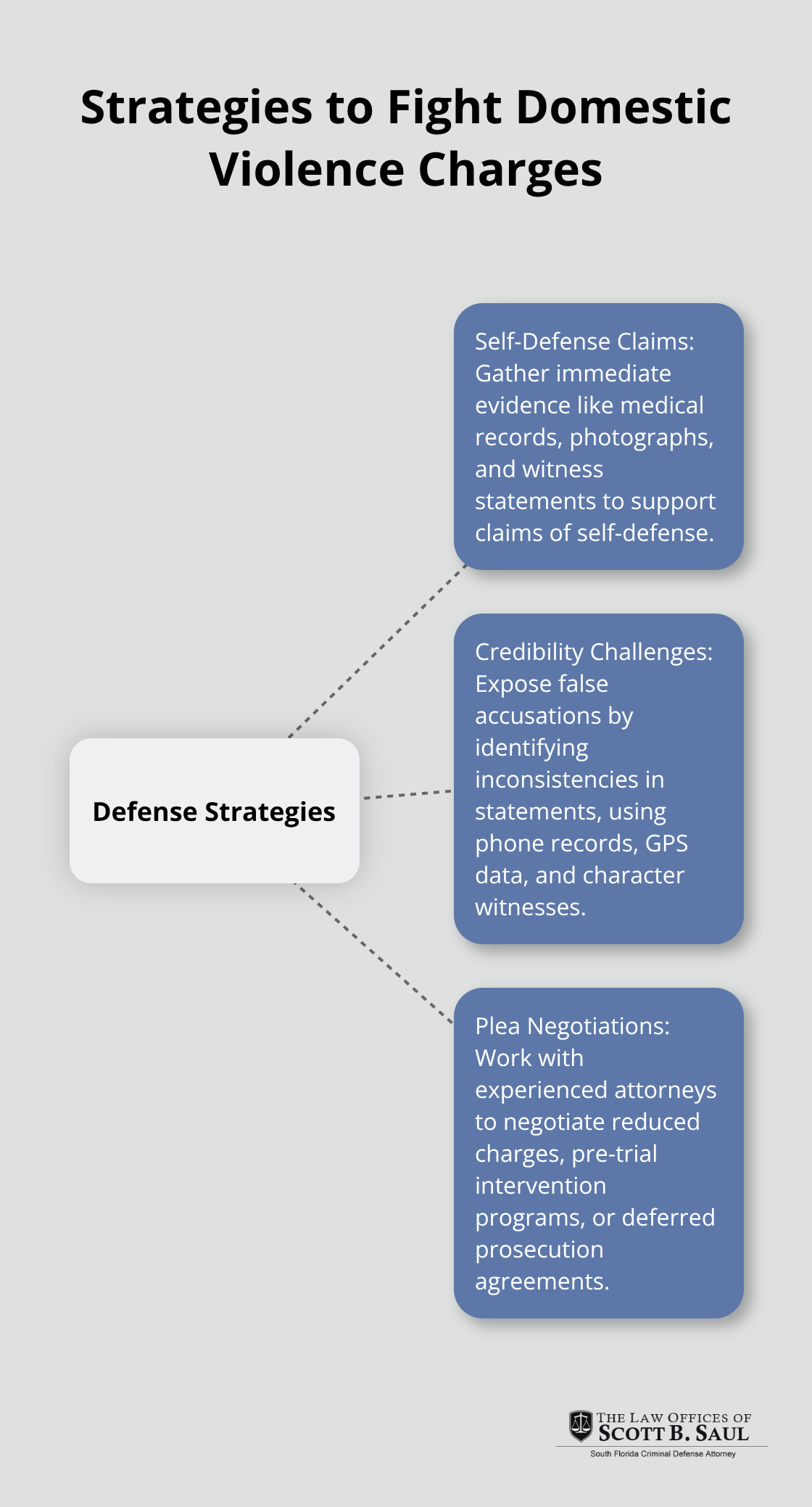
Self-defense claims succeed only when defendants gather compelling evidence before prosecutors build their case. Florida law permits physical force to prevent imminent harm, but courts scrutinize these claims aggressively. Medical records that document your injuries, photographs of defensive wounds, and witness statements create the foundation for successful self-defense arguments. Police body camera footage often captures the defendant’s emotional state and visible injuries that support self-defense claims. Text messages, voicemails, and social media posts from the alleged victim that show threats or aggressive behavior strengthen your position significantly. Defense attorneys must collect this evidence within 24 hours of arrest because prosecutors move quickly to secure witness statements that contradict self-defense claims.
Credibility Challenges Expose False Accusations
False domestic violence accusations occur frequently during divorce proceedings and custody battles, which creates opportunities for effective defense strategies. Inconsistent statements between police reports, sworn affidavits, and testimony reveal fabricated claims that prosecutors struggle to prove beyond reasonable doubt. Phone records, GPS data, and surveillance footage often contradict the alleged victim’s timeline and location claims. Financial records that show recent large purchases or insurance claims suggest motives for false reports. Cross-examination of witnesses reveals bias, coaching, or financial incentives that destroy prosecution credibility. Character witnesses who testify about the defendant’s peaceful nature and the alleged victim’s history of manipulation create reasonable doubt that juries cannot ignore.
Plea Negotiations Avoid Mandatory Sentences
Experienced defense attorneys negotiate plea agreements that avoid mandatory jail time and preserve clients’ futures. A domestic violence conviction carries a mandatory minimum sentence of ten days in county jail for a first offense, 15 days for a second offense, and 20 days for subsequent offenses. Prosecutors often accept reduced charges like disorderly conduct or breach of peace that carry no domestic violence designation. Pre-trial intervention programs allow first-time offenders to complete counseling and community service instead of conviction. Anger management classes, substance abuse treatment, and psychological evaluations demonstrate rehabilitation efforts that influence plea negotiations favorably. Deferred prosecution agreements postpone charges while defendants complete court-ordered programs, and if the program is successfully completed the charge is dismissed.
Final Thoughts
Florida domestic violence laws create a complex legal framework that destroys lives through mandatory jail sentences, permanent criminal records, and lifelong consequences. The state’s aggressive prosecution policies resulted in 63,217 arrests in 2020 alone. Courts impose harsh penalties that affect employment, housing, and family relationships for decades.
Professional legal representation becomes absolutely vital when you face these charges. The difference between conviction and freedom often depends on immediate evidence collection, credibility challenges, and strategic plea negotiations that avoid mandatory sentences. Time works against defendants as prosecutors build their case with each passing hour.
We at Law Offices of Scott B. Saul provide aggressive representation that protects clients’ rights and futures in domestic violence cases. Our firm fights for your freedom in court through skilled legal counsel that challenges evidence and negotiates favorable plea agreements. Contact experienced criminal defense attorneys immediately if you face domestic violence charges.
Archives
- February 2026 (5)
- January 2026 (9)
- December 2025 (9)
- November 2025 (8)
- October 2025 (8)
- September 2025 (9)
- August 2025 (8)
- July 2025 (8)
- June 2025 (9)
- May 2025 (9)
- April 2025 (8)
- March 2025 (9)
- February 2025 (8)
- January 2025 (9)
- December 2024 (10)
- November 2024 (5)
- July 2024 (2)
- June 2024 (2)
- May 2024 (2)
- April 2024 (2)
- March 2024 (2)
- February 2024 (2)
- January 2024 (2)
- December 2023 (2)
- November 2023 (2)
- October 2023 (2)
- September 2023 (2)
- August 2023 (1)
- July 2023 (2)
- June 2023 (2)
- May 2023 (2)
- April 2023 (2)
- March 2023 (2)
- February 2023 (2)
- January 2023 (2)
- December 2022 (2)
- November 2022 (2)
- October 2022 (2)
- September 2022 (2)
- August 2022 (2)
- July 2022 (2)
- June 2022 (2)
- May 2022 (2)
- April 2022 (2)
- March 2022 (2)
- February 2022 (2)
- January 2022 (2)
- December 2021 (2)
- November 2021 (2)
- October 2021 (2)
- September 2021 (2)
- August 2021 (2)
- July 2021 (2)
- June 2021 (2)
- May 2021 (2)
- April 2021 (2)
- September 2020 (5)
- July 2020 (4)
- June 2020 (4)
- May 2020 (4)
- April 2020 (5)
- March 2020 (4)
- February 2020 (4)
- January 2020 (4)
- December 2019 (1)
- November 2019 (4)
- October 2019 (4)
- September 2019 (4)
- August 2019 (4)
- July 2019 (5)
- June 2019 (4)
- May 2019 (4)
- April 2019 (4)
- March 2019 (4)
- February 2019 (4)
- January 2019 (4)
- December 2018 (4)
- November 2018 (5)
- October 2018 (5)
- September 2018 (4)
- August 2018 (4)
- July 2018 (7)
- June 2018 (4)
- May 2018 (4)
- April 2018 (8)
- March 2018 (4)
- February 2018 (4)
- January 2018 (4)
- November 2017 (4)
- October 2017 (4)
- September 2017 (4)
- August 2017 (7)
- July 2017 (6)
- June 2017 (4)
- May 2017 (4)
- April 2017 (4)
- March 2017 (4)
- February 2017 (7)
- January 2017 (4)
- December 2016 (7)
- November 2016 (4)
- October 2016 (4)
- September 2016 (10)
- August 2016 (4)
- July 2016 (4)
- June 2016 (4)
- May 2016 (4)
- April 2016 (4)
- March 2016 (4)
- February 2016 (7)
- January 2016 (4)
- December 2015 (5)
- November 2015 (4)
- October 2015 (7)
- September 2015 (4)
- August 2015 (4)
- July 2015 (13)
- June 2015 (9)
- May 2015 (8)
- April 2015 (6)
- March 2015 (4)
- February 2015 (4)
- January 2015 (4)
- December 2014 (4)
- November 2014 (4)
- October 2014 (4)
- September 2014 (3)
Categories
- Adjudication (1)
- Bankruptcy (1)
- Burglary Crimes (3)
- calendar call (1)
- Car Accident (1)
- Criminal Defense (395)
- Cyber Crimes (7)
- DNA (1)
- Domestic Violence (9)
- Drug Crimes (5)
- DUI (12)
- Embezzlement (1)
- Environmental Crimes (4)
- Expungement Law (2)
- Federal Sentencing Law (3)
- Firearm (3)
- Forgery (4)
- General (82)
- Healthcare (3)
- Immigration (1)
- Indentity Theft (1)
- Insurance (5)
- judicial sounding (2)
- Juvenile Crimes (4)
- Manslaughter (4)
- Money Laundering (3)
- Organized Crime (1)
- Racketeering (1)
- Reckless Driving (3)
- RICO (3)
- Sealing and Expunging (2)
- Sex Offense (1)
- Shoplifting (1)
- Suspended Driver's License (1)
- Traffic (4)
- Trending Topics (1)
- White-collar Offenses (1)
